First Impressions
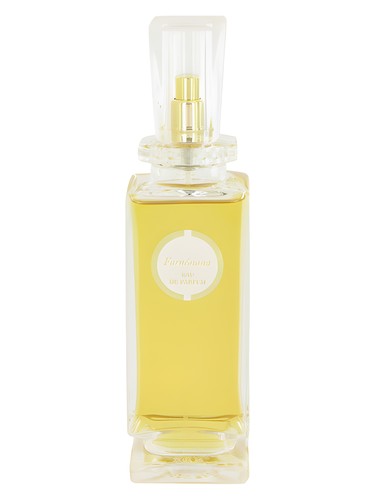
The first spray of Farnesiana transports you to a sunlit Parisian garden in early spring, where mimosa trees dust the air with their golden pollen. There''s an immediate softness here—a powdery embrace that feels both vintage and surprisingly modern. The opening is green and alive, with hay''s honeyed warmth mingling with mimosa''s fuzzy sweetness, while black currant adds an unexpected tartness and bergamot provides citrus clarity. This isn''t a fragrance that announces your entrance; it''s one that rewards those who lean in closer. Created in 1947, Farnesiana carries the DNA of post-war French perfumery, when beauty was about refinement and restraint rather than volume and projection.
The Scent Profile
Farnesiana''s structure reveals itself in gentle waves rather than dramatic shifts. The top accord centers on mimosa—that peculiar flower that smells simultaneously of honey, powder, and cucumber—supported by hay''s coumarin-rich sweetness. Black currant brings a subtle tartness that prevents the opening from becoming too cloying, while bergamot''s citrus brightness lifts the heavier elements. This combination creates the dominant powdery accord (registering at 100% in scent profile analysis) while maintaining a fresh, green quality (68%) that keeps things from feeling dated.
The heart emerges as a classic French floral trio: violet, jasmine, and lily-of-the-valley. Here, the powdery character deepens through violet''s slightly metallic softness, while jasmine provides indolic richness and lily-of-the-valley contributes its green, aqueous facets. This is where Farnesiana reveals its yellow floral character (67%), though it''s never a loud or heady interpretation. Instead, these flowers are glimpsed through a gauzy veil, their beauty suggested rather than displayed.
The base brings warmth and structure through vanilla, sandalwood, opoponax, and musk. The vanilla is restrained—adding roundness rather than dessert-like sweetness (the sweet accord registers at just 52%). Sandalwood provides creamy woodiness (woody accord at 47%), while opoponax, a sweet myrrh resin, adds balsamic depth. Musk anchors everything with skin-like intimacy. This foundation allows Farnesiana to settle into a soft, woody-powdery cloud that stays close to the skin, creating what aficionados call a "second skin" scent.
Character & Occasion
Farnesiana''s seasonal profile tells you everything about its character: it''s primarily a spring fragrance (84% seasonal suitability), with strong fall appeal (70%) and moderate winter wearability (52%). Summer proves its weakest season (36%), which makes sense given the warmth of vanilla and hay in the composition. This is a fragrance for transitional weather—those days when you need something comforting but not heavy, sophisticated but not severe.
The day versus night data is particularly telling: 100% suited for daytime wear versus just 29% for evening. Farnesiana shines in professional settings, quiet lunches, weekend errands, and anywhere you want to smell polished without making a statement. It''s the olfactory equivalent of a well-cut cashmere sweater—quality that speaks for itself. This makes it ideal for office environments where stronger fragrances might overwhelm, or as a signature scent for those who prefer subtlety over spectacle.
Community Verdict
The r/fragrance community, based on 66 opinions, awards Farnesiana an impressive 8.2 out of 10 sentiment score. The enthusiasts who know this scent champion it as an elegant, timeless composition that exemplifies the underrated quality of the Caron house. They particularly value its status as a signature fragrance that sidesteps mainstream trendiness—you won''t smell this on everyone at the mall.
Wearers praise its reliability for everyday use and note respectable longevity, though the consensus acknowledges limited projection and sillage. This is a fragrance for you, not for the room. The community also flags a significant practical concern: Farnesiana is difficult to find in US retail stores, requiring either online ordering or specialty boutique hunting. It''s not widely discussed compared to contemporary releases, which some view as part of its appeal—a secret handshake among serious collectors.
The overall impression is one of reverence tempered by realism. Those who own Farnesiana treasure it, but they''re honest about its limitations in an era that often prioritizes performance over poetry.
How It Compares
The list of similar fragrances reads like a Guerlain greatest hits collection: Samsara, Après l''Ondée, L''Heure Bleue, Vol de Nuit, and Nahema. This positioning makes perfect sense—Farnesiana occupies the same territory of classic French powdery florals that Guerlain dominated. What distinguishes Farnesiana is its particular emphasis on mimosa and hay, giving it a greener, more naturalistic quality than some of its peers. While L''Heure Bleue leans more overtly romantic and Samsara more sandalwood-centric, Farnesiana strikes a balance between floral prettiness and earthy grounding.
The Bottom Line
With 374 votes yielding a 4.25 out of 5 rating, Farnesiana stands as a beloved niche within the already niche world of vintage-style French perfumery. This isn''t a fragrance for those seeking compliment-generating powerhouses or trendy niche experimentation. Instead, it rewards patience, proximity, and an appreciation for restraint.
Value-wise, Caron typically offers quality at price points below comparable Guerlain classics, making Farnesiana an accessible entry into this style of perfumery. The challenge lies in sourcing rather than affordability. Should you try it? Absolutely, if you''re drawn to powdery florals, appreciate vintage aesthetics, or seek an everyday signature that won''t announce your presence before you enter a room. Farnesiana is for the person who understands that true elegance whispers.
AI-generated editorial review