First Impressions
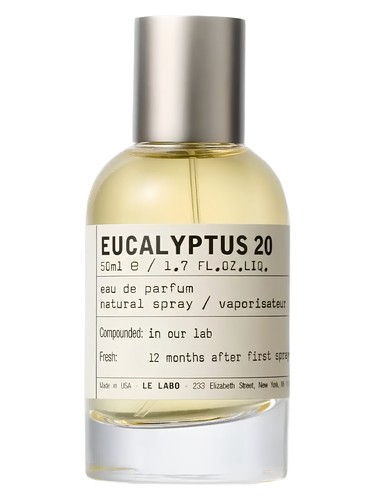
Spray Le Labo''s Eucalyptus 20, and you''ll find yourself waiting for a guest that never quite arrives. The name suggests a crisp, medicinal clarity—the kind that conjures spa steam rooms and Australian forests. Instead, what greets your skin is something far more cryptic: a woody, resinous presence with just the faintest whisper of camphor dancing at the edges. It''s the olfactory equivalent of false advertising, though whether that''s a dealbreaker or an intriguing plot twist depends entirely on your relationship with expectation.
This 2025 addition to Le Labo''s numbered series positions itself as a feminine fragrance, though its dominant woody accord (registering at 100% in the fragrance profile) suggests a composition that transcends conventional gender boundaries. The opening moments carry a subtle freshness, quickly consumed by amber warmth and aromatic depth—a trajectory that feels deliberate, sophisticated, and perhaps a touch provocative in its refusal to deliver what the bottle promises.
The Scent Profile
Without specified notes to guide us, Eucalyptus 20 reveals itself through its accord structure—a composition dominated by wood, wrapped in amber (62%), and layered with aromatic complexity (52%). The fresh spicy character (40%) provides initial brightness, while camphor (33%) offers the only real nod to the eucalyptus name, manifesting as a cooling, medicinal undertone that most wearers report as fleeting at best.
The evolution follows an unconventional path. Where you might expect eucalyptus to assert itself in the opening—crisp, green, invigorating—it instead appears as little more than a suggestion, a cool breath that dissipates within minutes. What remains is a sophisticated woody structure that grows increasingly resinous and incense-heavy as it settles into skin. The amber accord adds warmth without sweetness, while a subtle musk (23%) grounds the composition in the base, preventing it from becoming too ethereal or austere.
The drydown is where Eucalyptus 20 reveals its true character: deep, contemplative, and reminiscent of high-end apothecary products. Those familiar with Aesop''s aesthetic—that studied minimalism, that marriage of the medicinal and the luxurious—will recognize the sensibility here. This is a fragrance that smells expensive in its restraint, crafted in its evolution, and utterly unconcerned with immediate gratification.
Character & Occasion
Eucalyptus 20 is rated for all seasons, a versatility that makes sense given its balanced composition. The woody-amber core provides enough warmth for cooler months, while the aromatic and camphoraceous elements keep it from feeling heavy in transitional weather. However, community feedback suggests it shines brightest in winter and cooler seasons, where its resinous depth feels most at home.
Interestingly, the day/night data shows no clear preference, sitting at 0% for both categories—a statistical quirk that perhaps speaks to the fragrance''s niche positioning or its status as a 2025 release still finding its audience. In practice, this reads as a fragrance best suited for intentional wear: quiet days working from home, contemplative evenings, moments when you''re dressing for yourself rather than for others.
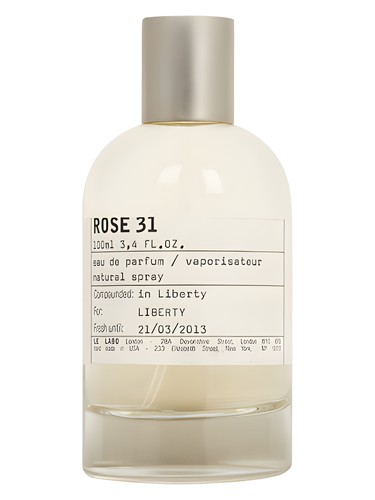
This is decidedly not a crowd-pleaser. Le Labo has crafted something for the wearer who values personal connection over external validation, who appreciates the journey of a fragrance more than its immediate impact. It''s for those who already own Rose 31, who understand that Le Labo''s numbered series often prioritizes artistic vision over commercial appeal.
Community Verdict
The fragrance community''s response has been decidedly mixed, earning a sentiment score of 6.2 out of 10 across 51 opinions. The overall rating of 3.96 from 532 votes suggests competence without consensus—a fragrance that works beautifully for some while leaving others confused or disappointed.
The primary complaint is consistent and damning: the eucalyptus note is barely detectable or disappears almost immediately. Community members describe feeling misled by the name, expecting a eucalyptus-forward composition and receiving instead a woody, incense-heavy experience. This disconnect between expectation and reality has created a polarizing reception.
Those who appreciate Eucalyptus 20 praise its technical execution—the sophisticated composition, the strong incense and resinous drydown, the resemblance to Aesop''s aesthetic sensibility. These advocates argue that judged on its own merits, divorced from its misleading name, it''s a unique and interesting fragrance worthy of exploration.
The consensus is clear: this is a scent for personal wear rather than seeking compliments, best appreciated by those who actively seek incense and woody compositions and aren''t hung up on literal interpretation of fragrance names.
How It Compares
The listed comparisons are telling: Baccarat Rouge 540, Rose 31, Oud Wood, Orphéon, and By the Fireplace. These are fragrances that prioritize complexity and sophistication over accessibility, that demand active engagement from the wearer.
Where Eucalyptus 20 distinguishes itself is in its restraint. It lacks the sweetness of Baccarat Rouge 540, the rose-forward boldness of its Le Labo sibling, and the obvious luxury of Oud Wood. Instead, it occupies a more austere space—closer to Orphéon''s intellectual incense or the contemplative quality of By the Fireplace, but drier, more medicinal in its underlying character.
The Bottom Line
Eucalyptus 20 presents a peculiar challenge: it''s technically accomplished but fundamentally misnamed. At 3.96 out of 5 stars from over 500 votes, it''s neither a disaster nor a masterpiece—it''s a well-crafted fragrance with an identity crisis.
Should you try it? Yes, if you approach it with the right expectations. Forget the eucalyptus. Instead, seek out a woody, amber-resinous composition with incense leanings and an apothecary aesthetic. If that description appeals to you, Eucalyptus 20 may surprise and delight. If you''re genuinely seeking eucalyptus—that bright, medicinal, forest-floor freshness—look elsewhere. Perhaps try it precisely because of its contradictions, because it represents Le Labo''s continued willingness to prioritize artistic vision over market expectations, even when that vision doesn''t quite align with the name on the bottle.
AI-generated editorial review