First Impressions
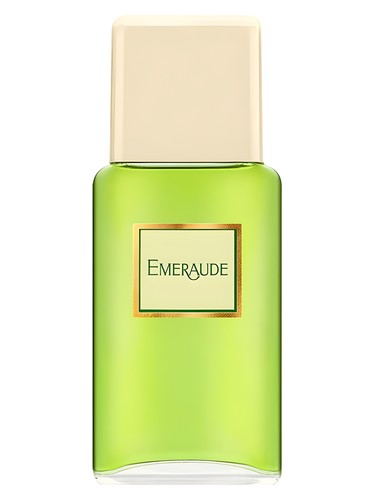
Emeraude opens with a sunburst of vintage citrus—bergamot, lemon, and orange dancing together in that particular way classic French perfumery mastered a century ago. This is not the scrubbed-clean, laundry-fresh citrus of modern fragrances, but something richer and more syrupy, as if the fruit has been candied and left to age in an apothecary jar. The brightness is fleeting, a momentary flash before the fragrance reveals its true character: a deeply amber-hued oriental that wears its 1921 birthdate with both pride and, admittedly, some creaking joints. There''s an immediate sense of opulence here, the kind that speaks to Jazz Age glamour and velvet-lined boudoirs, though whether that translates to contemporary appeal is another question entirely.
The Scent Profile
The evolution of Emeraude follows the classical oriental trajectory with textbook precision. Those opening citrus notes—bergamot leading the charge with lemon and orange as supporting players—dissolve within minutes into a lush, almost overwhelming floral heart. Brazilian rosewood forms the structural backbone here, its soft, creamy woodiness providing a canvas for ylang-ylang''s narcotic sweetness, jasmine''s indolic richness, and rose''s powdery femininity. This is the era when perfumers weren''t afraid of volume, and the heart accord demonstrates that philosophy unapologetically.
But it''s in the base where Emeraude truly establishes its identity. The amber accord—rated at a perfect 100%—is the undeniable star, supported by a constellation of classic oriental ingredients. Opoponax and benzoin bring a honeyed, balsamic warmth that borders on resinous. Vanilla adds sweetness without tipping into gourmand territory, while sandalwood and patchouli contribute a woody depth that grounds the composition and earns it that 74% woody accord rating. The result is a fragrance that sits heavy and close to the skin, radiating warmth like embers in a fireplace.
The amber dominance is so pronounced that every other element feels like it exists to serve it. The 72% citrus rating speaks to that bright opening, but it''s ephemeral. The 56% balsamic and 48% vanilla ratings reveal a fragrance that prioritizes richness and sweetness over freshness or modernity. This is comfort in a bottle, but comfort from another era.
Character & Occasion
Emeraude positions itself as an all-seasons fragrance, and technically, the data supports this classification. However, reality suggests a more nuanced picture. That amber-forward, balsamic-heavy composition will likely feel suffocating in summer heat, while its vintage warmth could be genuinely comforting in cooler months. The lack of day/night preference data (both registering at 0%) is telling—it suggests a fragrance that exists outside contemporary wearing patterns, neither distinctly daytime-appropriate nor evening-exclusive.
This is perfume for someone who appreciates history, who finds modern fragrances too sheer or too fleeting. It''s for the woman who inherited her grandmother''s jewelry and actually wears it. The sillage is moderate by today''s standards but would have been considered elegant restraint in 1921. Expect compliments from older generations and quizzical looks from younger ones. Emeraude doesn''t apologize for its age; it simply exists, stubbornly classical in a world that has largely moved on.
Community Verdict
Here''s where things become problematic. Despite 1,401 votes yielding a respectable 3.95/5 rating, the Reddit fragrance community has essentially ghosted Emeraude. The sentiment analysis registers a negative 2.5/10, and the reason becomes immediately clear: there''s no substantive discussion. The fragrance appears only as a passing reference in celebrity association lists. No one discusses its performance, its evolution, whether the reformulations have gutted its soul or if it remains true to its original formula. The community data offers no documented pros, no wearing experiences, no debate about its place in the modern rotation.
This silence is perhaps more damning than outright criticism. Emeraude hasn''t sparked controversy or passionate defense—it has simply failed to inspire conversation. For a fragrance that''s been in continuous production for over a century, this lack of engagement suggests it has become invisible, a drugstore fixture that perfume enthusiasts walk past without a second glance.
How It Compares
The comparison list reads like a who''s who of amber orientals: Dune by Dior, Shalimar by Guerlain, Coco by Chanel, Bal à Versailles by Jean Desprez, and Obsession by Calvin Klein. These are heavyweight fragrances, compositions with devoted followings and significant cultural cache. Emeraude shares their amber bones and vintage sensibility, but where Shalimar commands respect and Obsession defined a decade, Emeraude has faded into background noise. It offers a similar olfactory experience at a fraction of the price point, but without the prestige or the reformulation controversies that keep other classics in the conversation.
The Bottom Line
Emeraude is a paradox: a critically decent fragrance (3.95/5 is nothing to dismiss) that has somehow become critically irrelevant. It delivers exactly what its note pyramid promises—a rich, amber-woody oriental with vintage bones and unapologetic sweetness. For budget-conscious fragrance lovers who want to explore the amber oriental category without investing in Shalimar or Coco, Emeraude offers legitimate value. The bones are good, the composition is competent, and the price is accessible.
But approach with clear eyes. This is not a hidden gem waiting to be rediscovered. It''s a time capsule that may smell more like costume than couture to modern noses. Sample it if you''re curious about perfume history or drawn to vintage amber scents, but don''t expect it to revolutionize your collection. Sometimes a 3.95 rating and complete community silence tell you everything you need to know: solid, serviceable, and entirely skippable unless you''re specifically seeking what it offers.
AI-generated editorial review