First Impressions
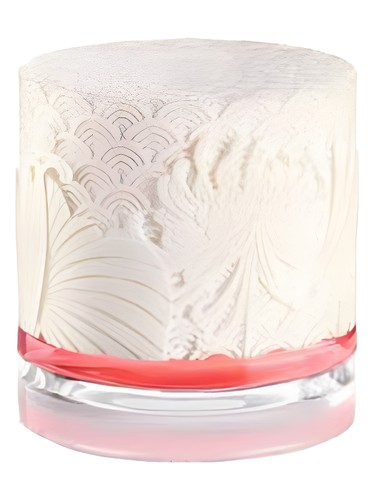
The first spray of Eden is like stepping into a greenhouse where nature and artifice have struck an uneasy truce. There''s an immediate rush of watery florals wrapped in something decidedly synthetic—not in the cheap sense, but in the audacious way that only the 1990s could deliver. Peach and citrus notes tumble forward with mandarin orange and lemon brightness, but they''re quickly enveloped by an otherworldly white floral haze that feels both lush and strangely plastic. This is not a fragrance that whispers; it announces itself with the confidence of a perfume house willing to take risks, and your first reaction will likely tell you everything you need to know about your relationship with Eden.
The Scent Profile
Eden''s opening quartet of peach, bergamot, mandarin orange, and lemon should theoretically deliver a sun-drenched Mediterranean morning. Instead, it reads more like a digital watercolor—recognizable but rendered through a distinctly synthetic lens. The peach, in particular, has that fuzzy, almost chalky quality that defined so many fragrances of its era, while the citrus notes provide a sharp counterpoint that keeps the composition from drowning in sweetness.
The heart is where Eden truly earns its reputation as an ambitious outlier. This isn''t just a white floral; it''s a botanical catalog run amok. Water lily, mimosa, tuberose, lotus, jasmine, lily-of-the-valley, and rose create a dense, almost suffocating floral wall, punctuated by unexpected guests: melon and pineapple. The result is simultaneously aquatic and tropical, pastoral and surreal. The tuberose and jasmine provide the classical white floral backbone, but the water lily and lotus lend an ephemeral, pond-side quality that justifies the aquatic accord rating of 66%. That melon note—so quintessentially 90s—either reads as refreshing or cloying depending on your tolerance for the era''s signature tricks.
As Eden settles into its base, the composition reveals unexpected depth. Patchouli, sandalwood, and cedar provide a woody foundation (accounting for that 69% woody accord) that grounds all that floral exuberance. Black locust—an unusual inclusion—adds a subtle honeyed quality, while tonka bean rounds everything out with vanilla-adjacent warmth. This base keeps Eden from floating away entirely into synthetic oblivion, anchoring it with enough traditional perfumery to remind you that yes, this is still meant to be worn on skin.
Character & Occasion
Eden''s data tells an interesting story: it''s rated for all seasons with equal weight, suggesting a fragrance that refuses to be pigeonholed. The dominant white floral accord (100%) and strong floral presence (94%) make it unmistakably feminine and bold, while the fresh (59%) and aquatic (66%) qualities theoretically make it suitable for warmer weather. Yet the woody base (69%) and sweet undertones (67%) give it enough substance for cooler months.
This is decisively a daytime fragrance—the data shows no particular advantage for evening wear, and indeed, Eden''s brightness and that distinctive synthetic shimmer feel more at home in natural light. It''s a perfume for the office if you work somewhere creative, for weekend errands if you enjoy turning heads, for brunch if you want to be remembered. It demands attention without the sultry weight of an evening scent.
Who is Eden for? The community data is revealing here: fragrance collectors and enthusiasts, those who appreciate unconventional scents, and people seeking something tied to personal nostalgia. This is not a crowdpleaser, nor does it aspire to be.
Community Verdict
With a 3.64 rating from 8,631 votes, Eden sits firmly in "respectable but divisive" territory. The Reddit fragrance community''s mixed sentiment (6.5/10) reflects a fragrance that inspires stronger reactions than its middling rating might suggest.
The pros are telling: collectors praise its unique and artistic composition with unusual note combinations. Many find it evocative and memorable, with natural, pastoral qualities that speak to a specific time and creative ambition. There''s appreciation for its place in fragrance history, representing Cacharel during a bold experimental period.
But the cons are equally emphatic: Eden is widely considered too synthetic and inaccessible. It''s not universally appealing or wearable for most people—a fact that 69 community opinions confirm with remarkable consistency. Even admirers acknowledge it''s difficult to describe and understand, suggesting a composition that defies easy categorization.
The consensus? Eden works best as a statement piece for adventurous collectors rather than a daily signature scent. It''s appreciated more for what it represents—90s boldness, artistic risk-taking—than for its universal wearability.
How It Compares
Eden sits in interesting company. Its similar fragrances span a spectrum from the poetic (Lancôme''s Poème) to the controversial (Dior''s Poison) to the minimalist (Cacharel''s own Noa). The comparison to Givenchy''s Organza makes sense—both are unapologetically 90s white florals with synthetic leanings. The Tom Ford Black Orchid reference is more curious, suggesting a shared DNA of polarizing boldness rather than actual scent similarity.
Within the white floral category, Eden occupies the experimental edge. Where Poème offers romantic accessibility, Eden challenges. Where Noa provides soapy comfort, Eden provokes.
The Bottom Line
Eden is a fragrance that makes more sense as a historical artifact than a contemporary recommendation, yet that''s precisely what gives it value. With nearly 9,000 ratings maintaining a 3.64 average, it''s clear this perfume has found its people—they''re just a specific subset willing to embrace its synthetic shimmer and unconventional spirit.
Should you try it? If you collect fragrances, absolutely. If you lived through the 90s and want an olfactory time capsule, yes. If you''re seeking a safe, universally loved signature scent, look elsewhere. Eden rewards curiosity and forgives nothing. It''s a garden where artificial and natural grow intertwined, beautiful to some, bewildering to others, but impossible to ignore.
AI-generated editorial review