First Impressions
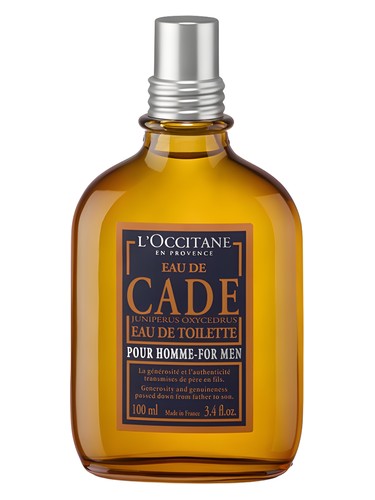
The first spray of Eau de Cade feels like stepping into a sun-warmed forest clearing somewhere in Provence. There''s an immediate herbal brightness—bergamot''s citrus clarity mingling with immortelle''s curious, almost curry-like sweetness—that stops short of being cheerful. This isn''t trying to wake you up or announce your arrival. Instead, it settles around you like a well-worn hiking jacket, comfortable and unpretentious. Within moments, that opening gives way to something more substantial, more grounded. The wood begins to show itself, not as a polished boardroom veneer but as something closer to actual timber: dry, aromatic, quietly confident.
The Scent Profile
Eau de Cade''s journey from skin to air follows a remarkably linear path, which in this case works entirely in its favor. The bergamot and immortelle opening provides just enough lift to keep things from feeling heavy-handed, though immortelle''s distinctive honeyed, hay-like character might catch some wearers off guard. It''s not your typical citrus burst—there''s something more contemplative here, almost meditative.
As the top notes recede, the heart reveals the fragrance''s true intentions. Cedar takes center stage, but it''s cedar rendered with unusual clarity and dryness. This isn''t the pencil-shavings sweetness you might expect; instead, it leans toward the actual wood, slightly dusty and resinous. Pink pepper weaves through, adding a gentle spiciness that reads more as texture than heat—think of it as the crack of twigs underfoot rather than anything approaching pungency.
The base is where Eau de Cade commits fully to its woody identity. Juniper brings a gin-like quality, crisp and slightly bitter in the best possible way, while labdanum adds amber-esque warmth and subtle animalic depth. Together, they create a foundation that''s both grounding and surprisingly versatile. The labdanum prevents the composition from becoming too austere, while the juniper keeps it from sliding into conventional amber territory. It''s this balance—between dry and warm, green and resinous—that gives the fragrance its distinctive character.
Character & Occasion
The community data tells a clear story: this is an autumn fragrance first and foremost, with 98% of wearers favoring it for fall. It makes perfect sense. There''s something about Eau de Cade''s combination of dry woods and aromatic herbs that mirrors the season itself—that transition from summer''s heat to winter''s chill, when the air turns crisp and everything smells faintly of smoke and fallen leaves.
Spring comes in second at 86%, and again, the logic holds. The bergamot and herbal notes give it enough freshness to work when the weather warms, though you''ll want to apply it more sparingly. Winter compatibility sits at 64%—perfectly respectable, though the fragrance might feel a touch lean during the coldest months. Summer, at 38%, is where Eau de Cade struggles most. The woody intensity and labdanum warmth can feel stifling in high heat.
This is decidedly a daytime scent, earning a perfect 100% day rating compared to just 51% for night. It lacks the heft or projection for evening events, but that''s not a flaw—it''s a design feature. This is a fragrance for long walks, weekend errands, casual office environments. It''s the scent of competence without pretension, perfect for the man who''d rather let his actions speak than his cologne.
Community Verdict
With 4.21 stars from 441 votes, Eau de Cade occupies that sweet spot of "genuinely appreciated" without tipping into hype territory. This isn''t a polarizing fragrance—there''s no avant-garde weirdness here—but neither is it so safe that it disappears. The rating suggests a composition that delivers on its promises: a well-executed woody aromatic that does exactly what it sets out to do.
The vote count itself is telling. Over 400 people have weighed in, a respectable showing that indicates steady interest beyond the initial release buzz. For a house like L''Occitane, better known for body care than haute perfumery, this level of engagement speaks to the quality of the juice itself.
How It Compares
L''Occitane positions Eau de Cade among some distinguished company. Terre d''Hermès shares that same earthy, mineral-tinged woodiness, though Hermès'' creation skews more citrus-forward and carries significantly more prestige pricing. Encre Noire by Lalique takes the woody concept to its darkest extreme—brooding vetiver where Eau de Cade opts for approachable cedar.
Closer to home, L''Occitane''s own Eau de Vétyver offers a natural comparison point, trading cedar for vetiver''s greener, grassier character. Guerlain''s Vetiver represents the classic benchmark of the category, while La Nuit de l''Homme''s inclusion suggests shared spicy-aromatic DNA, though the YSL leans decidedly more sensual and evening-appropriate.
What sets Eau de Cade apart is its unpretentious clarity. It doesn''t try to reinvent woody aromatics or make grand artistic statements. It simply executes the theme with quality materials and smart restraint.
The Bottom Line
Eau de Cade deserves its 4.21-star rating. This is a fragrance that understands its assignment and completes it with quiet confidence. For men seeking a reliable woody scent that won''t empty the wallet or demand constant attention, it''s an excellent choice. The performance is moderate—expect 4-6 hours with soft projection—but that suits the intimate, personal nature of the composition.
Consider this if you''re drawn to the idea of Terre d''Hermès but find it too austere, or if you want something woodier than your average fresh scent without crossing into full-on forest floor territory. It''s ideal for the man who appreciates natural materials, Mediterranean landscapes, and fragrances that suggest rather than announce. Just remember: this is a cool-weather companion best saved for daylight hours when its dry, aromatic character can truly shine.
AI-generated editorial review