First Impressions
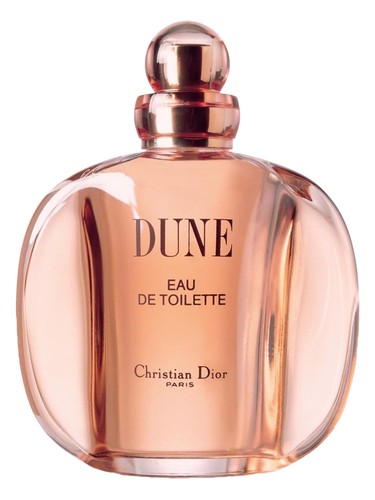
The first spray of Dune is like stepping onto sunbaked sand at the edge of the ocean—immediately disorienting, powerfully elemental, and utterly unlike the perfume counter fare surrounding it. Brazilian rosewood and aldehydes announce themselves with an intensity that borders on confrontational, their woody-waxy presence softened only marginally by mandarin orange and bergamot. This isn''t a gentle introduction; it''s a statement. The peony adds an unexpected floralcy that feels almost out of place in this arid landscape, yet somehow essential. Within moments, you understand why this 1991 creation from Dior has spent over three decades dividing opinion—it demands something from its wearer, a willingness to surrender to its particular vision of beauty.
The Scent Profile
Dune''s architecture reveals itself as unmistakably woody—the data doesn''t lie at 100% on this accord—but it''s the amber foundation at 67% that gives this composition its golden, resinous warmth. The opening''s assertive Brazilian rosewood-aldehyde pairing gradually yields to a heart that surprises with its lush florality. Lily, ylang-ylang, wallflower, jasmine, and rose create an oasis in the midst of that parched landscape, their presence more textural than traditionally pretty. These aren''t the dewy florals of a garden perfume; they''re sun-dried, almost papery, with the ylang-ylang contributing a creamy richness that prevents the composition from becoming too austere.
The true magic happens in the base, where amber, sandalwood, and benzoin form a triumvirate of warmth that could easily veer into heaviness if not for the grounding presence of oakmoss and patchouli. The vanilla here reads subtle rather than gourmand, a whisper of sweetness that plays against the balsamic qualities (44% accord strength) and the warm spicy notes (42%) that pulse through the composition. Musk anchors everything with a skin-like intimacy, while that sandalwood—so central to the woody character—maintains its presence from opening to drydown. The powdery accord at 39% manifests not as old-fashioned face powder but as the fine dust of desert sand, somehow both soft and abrasive.
Character & Occasion
The seasonal data tells a fascinating story: Dune scores 97% for fall, making it nearly perfect for those golden-lit, crisp-aired months. Yet it also claims 70% for summer, a testament to its ability to evoke heat without wilting under it. Winter receives a respectable 64%, while spring lags at 46%—this isn''t a fragrance that celebrates renewal so much as endurance and timelessness.
Its day-to-night versatility (100% day, 68% night) positions it primarily as a daytime companion, though its complexity and intensity certainly allow for evening wear. This is a perfume best appreciated in personal settings rather than crowded offices. It requires space—both physical and conceptual—to breathe and be appreciated. Those seeking a crowd-pleaser should look elsewhere; Dune speaks to the wearer first, observers second.
The fragrance suits experienced collectors who appreciate bold, unconventional compositions. It''s not an easy wear, and its challenging nature means it won''t flatter everyone. But for those who connect with its particular vision—that intersection of oceanic air and desert heat—it becomes irreplaceable.
Community Verdict
The community sentiment sits at 7.2 out of 10, reflecting genuine appreciation tempered by real reservations. Based on 38 opinions from dedicated fragrance enthusiasts, Dune emerges as a respected but polarizing creation. The praise is specific and passionate: users celebrate its unique ability to authentically evoke beaches and deserts, calling out its distinctive scent profile that remains unmatched decades later. Vintage versions and extrait concentrations earn special acclaim for exceptional longevity—12+ hours is frequently cited—and the complex progression through its development keeps wearers engaged.
The criticisms are equally pointed. Many find the opening one-dimensional and overpowering, requiring patience to appreciate what follows. A recurring complaint centers on reformulation: modern versions reportedly lack the earthiness and overall quality that made vintage Dune legendary. The fragrance''s difficulty and intensity mean it doesn''t suit everyone, regardless of its objective quality. Interestingly, the male version receives particular criticism for poor longevity and performance, suggesting significant differences between the gender expressions.
The consensus? This is summer and hot weather perfumery at its most ambitious, designed for personal enjoyment rather than social situations, best appreciated by those who already love bold, unconventional scents.
How It Compares
Dune occupies rarefied territory alongside Chanel''s Coco Eau de Parfum, Tom Ford''s Black Orchid, and Guerlain''s Samsara and Shalimar—all complex, opulent fragrances that reward patience and understanding. While these siblings share certain amber and woody qualities, Dune distinguishes itself through that peculiar desert-oceanic duality. Where Shalimar leans into vanilla and incense, and Black Orchid embraces gothic opulence, Dune remains determinedly austere despite its richness. It''s closest perhaps to Cacharel''s LouLou in its unapologetic intensity, though Dune trades sweetness for minerality.
The Bottom Line
With 12,759 votes averaging 3.99 out of 5 stars, Dune occupies an interesting position: widely sampled, genuinely respected, but not universally loved. This rating accurately reflects its nature—a perfume of undeniable quality and artistry that simply won''t work for everyone.
Should you seek out vintage formulations? If you can afford them and the quest appeals to you, absolutely. The community''s enthusiasm for older versions suggests meaningful differences. But even modern Dune, with its reported shortcomings, offers something increasingly rare: a genuine point of view, executed without compromise.
Try Dune if you appreciate perfumes that challenge rather than comfort, if you''re drawn to woody-amber compositions with backbone, or if you''ve ever wanted to smell like the exact moment where desert sand meets salt spray. Skip it if you prefer immediate gratification, office-friendly subtlety, or traditionally pretty florals. At three decades old, Dune remains defiantly itself—take it or leave it, but don''t expect it to change for you.
AI-generated editorial review