First Impressions
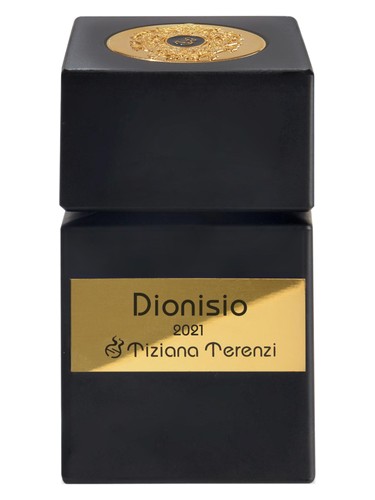
Spray Dionisio and you''re immediately enveloped in a cloud of opulent vanilla that announces itself with unabashed confidence. This is not the polite, whisper-soft vanilla of your grandmother''s perfume collection. Tiziana Terenzi''s 2018 feminine creation opens with the kind of projection that turns heads—whether in admiration or alarm depends entirely on your tolerance for gourmand excess. There''s something almost ceremonial about this first encounter, as if you''ve just walked into an ancient temple where incense mingles with something darker, more primal. The fragrance wastes no time establishing its intentions: this is a scent that demands attention, unapologetically sweet yet shadowed by something indefinably wild.
The Scent Profile
Without specified top, heart, or base notes in the official composition, Dionisio reveals itself through its dominant accords—and what a revealing it is. The vanilla accord sits at the throne with 100% intensity, but this isn''t a simple sugar-bomb. It''s a complex, toasted vanilla that community members describe as reminiscent of caramelized marshmallows, their edges just beginning to char over an open flame.
Supporting this vanilla dominance is a robust 93% amber accord that lends warmth and golden richness to the composition. The interplay between these two creates the fragrance''s gourmand backbone, but here''s where Dionisio takes an unexpected turn: a substantial 72% musky accord introduces skin-like intimacy, while 68% oud and equally potent animalic notes inject an edge that separates this from conventional dessert fragrances.
The powdery accord, weighing in at 66%, softens the composition''s edges, though "soften" is a relative term when discussing a fragrance this bold. As Dionisio develops on skin, that salty ambergris undertone emerges—the element that divides wearers into devoted fans and disappointed detractors. What starts as a captivating foodie experience can evolve into something more challenging. Some find it intriguing; others detect what they describe as burnt popcorn or even cardboard in the dry-down, a polarizing metamorphosis that makes batch variation a significant concern.
Character & Occasion
The seasonal data tells a clear story: Dionisio is winter''s child. With 100% winter suitability and 99% fall compatibility, this is undeniably a cold-weather fragrance. Spring shows 48% viability—possible during cooler evenings, perhaps—while summer''s 23% rating confirms what your nose already knows: this is far too heavy for heat.
The day/night profile proves equally revealing. While Dionisio scores 51% for daytime wear, it achieves 100% night suitability. This is a fragrance that comes alive under artificial light, in intimate settings where its projection can work magic rather than overwhelm. Think candlelit dinners, winter galas, or evenings when you want to leave an indelible impression. The 4.1/5 rating from 479 voters suggests this fragrance has found its audience, though that audience is selective.
This is a scent for collectors who appreciate challenging compositions, those who view fragrance as art rather than mere accessory. It''s for the person who wants to smell different, distinctive, memorable—even if that memory might be complicated.
Community Verdict
The Reddit r/fragrance community delivers a mixed verdict with a 5.5/10 sentiment score based on six opinions—a numerical manifestation of Dionisio''s polarizing nature. The praise centers on its undeniable strengths: projection that broadcasts your presence across rooms, longevity that lasts through the longest winter nights, and a unique foodie vanilla profile unlike anything else in your collection.
However, the criticisms are equally substantial. Batch variation emerges as a recurring complaint, with performance reportedly varying significantly between bottles—a serious concern at this price point. That salty, dirty ambergris undertone that some find intriguing others describe as genuinely off-putting. Most damning is the dry-down issue: multiple community members report that captivating opening devolving into unpleasant burnt popcorn or cardboard notes, a journey from promising to problematic that renders the fragrance unwearable for some.
The consensus positions Dionisio as best suited for fragrance collectors seeking genuinely unique gourmand experiences, those who prefer bold fragrances that challenge conventional palatability, and evening occasions where its intensity can be an asset rather than a liability.
How It Compares
Dionisio finds itself in prestigious company, with similarities noted to Grand Soir by Maison Francis Kurkdjian, Love Don''t Be Shy by By Kilian, and Ani by Nishane—all powerhouse vanilla-amber compositions. The comparison to Interlude Man by Amouage suggests shared oud and incense characteristics, while the Baccarat Rouge 540 Extrait connection points to that similar sweet-yet-sophisticated ambition.
Where Dionisio distinguishes itself is in its willingness to venture into stranger territory. While those comparisons maintain more conventional wearability, Dionisio pushes boundaries—sometimes successfully, sometimes not.
The Bottom Line
Dionisio is a fragrance that rewards the adventurous while potentially punishing the unprepared. Its 4.1/5 rating tells part of the story: this is a well-crafted composition that resonates with many. But the community sentiment reveals the fuller picture—a fragrance whose batch inconsistency and challenging dry-down create legitimate concerns.
Should you sample it? Absolutely, especially if you collect niche fragrances or crave unique vanilla compositions. Should you blind-buy? Absolutely not. The batch variation alone demands testing your specific bottle, while the polarizing dry-down means you need hours with this fragrance, not minutes at a counter.
For those whose skin chemistry harmonizes with Dionisio''s particular alchemy, this could be a winter signature. For others, it might remain an interesting experiment that ultimately disappoints. Either way, it''s a fragrance that refuses to be ignored—which is, perhaps, exactly what Tiziana Terenzi intended.
AI-generated editorial review