First Impressions
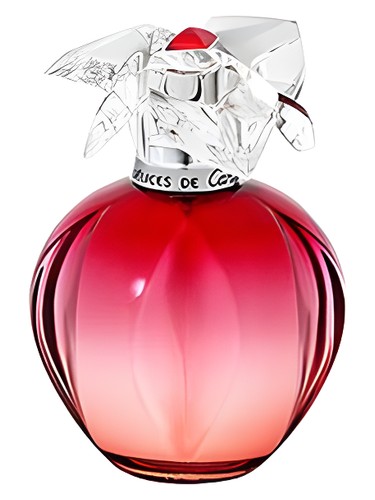
The first spray of Delices de Cartier Eau Fruitee announces itself with an unmistakable brightness—a burst of rhubarb that's both tart and sweet, immediately tempered by the sunny warmth of mandarin orange and the refined sharpness of bergamot. This isn't the saccharine fruit cocktail you might expect from a fragrance bearing "fruitee" in its name. Instead, Cartier opts for something more nuanced: a citrus-forward opening that feels like biting into a fresh stalk of rhubarb on a spring morning, complete with that characteristic mouth-puckering quality that makes you lean in for another encounter. The green, almost vegetable-like quality of rhubarb gives this 2007 release an unexpected sophistication, preventing it from sliding into the overly sweet territory that plagued many fruity-florals of its era.
The Scent Profile
The composition's citrus dominance—rated at a perfect 100% in its accord profile—sets the stage for everything that follows. That opening trio of rhubarb, mandarin, and bergamot creates a shimmering, almost effervescent quality that lingers longer than you'd expect from typical top notes. The rhubarb, in particular, proves to be the star player, offering both tartness and a peculiar greenness that keeps the fragrance from veering too sweet.
As the citrus begins its inevitable fade, the heart reveals itself with cherry blossom and jasmine. This floral core, registering at 98% in the accord analysis, feels delicate rather than heavy. The cherry blossom brings a soft, powdery sweetness—more suggestion than statement—while the jasmine adds just enough indolic richness to remind you this is a proper perfume, not a body mist. There's an airiness here, a translucent quality that allows the remaining citrus notes to peek through. The fruity accord at 82% manifests primarily through the interplay between the opening rhubarb and these blossoms, creating something that reads as "spring orchard" rather than fruit basket.
The base of amber and sandalwood provides a gentle landing, offering just enough warmth to keep the fragrance from disappearing entirely into the ether. With amber registering at 59% in the accord profile, it's present but restrained—a soft glow rather than a bold statement. The sandalwood adds a creamy woodiness that grounds the floral elements without weighing them down. This foundation explains why the fragrance maintains relevance into fall (49% seasonal suitability), even as its true homes remain spring (62%) and summer (57%).
Character & Occasion
This is unequivocally a daylight fragrance—the data confirms it with a perfect 100% day rating versus just 38% for night. And that makes complete sense. Delices de Cartier Eau Fruitee possesses the bright, uncomplicated cheerfulness of morning light streaming through windows. It's a fragrance for brunch dates, outdoor markets, spring cleaning with the windows open, or those first warm days when you've packed away your winter coat but still need a light cardigan.
The seasonal breakdown tells an instructive story: strongest in spring, nearly as compelling in summer, dropping off somewhat in fall, and reaching only 34% suitability for winter. This is a warm-weather companion through and through, most at home when flowers are blooming and citrus feels like a natural extension of the air around you.
Who should wear it? The composition skews decidedly feminine, though not oppressively so. It's particularly well-suited to those who appreciate freshness but find purely aquatic or ozonic scents too cold or synthetic. If you're someone who gravitates toward the "your skin but better" category but wants something with more personality than a simple citrus cologne, this delivers.
Community Verdict
With 353 votes landing on a 3.53 out of 5 rating, Delices de Cartier Eau Fruitee occupies that interesting middle ground: appreciated rather than adored, liked rather than loved. This isn't a fragrance inspiring passionate devotion or heated debate. Instead, it seems to win approval as a reliable, pleasant option—exactly the kind of scent you reach for when you want to smell nice without making a statement. That rating suggests competence and wearability rather than groundbreaking artistry, which, for a daytime spring fragrance from 2007, feels about right.
How It Compares
The comparison to fragrances like Lancôme's Miracle and Chanel's Coco Mademoiselle places Delices de Cartier Eau Fruitee in prestigious company, though it's worth noting these references span quite different olfactory territories. The connection likely stems from shared citrus brightness and modern femininity rather than note-for-note similarity. Against Miracle's crisp magnolia-forward profile, Cartier's offering feels fruitier and less reserved. Compared to the patchouli-enriched sophistication of Coco Mademoiselle, it reads as younger and more straightforward.
The mention of Flowerbomb and Euphoria in the similar fragrances list seems to reference the era and market position rather than scent similarity—all are feminine releases from the mid-2000s occupying different facets of the floral-fruity spectrum.
The Bottom Line
Delices de Cartier Eau Fruitee won't revolutionize your fragrance wardrobe, but that's not really its ambition. This is a well-executed spring and summer daytime scent that does exactly what it sets out to do: provide bright, cheerful wearability with enough Cartier refinement to elevate it above drugstore alternatives. The rhubarb note gives it personality, the citrus-floral balance keeps it versatile, and the gentle base prevents it from disappearing too quickly.
The 3.53 rating reflects its nature: solidly good rather than extraordinary. For someone building a rotation of seasonal fragrances or looking for a reliable warm-weather option that won't overwhelm the office or outdoor gatherings, this deserves consideration. Those seeking their signature scent or a challenging, artistic composition should look elsewhere. But if you want something that captures the essence of a spring morning without demanding too much attention, Delices de Cartier Eau Fruitee makes a compelling case for itself.
AI-generated editorial review