First Impressions
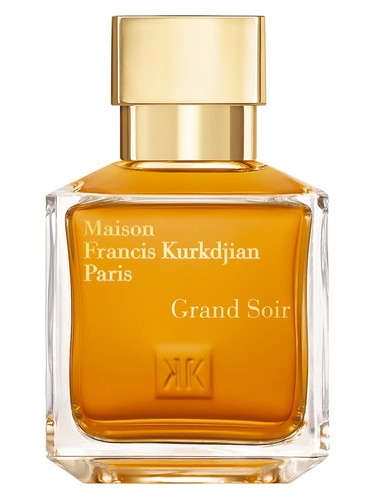
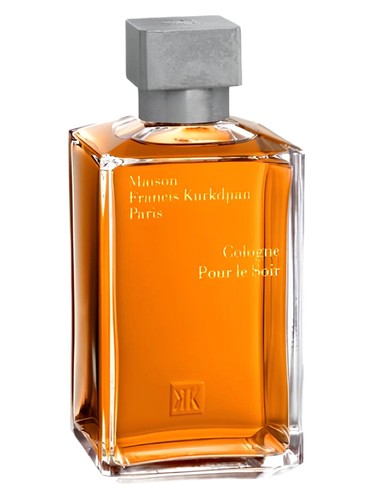
The name is a lie—or perhaps a joke, a wink from Francis Kurkdjian himself. "Cologne for the Evening" sounds like a contradiction, and the moment this fragrance touches skin, you understand the intentional irony. This is no sparkling citrus splash, no bracing fougère meant to freshen and disappear. Instead, what emerges is a wall of amber so commanding, so unapologetically rich, that it redefines what masculine perfumery can be. The opening is immediate and enveloping: honeyed warmth shot through with smoke, as if someone drizzled wildflower nectar over smoldering incense. There''s a thickness here, a textural quality that feels almost tactile, like running your fingers through liquid gold that''s been left too close to a fire.
This is Kurkdjian operating at full confidence in 2009, just two years after founding his eponymous house. Where others might hedge their bets with accessibility, he committed fully to an oriental vision that wears its masculine designation with quiet subversion—there''s rose here, soft and dignified, threading through the amber like a secret.
The Scent Profile
Without specific note breakdowns to guide us, we must read Cologne Pour Le Soir through its dominant accords, and they tell a remarkably clear story. The amber accord registers at maximum intensity, forming the structural foundation upon which everything else is built. This isn''t the clean, laundry-musk amber of modern sport fragrances; it''s the real thing, resinous and ancient, with the kind of depth that suggests labdanum, benzoin, and vanilla working in concert.
The honey accord follows at 61%, and this is where the fragrance reveals its sensual core. It''s not literal honey—no sticky sweetness or confectionery sugar—but rather the animalic warmth that honey suggests: beeswax, propolis, that faintly musky quality of the hive itself. Combined with the warm spicy notes (48%), you get the sense of honey that''s been infused with cinnamon bark and perhaps a whisper of saffron, creating complexity rather than simple sweetness.
The rose accord at 40% is crucial. In lesser hands, rose in a masculine fragrance can read as tentative or apologetic. Here, it''s woven so thoroughly into the amber-honey matrix that it manifests as a dusky, slightly leathery quality—think of dried rose petals pressed between the pages of an old book, their color deepened to burgundy, their sweetness concentrated and nearly savory.
The smoky and balsamic notes (39% and 36% respectively) emerge more clearly as the fragrance settles. There''s an incense-like quality, a hint of church frankincense or perhaps the vegetal smoke of burning wood. The balsamic aspect adds a slightly medicinal edge, like tolu balsam or Peru balsam, grounding the sweetness with something more austere and contemplative.
The evolution is less about distinct phases and more about slowly rotating facets—the amber remains constant while honey, spice, rose, and smoke take turns catching the light.
Character & Occasion
The seasonal data speaks volumes: fall registers at 100%, winter at 95%, while spring and summer trail at 30% and 20%. This is a cold-weather creature through and through, designed for those months when darkness comes early and the air demands something substantial. Wearing this in July heat would be an act of defiance; wearing it in October feels like coming home.
The day/night split is equally revealing: 70% day versus 84% night. While it can certainly be worn during daylight hours—particularly in professional settings where its sophistication reads as confidence rather than aggression—it truly awakens after sunset. This is a fragrance for dinner reservations, gallery openings, late conversations over wine. It has presence without being loud, warmth without being cloying.
As for who should wear it: the "masculine" designation is accurate in its traditional vernacular, but anyone drawn to rich oriental fragrances would wear this beautifully. It requires a certain comfort with attention, a willingness to be remembered.
Community Verdict
With a rating of 4.09 out of 5 from 435 votes, Cologne Pour Le Soir has clearly found its audience. This isn''t a polarizing fragrance that people either worship or despise; instead, it maintains strong approval across a substantial voter base. That consistency suggests a well-executed vision—people know what they''re getting, and they appreciate the craftsmanship. The relatively modest vote count compared to some mainstream fragrances also indicates this remains something of a connoisseur''s choice, discovered by those willing to look beyond the obvious.
How It Compares
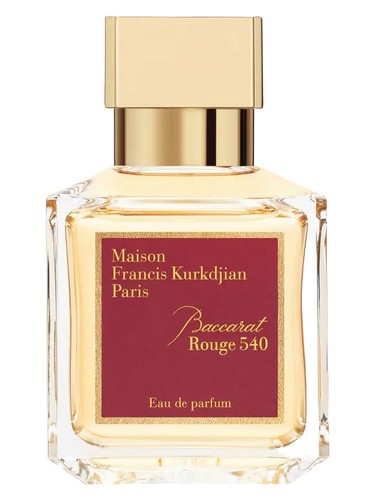
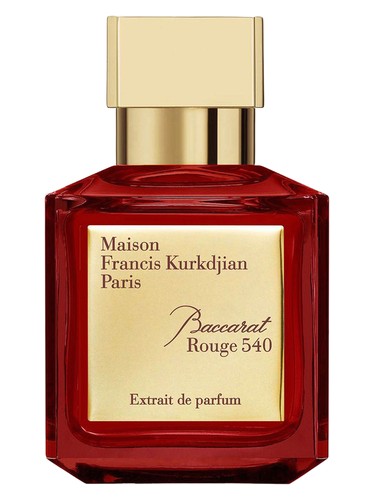
The comparison fragrances reveal Cologne Pour Le Soir''s pedigree. It shares DNA with Kurkdjian''s own Absolue Pour le Soir, presumably a more concentrated or intensified version of the same theme. The presence of Amouage''s Jubilation XXV Man and Serge Lutens'' Chergui places it firmly in the amber-oriental category, while Portrait of a Lady and Ambre Sultan confirm the sophisticated, unisex-leaning rose-amber territory it occupies.
What distinguishes it is perhaps the balance—it''s warmer than Portrait of a Lady, less overtly Middle Eastern than Ambre Sultan, more wearable than Jubilation XXV''s baroque complexity. It occupies a sweet spot: undeniably luxurious but not overwhelming, distinctive but not strange.
The Bottom Line
Cologne Pour Le Soir is that rare creation: a fragrance that knows exactly what it wants to be and executes that vision with precision. At 4.09/5, it''s not claiming perfection, but it''s earning consistent admiration from those who wear it. This is a fragrance that rewards commitment—it''s not designed for sampling in a department store under fluorescent lights, but for living with through a season''s worth of autumn evenings.
Who should try it? Anyone who loves amber fragrances but wants something more nuanced than sweet vanilla bombs. Anyone drawn to the romance of traditional perfumery but living in the modern world. Anyone who understands that sometimes the best cologne for evening is the one that isn''t a cologne at all.
AI-generated editorial review