First Impressions
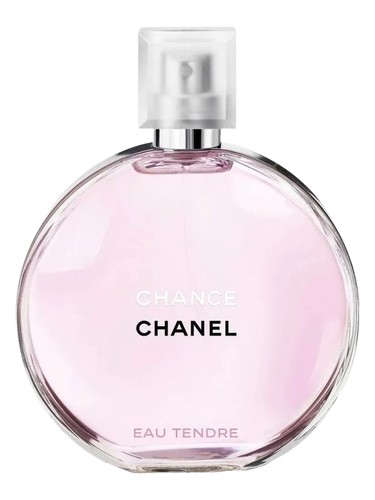
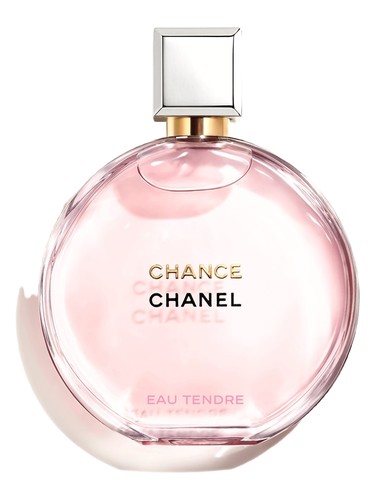
The first spritz of Chance Eau Tendre Eau de Parfum arrives like a whispered confession—gentle, surprisingly radiant, and utterly disarming. There''s an immediate brightness from the grapefruit, but it''s softened by the quince, a fruit note that feels almost deliberately uncommon in an industry saturated with predictable citruses. Together, they create an opening that''s both familiar and subtly unexpected, like catching a stranger''s perfume in passing and realizing it''s exactly what you''ve been searching for. This is tenderness with a backbone, sweetness with sophistication, and it announces itself without ever demanding attention.
The dominant rose accord—registering at a full 100% according to scent mapping—doesn''t reveal itself immediately. Instead, Chanel orchestrates a patient unveiling, allowing the citrus and fruity elements (90% and 88% respectively) to establish the fragrance''s luminous character before the floral heart emerges. It''s this restraint that marks the Eau de Parfum concentration as something more considered than its lighter counterparts.
The Scent Profile
The quince-grapefruit pairing in the opening moments deserves particular attention. While grapefruit has become something of a cliché in contemporary feminine fragrances, the addition of quince—with its honeyed, slightly tart profile—transforms what could have been a one-dimensional citrus burst into something more textured. The effect is reminiscent of sunlight filtering through sheer curtains: bright but diffused, warm but never heavy.
As the fragrance settles into its heart, rose and jasmine intertwine in a dance that feels both classic and decidedly modern. This isn''t the heady, vintage rose of old-school French perfumery, nor is it the watery, apologetic rose of many contemporary releases. Instead, Chanel strikes a middle path—the rose is present, even dominant, but it''s rendered transparent by the jasmine and anchored by that persistent citrus glow from the top notes. The floral accord, measured at 86%, never overwhelms; it simply persists with quiet confidence.
The base is where Chance Eau Tendre EDP distinguishes itself from fleeting summer fragrances. White musk provides a soft, skin-like foundation that registers at 87% in the musky accord data. This isn''t the sharp, synthetic musk of budget fragrances, but rather a plush, almost cashmere-like finish that allows the rose and citrus to linger without turning soapy or cloying. The sweetness—present at 75%—is calibrated precisely to enhance rather than dominate, creating a fragrance that dries down to something genuinely tender.
Character & Occasion
The data tells an unambiguous story: this is a spring fragrance first and foremost (100%), with substantial summer appeal (84%). The numbers drop precipitously for fall (37%) and winter (23%), and honestly, this makes perfect sense. Chance Eau Tendre EDP is designed for warmth and daylight—it thrives in settings where its delicate construction can breathe and its citrus-rose brightness can shine without competing against heavy clothing or cold air.
The day-versus-night split is even more pronounced: 100% day wear, a mere 26% night. This is not a fragrance for cocktail dresses and dim lighting. It''s for morning meetings, weekend brunches, garden parties, and long afternoon walks. There''s an inherent optimism to its composition that feels almost out of place after dark.
Who is this for? The feminine classification is clear, but more specifically, this is for someone who wants to smell polished without appearing to have tried too hard. It''s for the person who appreciates French elegance but doesn''t need to announce it. The broad appeal—evidenced by over 4,000 community votes averaging 4.22 out of 5—suggests this fragrance crosses age demographics with unusual ease.
Community Verdict
The Reddit fragrance community awards Chance Eau Tendre EDP a positive sentiment score of 8.2 out of 10, based on nine documented opinions. What''s particularly telling is the nature of the praise: users consistently cite formula consistency as a major strength. In an era when reformulation anxiety haunts nearly every discussion of established fragrances, the community''s confidence that "the EDP maintains its signature scent over time" carries significant weight.
Multiple users identify it as a personal favorite, with the fragrance earning enough affection to warrant "keeping and re-enjoying" even after personal setbacks (including post-COVID olfactory changes). This speaks to an emotional connection that transcends mere pleasant smell—people form attachments to this fragrance.
The cons are notable primarily for what they reveal about concentration differences: the EDT and EDP "smell noticeably different from each other," a reminder that Chance Eau Tendre is not simply one formula at different strengths. The community also documented cases where post-COVID anosmia rendered the fragrance temporarily unrecognizable—though significantly, users attributed this to their own changed perception rather than product reformulation.
Recommended uses include regular daily wear and gift-giving occasions, both of which align perfectly with the fragrance''s accessible elegance and broad seasonal applicability.
How It Compares
Chanel positions Chance Eau Tendre EDP in competitive territory alongside Miss Dior Blooming Bouquet, J''adore, Narciso Rodriguez For Her, and Chloé Eau de Parfum. Within this constellation of modern feminine classics, Chance Eau Tendre distinguishes itself through its citrus-rose balance—less overtly floral than Miss Dior Blooming Bouquet, more fruit-forward than Narciso Rodriguez For Her''s musky minimalism.
Interestingly, the data also lists the original Chance Eau Tendre (presumably the EDT) as a similar fragrance, reinforcing the community observation that the concentrations differ substantially. The EDP emerges as the more developed, complex iteration of the Chance Eau Tendre concept—deeper in its musk, more persistent in its rose.
The Bottom Line
A 4.22 rating from over 4,000 votes suggests Chance Eau Tendre Eau de Parfum has achieved something increasingly rare: genuine consensus appeal without compromising distinctiveness. This is not a revolutionary fragrance, nor does it pretend to be. Instead, it perfects a particular vision of contemporary French femininity—bright, tender, polished, and utterly wearable.
The value proposition is solid. While Chanel commands premium pricing, the formula consistency and community loyalty suggest this is a fragrance that delivers on its promises season after season. For those seeking a dependable spring and summer signature that won''t alienate colleagues or fade into complete anonymity, this represents a safe but satisfying investment.
Who should try it? Anyone drawn to rose fragrances but intimidated by their potential heaviness. Anyone who loves citrus but wants more sophistication than a simple cologne. Anyone building a wardrobe who needs a reliable daytime option that works from March through September.
Skip it if you''re seeking drama, provocation, or cold-weather comfort. This is tenderness as advertised—and sometimes, that''s exactly what''s needed.
AI-generated editorial review