First Impressions
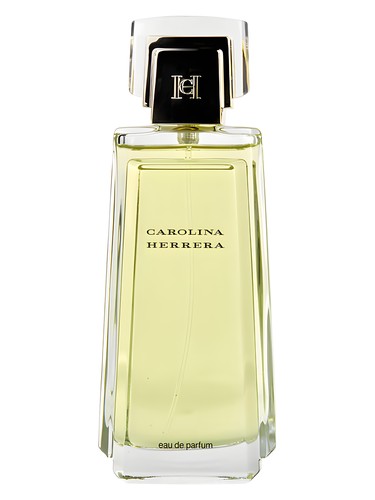
The first spray of Carolina Herrera''s eponymous 1988 fragrance announces itself with the confidence of a woman descending a grand staircase in full evening regalia. There''s nothing apologetic here—just the bold, unapologetic statement of apricot-tinged green notes meeting orange blossom in a bright, almost brash opening. Brazilian rosewood adds an exotic, slightly medicinal edge, while bergamot attempts to cut through the density with citrus clarity. This is not a fragrance that whispers; it''s the olfactory equivalent of silk taffeta rustling across marble floors, demanding attention from the first moment.
The opening feels decidedly of its era—that late ''80s moment when power dressing met power fragrances, when more was more, and restraint was for the timid.
The Scent Profile
As the initial green brightness settles, Carolina Herrera reveals its true character: a white floral composition of almost architectural proportions. The heart is where this fragrance lives and breathes, dominated by Indian tuberose at a potency that registers at 42% in its accord profile—a significant presence that doesn''t apologize for its heady, narcotic nature.
But tuberose doesn''t stand alone. It''s surrounded by a veritable bouquet: jasmine both standard and Spanish varieties, ylang-ylang contributing its banana-like sweetness, narcissus adding green-floral depth, honeysuckle providing nectar-sweet tendrils, hyacinth bringing aqueous texture, and lily-of-the-valley offering its clean, spring-like facets. At 100% white floral accord dominance, this is a maximalist composition that embraces abundance over minimalism.
The base emerges gradually, anchoring all that floral exuberance with animalic depth. Civet and musk provide that vintage, skin-like quality—the kind of raw, feral undertone that modern reformulations often lack. At 38% animalic accord, there''s a pulsing warmth here, something almost carnal beneath the garden of white flowers. Amber adds resinous sweetness, while oakmoss, sandalwood, vetiver, and cedar create a woody foundation (33% woody accord) that prevents the composition from floating away into pure floral abstraction.
This is a fragrance built in the classic pyramid style, with clear delineation between phases, yet it maintains remarkable tenacity—those base notes ensuring the scent evolves over hours rather than minutes.
Character & Occasion
The seasonal data tells a clear story: Carolina Herrera is a cold-weather creature. With 95% winter suitability and 85% for fall, this is a fragrance that thrives when temperatures drop and heavier compositions can bloom without becoming oppressive. Spring registers at 69%—still viable, particularly for evening occasions—but summer''s 34% rating confirms what the nose already knows: this density needs cool air.
The day/night split is equally revealing. While it scores 82% for daytime wear, it reaches 100% for evening use. This is fundamentally a night fragrance, designed for candlelit dinners, opera boxes, and formal affairs. The animalic base and tuberose dominance create an intimacy that works best in enclosed spaces and closer quarters. During the day, it would need a lighter hand—perhaps a single spray rather than the generous application it might invite.
Who is this for? The woman who isn''t afraid of presence, who remembers (or romanticizes) the era when fragrances announced your arrival before you entered the room. It''s decidedly feminine in its construction, speaking the language of classic perfumery rather than modern gender-neutral minimalism.
Community Verdict
The available community data presents an interesting gap—while the fragrance holds a respectable 3.83 out of 5 rating from 2,008 votes on the broader platform, specific Reddit discussions don''t surface substantive conversation about this particular scent. This silence is itself telling; Carolina Herrera by Carolina Herrera exists in a peculiar space where it''s known but not currently discussed, worn but perhaps not passionately defended or debated.
The absence of active community dialogue suggests this may be a fragrance that has aged into a quieter relevance—respected rather than celebrated, maintained in collections but not necessarily reaching for first.
How It Comparisons
The similar fragrances list reads like a who''s who of powerhouse florals: Amarige by Givenchy, Organza by Givenchy, Poème by Lancôme—all sharing that unapologetic white floral DNA. The inclusion of Anais Anais by Cacharel suggests the romantic white floral lineage, while Alien by Mugler indicates that modern tuberose lovers might find kinship here, albeit in a more classically structured form.
Where Carolina Herrera distinguishes itself is in its balance of green notes (41% accord) with the white florals—there''s a crispness that prevents it from becoming purely creamy or dessert-like. The animalic base also sets it apart from cleaner interpretations of the white floral theme, giving it an edge that more sanitized modern compositions lack.
The Bottom Line
Carolina Herrera by Carolina Herrera is a fragrance that demands context. At 3.83 stars from over 2,000 ratings, it occupies that interesting middle ground—neither universally adored nor dismissed, but rather appreciated by those who understand what it''s trying to do. This is vintage perfumery at near-full strength, a reminder of when fragrances wore their complexity and power openly.
Should you try it? If you''re drawn to tuberose, if you appreciate animalic depth, if you''re curious about ''80s perfumery before reformulation dulled its edges—absolutely. It''s best experienced in cool weather, applied sparingly, worn at night when its full character can unfold without overwhelming. This isn''t a everyday signature scent for most modern wearers, but it''s a compelling piece of olfactory history that still has something to say to those willing to listen.
AI-generated editorial review