First Impressions
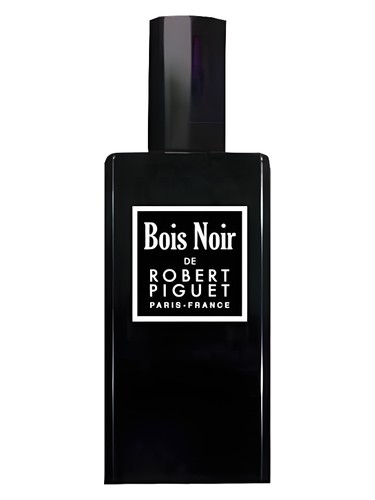
The opening of Bois Noir announces itself with the kind of confident restraint that feels almost radical in contemporary perfumery. There''s no fruity greeting, no sparkle of citrus to soften the blow—just the immediate, unyielding presence of wood. Guaiac and cedar arrive together, their resinous depth creating a first impression that''s as severe as it is beautiful. This is a fragrance that shakes your hand with a firm grip, one that makes you wonder if Robert Piguet''s 2012 creation might be the house''s most daring departure from their historically glamorous aesthetic. Where other "feminine" fragrances tiptoe around masculinity, Bois Noir strides directly into traditionally male territory without apology or explanation.
The Scent Profile
The structure of Bois Noir reads almost like a meditation on density. Those opening notes of guaiac wood and cedar don''t so much evolve as they deepen, adding layers rather than transforming. The guaiac brings its characteristic smoky, almost medicinal quality—think old libraries and worn leather chairs—while the cedar provides a drier, more linear woodiness that keeps the composition from becoming too heavy.
As the fragrance settles into its heart, sandalwood and patchouli enter the conversation. The sandalwood here isn''t the creamy, soft variety that dominates contemporary releases; it reads more austere, adding a subtle milkiness that tempers rather than sweetens. The patchouli, meanwhile, reinforces the earthy foundation without veering into head-shop territory. Together, these middle notes create a remarkably unified woody accord—the fragrance''s dominant character at 100%—that refuses to fragment into distinct phases.
The base is where Bois Noir reveals its warmer intentions. Labdanum brings that characteristic amber sweetness (43% of the overall impression), adding a balsamic, slightly animalic quality that humanizes all that austere wood. Resins deepen the resinous qualities already present from the opening, while musk provides a subtle skin-like quality that grounds the composition. There''s a powdery element (25%) that emerges in the dry down, likely from the interplay of woods and musk, creating an almost talc-like softness that feels surprisingly intimate given the fragrance''s otherwise stark character.
Character & Occasion
Bois Noir''s versatility is perhaps its most surprising quality. The data shows it performing equally across all seasons, and there''s a logic to this that becomes clear after wearing it. In winter, its woody depth feels protective and cocooning; in summer, that same woody quality reads as cooling shade rather than oppressive warmth. The amber and balsamic elements (24%) provide just enough richness to carry through cold weather without making the fragrance feel heavy in heat.
The day versus night data is notably neutral, suggesting a fragrance that doesn''t conform to typical wearing occasions. This makes sense—Bois Noir isn''t trying to seduce or impress in conventional ways. It''s introspective rather than projective, more suited to moments when you''re dressing for yourself rather than for others. Think gallery openings rather than cocktail parties, solitary walks rather than dinner dates.
As for who this is for: despite its feminine designation, Bois Noir feels resolutely unisex, perhaps even leaning slightly masculine in its presentation. It''s for someone comfortable with ambiguity, someone who appreciates fragrance as an art form rather than merely an accessory.
Community Verdict
Here''s where things get interesting: the broader community has awarded Bois Noir a solid 4.12 out of 5 rating based on 590 votes, suggesting genuine appreciation from those who''ve experienced it. However, the Reddit fragrance community discussion available for this review doesn''t actually contain specific commentary on Bois Noir itself. This absence is telling in its own way—the fragrance seems to exist in a curious blind spot, respected enough to garner hundreds of ratings but not quite provocative enough to generate heated discussion. It''s the kind of quiet excellence that risks being overlooked in a market obsessed with the next attention-grabbing release.
How It Compares
The comparison fragrances paint a revealing picture of Bois Noir''s territory. Sharing kinship with L''Artisan Parfumeur''s Timbuktu and Lalique''s Encre Noire places it firmly in the realm of serious, uncompromising woody compositions. The Tauer connection (L''Air du Desert Marocain) suggests a similar commitment to natural-smelling resinous depth, while Serge Lutens'' Fille en Aiguilles points to that same willingness to embrace austere beauty. The Tom Ford Oud Wood comparison is perhaps the most illuminating—both fragrances take precious materials and present them with unusual restraint.
Where Bois Noir distinguishes itself is in its relative accessibility. It delivers the complexity of a niche composition without the challenging edges that can make some of its comparisons difficult wears. It''s severe without being confrontational, woody without being aggressively masculine.
The Bottom Line
At 4.12 out of 5 stars from nearly 600 voters, Bois Noir has earned its respect honestly. This isn''t a fragrance that will convert woody-averse wearers or those seeking immediate gratification. What it offers instead is a masterclass in restraint—a composition that proves you can create depth and interest through subtle variation rather than dramatic contrast.
The value proposition depends entirely on what you''re seeking. For collectors of woody fragrances or those who appreciate the architectural approach to perfumery, Bois Noir deserves serious consideration. It''s wearable enough for regular rotation but interesting enough to reward attention. Those new to Robert Piguet might find it an odd entry point—this house is better known for opulent florals and animalic classics—but that''s precisely what makes it worth exploring.
Should you try it? If you''ve ever found yourself drawn to the austere beauty of bare trees in winter, or if fragrances like Encre Noire intrigue you but feel too stark, Bois Noir offers a more nuanced entry into this territory. It''s a fragrance that asks you to slow down and listen rather than demanding immediate admiration—and in today''s crowded market, that quiet confidence is increasingly rare.
AI-generated editorial review