First Impressions
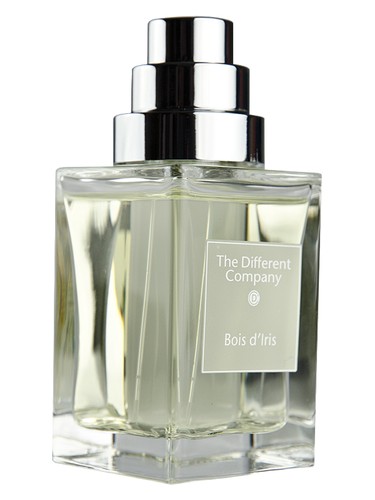
The first spray of Bois d''Iris announces itself with quiet confidence rather than fanfare. There''s an immediate brightness from bergamot, yes, but it''s the iris that commands attention—not the cosmetic-powdery iris of vintage compacts, but something more complex and earthy, as if the rhizome has been lifted straight from damp soil. This is iris reimagined through a naturalistic lens, its inherent elegance intact but tempered with an aromatic freshness that feels almost androgynous despite its feminine classification. The Different Company, in their inaugural year of 2000, seemed intent on proving that iris compositions needn''t be delicate whispers; they can speak in clear, confident tones.
The Scent Profile
The opening marriage of iris and bergamot establishes the duality that defines this fragrance throughout its evolution. The bergamot provides citric lift without sweetness, a clean brightness that illuminates rather than obscures the iris''s multifaceted personality. This isn''t a linear iris soliflore—it''s a study in contrasts and textures.
As the composition settles, the heart reveals its aromatic complexity. Geranium introduces a green, slightly minty facet that reinforces the natural garden character, while coriander adds an unexpected fresh-spicy dimension that prevents the iris from becoming too introspective. The narcissus weaves through these elements with subtle floral sweetness, though it never dominates. This middle phase is where Bois d''Iris truly justifies its name—the "wood of iris" begins to emerge not just as metaphor but as olfactory reality, with the floral and spice notes creating a bridge between the bright opening and what''s to come.
The base is where this fragrance firmly plants its feet in woody-earthy territory. Vetiver brings its characteristic earthiness, that slightly smoky, root-like quality that mirrors and amplifies the iris''s own rhizome character. Cedar adds structural woodiness without heaviness, creating a frame rather than a fortress. White musk in the foundation provides subtle radiance and longevity, keeping the composition from becoming too austere. The overall impression is of walking through a sophisticated botanical garden after rain—clean, earthy, alive, but undeniably refined.
Character & Occasion
The community data tells a clear story about Bois d''Iris''s natural habitat: this is overwhelmingly a daytime fragrance, suited perfectly for spring (80%) and fall (78%) wear. Its aromatic-woody profile makes intuitive sense for these transitional seasons, when the air itself seems to hover between warmth and coolness, between bloom and dormancy.
Summer wearers find it viable (51%), likely appreciating its fresh, non-cloying nature during warmer months, though the woody base might feel slightly too grounded for peak heat. Winter receives the least enthusiasm (31%), which tracks—this isn''t a fragrance built for cozy warmth or festive indulgence. It''s too bright, too green, too connected to growing things.
The day/night split is particularly telling: 100% day, 29% night. This is morning light through greenhouse glass, not candlelit dinner. It''s office-appropriate without being boring, sophisticated enough for important meetings, natural enough for weekend errands. The aromatic-woody dominance (100% and 88% respectively) gives it enough presence to be noticed but never overwhelms—a quality that makes it ideal for professional settings where you want to suggest taste without announcing it.
While marketed as feminine, the composition''s aromatic and woody emphasis places it firmly in territory that contemporary wearers might consider unisex or even masculine-leaning. Those seeking a traditionally pretty, soft iris will need to adjust expectations; this is iris for people who appreciate complexity over comfort.
Community Verdict
With a 4.05 out of 5 rating across 572 votes, Bois d''Iris has earned solid appreciation from those who''ve experienced it. This isn''t quite cult-status adoration, but it represents consistent respect—the kind of rating that suggests a well-executed, coherent vision that delivers on its promises. The vote count itself indicates a fragrance that flies somewhat under the radar compared to mainstream releases, which often suits perfume lovers seeking something distinctive without venturing into niche obscurity.
The score suggests competence and quality without major flaws that polarize opinion. This is a fragrance that knows what it wants to be and achieves it without drama or missteps.
How It Compares
The similar fragrances list reads like a who''s who of sophisticated, modern iris and aromatic compositions. The comparison to Hermès Hiris is natural—both explore iris in non-traditional ways—though Bois d''Iris skews woodier and less powdery. The Chanel N°19 reference points to a shared green sophistication, while Prada''s Infusion d''Iris represents the softer, more minimalist alternative.
Intriguingly, Terre d''Hermès and Un Jardin en Méditerranée appear on this list, neither of them iris-focused. This suggests that Bois d''Iris shares more with aromatic-woody fragrances generally than with conventional iris perfumes—a testament to its unique positioning. Where it stands apart is in maintaining iris as a clear protagonist while building an unexpectedly woody, earthy framework around it.
The Bottom Line
Bois d''Iris represents The Different Company living up to its name from day one. This isn''t iris as you might expect it, and that''s precisely the point. With its strong 4.05 rating and clear seasonal/occasion profile, it''s a fragrance that knows its audience: those seeking sophisticated daytime scents that balance refinement with naturalism, femininity with strength.
Should you try it? If you appreciate iris but find traditional interpretations too powdery or nostalgic, absolutely. If you gravitate toward aromatic-woody fragrances but want something with more floral nuance than typical offerings, this deserves your attention. It''s particularly suited to those whose style leans minimalist-chic rather than overtly romantic.
At over two decades since its release, Bois d''Iris remains a relevant, wearable proposition—no small feat in the rapidly evolving fragrance landscape. It may not be the most talked-about iris, but sometimes quiet sophistication ages better than loud innovation.
AI-generated editorial review