First Impressions
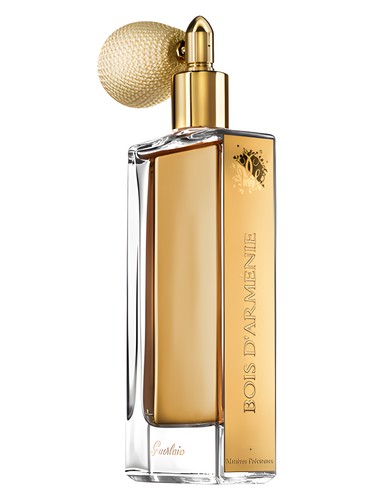
The first spray of Bois d''Armenie unfolds like opening a precious wooden box filled with church incense and powdered iris root. There''s an immediate smokiness here, tempered by the refined spice of pink pepper, creating an atmosphere that feels both sacred and intimate. This is not a fragrance that announces itself with fanfare; instead, it draws you into its orbit with a gravitational pull of resinous warmth. The opening whispers rather than shouts, a characteristic that would ultimately seal both its critical acclaim and its commercial fate.
Within moments, the composition reveals its amber DNA—the dominant accord scoring a perfect 100% on its profile—but this isn''t the sweet, vanillic amber of crowd-pleasers. This is amber with architecture, with bones, with intention. The iris lends a subtle powderiness that keeps the opening from becoming too heavy, while the incense provides an almost meditative quality that sets the tone for everything that follows.
The Scent Profile
As Bois d''Armenie settles into its heart, the true craftsmanship becomes apparent. Benzoin emerges as the star performer, its resinous sweetness wrapping around guaiac wood''s smoky warmth in a way that feels effortless yet clearly deliberate. This is where the fragrance earns its 52% woody and 45% balsamic accord ratings—the composition achieves a remarkable balance between dry, almost austere woodiness and the plush comfort of resinous balsams.
The coriander adds an unexpected dimension here, its slightly green spiciness cutting through the richness just enough to prevent the heart from becoming cloying. This 43% warm spicy accord isn''t about heat or aggression; it''s about depth and complexity, the kind of spice that reveals itself slowly, like warming your hands over coals rather than holding them to a flame.
The base is where Bois d''Armenie truly settles into its identity as a cold-weather companion. Copahu balm—a less common note in perfumery—brings a distinctive resinous quality that differs from the benzoin, adding layers upon layers of balsamic warmth. Patchouli provides earthy grounding without dominating, while white musk keeps the entire composition from becoming too heavy or opaque. The 32% smoky accord lingers throughout, never overwhelming but always present, like the memory of incense in an empty cathedral.
This is a fragrance with impressive longevity and projection, befitting its place in Guerlain''s premium L''Art & La Matière collection. The evolution is slow and graceful, each phase bleeding into the next over hours rather than minutes.
Character & Occasion
The data tells a clear story: Bois d''Armenie is unequivocally an autumn and winter fragrance, scoring 100% for fall and 87% for winter wear. Spring sees a modest 35% rating, while summer barely registers at 14%. This is not versatility speaking; this is specialization. This is a fragrance that knows exactly what it is—a cozy, enveloping embrace meant for cooler weather when the air carries a chill and comfort becomes currency.
Interestingly, the day/night split is nearly even—77% for day wear versus 78% for night—suggesting that Bois d''Armenie occupies that rare space of being substantial enough for evening while remaining refined enough for daytime. It''s intimate rather than projecting, sophisticated rather than seductive, making it equally appropriate for a quiet afternoon working from a café or a dinner party with close friends.
Marketed as feminine, Bois d''Armenie''s composition transcends such boundaries. The woody, smoky, resinous character speaks to anyone who appreciates complexity and restraint over obvious charm. This is a fragrance for those who find comfort in layers, who appreciate craftsmanship, who aren''t looking to be the loudest presence in a room.
Community Verdict
The Reddit fragrance community''s assessment of Bois d''Armenie, based on 35 opinions and carrying a 7.5/10 sentiment score, reveals a fascinating dichotomy. The praise is effusive: it''s described as a "beautiful, unique resinous benzoin fragrance with cozy comfort," with "heavy, well-crafted composition with strong performance." It''s recognized as "excellent for autumn and cooler weather wear" and "highly regarded by fragrance experts."
But the criticism isn''t about the juice in the bottle—it''s about everything surrounding it. The fragrance was discontinued due to poor sales outside key markets, a victim of its very expensive price point in the L''Art & La Matière collection. Community members express frustration that it''s "difficult to find and increasingly unavailable" with "limited market appeal compared to louder, more mainstream fragrances."
This tension between artistic achievement and commercial reality runs through the community discussion. There''s genuine admiration for the perfume itself, tempered by resignation about its fate and broader frustration with Guerlain''s pattern of discontinuing beloved fragrances from their premium lines.
How It Compares
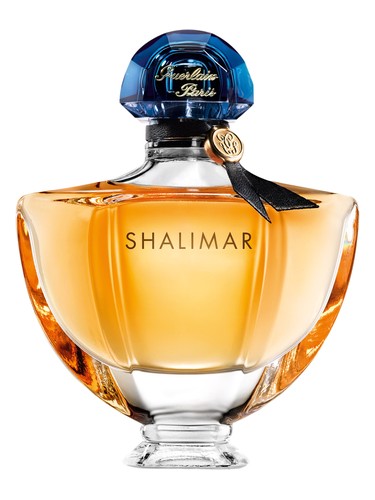
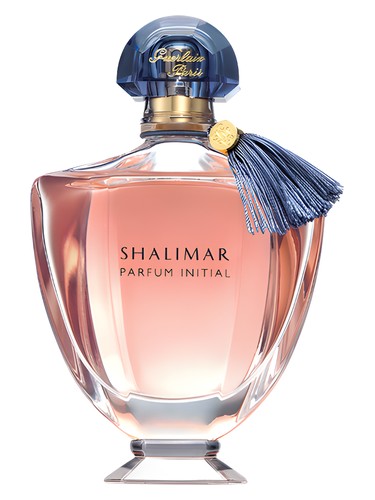
Bois d''Armenie shares DNA with some of perfumery''s most respected compositions. Chanel''s Coromandel offers similar incense-and-wood warmth, while Serge Lutens'' Ambre Sultan explores amber territory with different results. Within Guerlain''s own stable, it echoes the warmth of Spiritueuse Double Vanille and shares heritage with Shalimar Eau de Parfum, while Chanel''s Coco Eau de Parfum occupies adjacent olfactory space.
Where Bois d''Armenie distinguishes itself is in its restraint and its emphasis on benzoin''s resinous character over sweeter vanilla interpretations. It''s quieter than most of its comparisons, more contemplative, more willing to reward patience.
The Bottom Line
With a 4.37/5 rating from 1,665 votes, Bois d''Armenie''s quality is undisputed. But quality and commercial success don''t always align, and this fragrance''s discontinuation serves as a sobering reminder that masterful craftsmanship isn''t always enough in a market that increasingly favors projection and instant gratification.
For those who can still find it, Bois d''Armenie represents what Guerlain does best: intelligent, beautifully constructed perfumes that prioritize sophistication over mass appeal. The high price point remains a barrier, but for collectors and those who appreciate resinous, woody amber compositions, it''s worth the hunt. This is a fragrance that deserved better than discontinuation, but perhaps its very refinement—the quality that made it beloved—was always going to limit its audience. Sometimes perfection is its own problem.
AI-generated editorial review