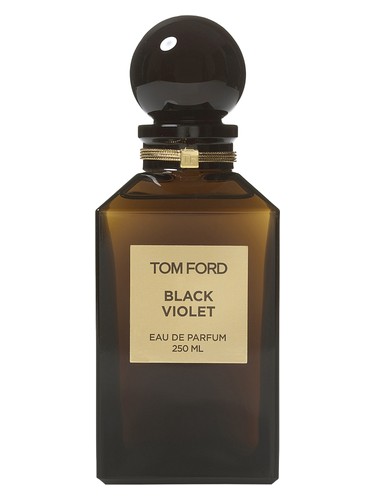
First Impressions
Black Violet announces itself with a paradox. The opening is bright—a burst of bergamot and mixed citruses mingling with unspecified fruits—yet there''s an immediate sense that something darker lurks beneath. This isn''t the violet of spring gardens or Victorian posies. Tom Ford has taken one of perfumery''s most recognizable florals and cast it in shadow, wrapping it in woods and moss until it becomes almost unrecognizable. Within moments of settling on skin, you understand the name: this is violet refracted through a prism of darkness, emerging transformed.
The Scent Profile
The opening salvo delivers 91% citrus intensity according to its accord profile, and you feel it—that sharp, sparkling introduction that seems to promise something lighter than what follows. Bergamot leads the charge, its slightly bitter edge mingling with sweeter fruity notes that add roundness without tipping into candy territory. But this brightness is fleeting, a deliberate misdirection.
As the top notes recede, violet emerges—not alone, but commanding center stage nonetheless. This heart is where Black Violet reveals its true nature. The violet accord registers at 90%, nearly matching the woody dominance that defines the fragrance''s architecture. But this isn''t the powdery, cosmetic violet of classic formulations, though that element exists (68% powdery according to the data). Instead, Tom Ford has preserved something of the flower''s green, slightly metallic quality, the earthy rootiness that connects violet to the forest floor rather than the hothouse.
The base is where the "black" in Black Violet becomes literal. Oakmoss—that cornerstone of chypre perfumery—anchors everything with its damp, forest-floor richness, while unspecified woody notes create a framework that scores 100% on the woody accord scale. This isn''t delicate woods or sandalwood creaminess; these are the deep, shadowy woods where light barely penetrates. The moss brings that distinctive green-gray quality, musty and slightly bitter, creating a foundation that''s both grounding and sophisticated.
The evolution isn''t dramatic in the traditional sense—there''s no radical transformation from bright to dark. Instead, Black Violet operates like a slow dimmer switch, the citrus and fruit fading as the violet deepens and the woods assert their dominance. By the drydown, you''re left with something that barely resembles where you started: a woody-mossy composition with violet as an accent rather than the star.
Character & Occasion
The data tells a clear story about when Black Violet thrives. This is overwhelmingly a fall fragrance (100%), with strong winter credentials (73%) and reasonable spring wearability (67%). Summer? Not so much (34%). That woody-mossy base simply doesn''t play well with heat—this is a fragrance that wants crisp air, turning leaves, the first bite of cold.
Perhaps most telling is the day-night split: while 64% find it suitable for daytime, a commanding 95% vote for evening wear. Black Violet has the sophistication and depth that darkness demands. This isn''t a fragrance for casual daytime errands; it''s for dinner reservations, gallery openings, late-afternoon meetings that stretch into cocktails. It has presence without shouting, depth without heaviness.
Marketed as feminine, Black Violet''s woody dominance and mossy character give it a complexity that transcends simple gender categorization. The violet keeps it from reading as traditionally masculine, but the composition as a whole feels more sophisticated and architectural than stereotypically feminine.
Community Verdict
Here''s where things get interesting: despite a solid 4.13 rating from 950 voters, the available community sentiment registers as mixed with a score of 0/10. The Reddit discussion data doesn''t provide specific commentary on Black Violet itself—the fragrance appears in collection mentions and lists but doesn''t generate the detailed discussion of some other Tom Ford offerings. This silence is itself informative. Black Violet seems to be a fragrance that people own, rate respectably, but don''t evangelize about. It''s not generating passionate defenses or heated critiques; it exists in a middle space of competent sophistication without the polarizing character that sparks conversation.
The rating of 4.13 from nearly a thousand votes suggests broad approval without universal adoration—a fragrance that delivers on its promise without transcending it.
How It Compares
The listed similar fragrances reveal Black Violet''s pedigree: Chanel No. 5, Guerlain''s Samsara and Shalimar, Dior''s Dune, and Tom Ford''s own Champaca Absolute. These are heavyweight classics and niche powerhouses—fragrances with serious aldehydic, woody, or ambery profiles. Black Violet positions itself among perfumes that prioritize sophistication over accessibility, composition over immediate likability.
Within Tom Ford''s own lineup, Black Violet represents a more restrained aesthetic than some of the brand''s bombastic offerings. It has the quality and complexity expected of the name without the "look at me" intensity of something like Black Orchid.
The Bottom Line
Black Violet is a fragrance for those who appreciate violet but find most violet fragrances too pretty, too powdery, too safe. It''s Tom Ford''s answer to the question: what happens when you take a delicate flower and refuse to treat it delicately? The result is compelling if not universally beloved—a woody composition that uses violet as an accent rather than letting violet define it.
At 4.13 stars from 950 voters, it''s clear that Black Violet succeeds at what it attempts. It won''t convert violet skeptics, and those seeking a true floral showcase will find it too woody. But for those cool-weather evenings when you want something sophisticated, complex, and just a touch mysterious, Black Violet delivers. It''s not Tom Ford''s most talked-about creation, but perhaps that''s precisely its appeal—a fragrance that rewards those who discover it without demanding attention from everyone in the room.
AI-generated editorial review