First Impressions
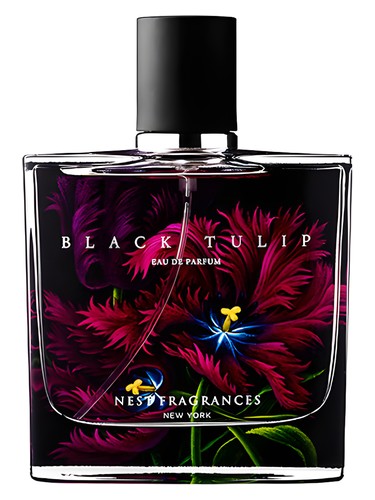
The first spray of Black Tulip doesn''t announce itself with florals, despite what the name might suggest. Instead, you''re greeted by a rush of dark, jammy fruit—the kind that stains fingers and lips a deep burgundy. This isn''t the bright, cheerful fruitiness of a summer sorbet; it''s something richer, more mysterious, with an earthiness already lurking beneath. Within moments, patchouli emerges as the fragrance''s backbone, transforming what could have been cloying sweetness into something grounded and compelling. The violet accord adds an unexpected powdery softness that keeps the composition from veering too heavily into gourmand territory. This is a fragrance that wears like expensive velvet: plush, slightly dark, and utterly tactile.
The Scent Profile
Black Tulip presents an intriguing compositional puzzle, as its specific note breakdown remains undisclosed by Nest. What we know comes from the fragrance''s dominant character: an overwhelming fruity accord at 100%, supported by a robust patchouli presence at 87%. The opening—though officially unspecified—clearly delivers that fruit-forward punch, likely featuring dark berries or plum notes that create an almost wine-like richness.
As the fragrance settles into its heart, the violet accord (71%) becomes more pronounced, lending a nostalgic, lipstick-like quality that bridges the gap between the juicy opening and what''s to come. This isn''t garden-fresh violet; it''s the powdery (50%), slightly retro interpretation that recalls vintage cosmetics and old-fashioned femininity. The interplay between modern fruity sweetness and this more classic violet creates an interesting temporal tension.
The base reveals where Black Tulip earns its sultry reputation. Patchouli anchors everything with its earthy, slightly funky warmth, while woody notes (63%) add structure and depth. The sweet accord (62%) persists throughout, never quite releasing its hold on the composition, but the patchouli ensures it remains sophisticated rather than saccharine. The overall effect is of a fragrance that evolves from bright to brooding, fruit giving way to forest floor, sweetness tempered by shadow.
Character & Occasion
Black Tulip is decidedly a cold-weather companion. The community data speaks clearly: this fragrance shines in winter (87%) and fall (83%), while struggling in the heat of summer (27%). That substantial patchouli-fruit combination needs cooler air to avoid overwhelming; in autumn''s crispness or winter''s bite, it blooms perfectly against wool coats and cashmere scarves.
The day-to-night wearability tells an interesting story. While 51% of wearers find it suitable for daytime, a perfect 100% endorse it for evening wear. This suggests a fragrance with chameleon qualities—restrained enough for a fall workday when applied sparingly, but truly coming into its own after dark. Picture it for late dinners, gallery openings, or evening walks when the city lights flicker on. It''s the kind of scent that makes jeans and a sweater feel dressed up, that adds intrigue to otherwise ordinary moments.
This is unquestionably a feminine fragrance, though its woody-patchouli character gives it enough backbone to appeal to those who prefer their femininity with an edge. It''s not for the timid or those seeking fresh, clean simplicity.
Community Verdict
With a solid 3.91 out of 5 stars from 1,177 votes, Black Tulip has earned respectable approval, if not universal adoration. The Reddit fragrance community''s sentiment leans positive (7.5/10), and perhaps most tellingly, multiple members actively seek dupes—a clear indicator that the fragrance is desirable enough to inspire hunting for more affordable alternatives.
The community''s main criticism centers on price. Black Tulip''s positioning drives fragrance lovers to search for budget-friendly alternatives, suggesting that while the scent itself wins fans, the value proposition gives some pause. This isn''t a fragrance sparking heated debates about performance or artistic merit; rather, it''s one that people appreciate but wish were more accessible.
Interestingly, the community notes a lack of detailed scent reviews in discussions, suggesting Black Tulip occupies a curious middle ground: respected as part of Nest''s well-regarded line, appreciated by those who wear it, but not generating the passionate discourse reserved for either beloved masterpieces or controversial releases. It''s recommended for collectors, special occasions, and layering experiments—uses that suggest versatility rather than standalone statement-making power.
How It Compares
Black Tulip runs in impressive company. Its similar fragrances list reads like a greatest hits of modern feminine blockbusters: La Vie Est Belle, Black Orchid, Flowerbomb, Black Opium, and Nest''s own Midnight Fleur. This positioning in the fruity-patchouli-sweet category places it among some of the most commercially successful fragrances of the past two decades.
Where Black Tulip distinguishes itself is in that violet accord—less aggressively sweet than Flowerbomb, less obviously gourmand than Black Opium, and more approachable than Black Orchid''s unapologetic intensity. It occupies a sophisticated middle ground, offering depth without drama, sweetness without excess.
The Bottom Line
Black Tulip is the fragrance equivalent of a perfectly worn leather jacket: cool enough to turn heads, comfortable enough to forget you''re wearing it, and versatile enough to work in more situations than you''d initially expect. Its 3.91 rating reflects exactly what it is—a very good fragrance that stops just short of greatness.
The value question hangs over this one. If you''re already invested in Nest''s aesthetic and appreciate their approach to composition, Black Tulip delivers. For those watching budgets, the community''s hunt for dupes suggests you might find similar satisfaction elsewhere. That said, testing is essential. Sometimes the "almost-but-not-quite" alternatives leave you wishing you''d invested in the real thing.
Try this if you love fruity-patchouli combinations but want something slightly more nuanced than the category''s heavy-hitters, or if you''re seeking a cold-weather signature that works from desk to dinner. Skip it if you prefer transparent florals, hate patchouli, or need something summer-appropriate. At its best, Black Tulip proves that sometimes the most memorable blooms are the darkest ones.
AI-generated editorial review