First Impressions
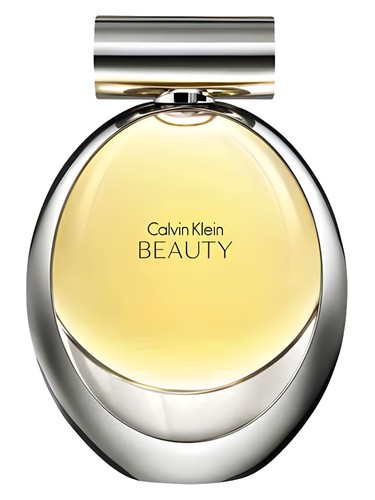
There''s something deliberately quiet about Beauty by Calvin Klein. The first spray doesn''t announce itself with fanfare or bold declarations—instead, it settles onto skin like morning light filtering through sheer curtains. The ambrette opening feels almost contradictory: musky yet fresh, vegetal yet soft, creating an impression that hovers just beyond definition. This is not a fragrance that grabs attention; it''s one that invites closer inspection, drawing people into your personal space rather than broadcasting across a room. It''s this restraint, this careful balance, that has earned Beauty recognition from industry professionals—and simultaneously sparked debate among those who wear it daily.
The Scent Profile
Beauty''s architecture is deceptively simple, a minimalist three-note structure that relies on quality over complexity. The ambrette at the opening provides an unusual starting point for a white floral composition. Unlike traditional citrus or fruity introductions, ambrette (musk mallow) offers an earthy-sweet muskiness that feels botanical rather than synthetic. It''s green without being sharp, warm without being heavy—a vegetal softness that creates an almost skin-like quality from the very first moment.
As the fragrance develops, jasmine emerges at its heart, and here Beauty reveals its true character. This isn''t the indolic, heavy jasmine of vintage perfumes, nor is it the clean, sanitized version found in many contemporary fragrances. Instead, it occupies a middle ground—creamy and luminous, with just enough depth to suggest authenticity without overwhelming the composition. The jasmine comprises the dominant white floral accord that defines Beauty, presenting at full strength while remaining surprisingly wearable for those who typically find white florals cloying.
The base introduces Virginia cedar, providing a woody foundation that keeps the floral elements from floating away entirely. This cedar doesn''t read as pencil shavings or obvious woodiness; rather, it adds structure and a whisper of dryness that grounds the composition. The interplay between the musky ambrette, the floral jasmine, and the woody cedar creates a scent that feels complete despite its simplicity—each element supporting the others without competition.
Character & Occasion
The data tells a clear story about Beauty''s natural habitat: this is overwhelmingly a spring fragrance, with 88% suitability during that season. Summer follows at 53%, making it a warm-weather companion that thrives in temperatures where heavier compositions would suffocate. The daytime orientation is even more pronounced—100% day wear versus just 29% for evening—positioning Beauty firmly in the realm of professional, daylight hours.
This makes intuitive sense. The soft projection and white floral character create what community members describe as a "pleasant aura," perfect for office environments where you want to smell refined without dominating shared spaces. It''s the fragrance equivalent of a well-tailored linen shirt: appropriate, elevated, but never ostentatious. The fresh and aromatic accords (10% and 16% respectively) add just enough airiness to prevent the musky-woody base from feeling too intimate or boudoir-like during working hours.
That said, Beauty''s restrained nature means it won''t carry you through a long evening event or make a statement at formal occasions. This is a fragrance for meetings, lunch dates, weekend errands in pleasant weather—moments where you want to smell good to those within arm''s reach.
Community Verdict
Here''s where Beauty becomes genuinely interesting. With a sentiment score of 6.5/10 based on 28 opinions, the fragrance occupies decidedly mixed territory. The split is fascinating: professional perfumers and industry insiders consistently praise Beauty''s sophisticated construction and well-balanced sillage. They recognize technical excellence, an expertly crafted "aura" that demonstrates real artistry in restraint.
Yet everyday wearers tell a different story. The most common complaint surfaces repeatedly: longevity and projection fall disappointingly short compared to other fragrances in this category and price range. Multiple users report that Beauty performs as more of a skin scent, requiring reapplication throughout the day. Some note significant variations based on individual skin chemistry, suggesting that while it may last reasonably on some wearers, others find it evaporates within hours.
The price-to-performance ratio emerges as a particular sticking point. While users appreciate the scent itself—describing it as "unique," "divine," and "pleasant"—many feel the cost doesn''t align with the brief wearing time. On the positive side, Beauty''s non-offensive character and suitability for professional settings earn consistent praise, as does its potential as a layering fragrance, where its soft profile can add dimension to longer-lasting scents.
How It Compares
Beauty finds itself in distinguished company, drawing comparisons to several white floral icons: Pure Poison by Dior, Alien by Mugler, J''adore by Dior, Narciso Rodriguez For Her, and Noa by Cacharel. This lineup represents the cream of modern white floral perfumery, each approaching the category from different angles. Where Alien leans into bold, alien-flower intensity and Narciso Rodriguez emphasizes musk, Beauty occupies a middle position—less challenging than Alien, less synthetic-feeling than some iterations of J''adore, more cedary and grounded than the powdery Noa.
Within this competitive landscape, Beauty distinguishes itself through restraint rather than projection, subtlety over statement. It''s the quietest voice in a conversation of confident speakers.
The Bottom Line
With a solid 3.75/5 rating from 5,873 voters, Beauty by Calvin Klein has clearly found its audience—it just might not be everyone. This is a fragrance that demands specific expectations: if you value professional sophistication, enjoy close-wearing scents, or appreciate the art of restraint in perfumery, Beauty delivers genuinely lovely moments. Those same qualities become drawbacks if you expect your fragrance to announce your presence or last through a full workday without reapplication.
The disconnect between professional acclaim and consumer satisfaction suggests Beauty might be a fragrance ahead of its intended market—too subtle for those seeking value in longevity and projection, yet technically accomplished enough to earn respect from those who understand perfume construction. Consider it for spring office wear, for layering experiments, or for days when you want to smell beautiful only to those who come close. Just go in knowing you''re choosing ephemeral elegance over lasting power, and that the price tag reflects prestige more than performance.
AI-generated editorial review