First Impressions
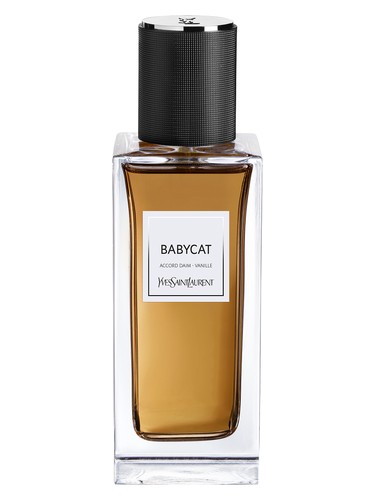
The first spray of Babycat is nothing short of confrontational. A blast of black and pink pepper hits with unexpected force, an opening salvo that declares this is no ordinary vanilla perfume. It''s the kind of introduction that makes you pause, reconsider, and—if you''re patient—fall completely under its spell. Within those first crucial minutes, the fragrance performs a magic trick: what begins as an aggressive pepper storm gradually softens, revealing glimpses of resinous warmth underneath. This is the moment where Babycat either loses you or captures you entirely.
That Yves Saint Laurent would name such a boldly spiced fragrance "Babycat" is itself a statement—a playful misdirection that hints at the soft vanilla heart beneath its thorny exterior. Released in 2022, it''s earned an impressive 4.24 out of 5 rating from over 4,500 votes, suggesting that most who weather that opening find something extraordinary waiting on the other side.
The Scent Profile
Babycat''s composition reads like a study in contrasts. The top notes double down on pepper—both black and pink—joined by elemi, a resin that adds citrusy, spicy brightness to the initial blast. It''s an uncompromising start, one that registers as 90% fresh spicy in its accord profile. This isn''t the polite sprinkle of pepper found in many modern releases; it''s a genuine spice cabinet moment that demands attention.
As the pepper begins its slow fade, the heart reveals olibanum (frankincense) and saffron, two ingredients that bridge the gap between the aggressive opening and the comfort to come. The frankincense brings ecclesiastical depth—smoky, meditative, slightly austere—while saffron adds its characteristic leathery warmth. Here, at around the fifteen-minute mark, the fragrance''s leather accord (registering at 72%) becomes apparent, lending an animalic sophistication that prevents the scent from veering too sweet.
But make no mistake: Babycat''s soul is vanilla. Registering at 100% in the accord breakdown, Bourbon vanilla dominates the base, supported by suede and cedar. This isn''t the simple sweetness of vanilla extract or the cloying quality of vanilla frosting. Instead, it''s a mature, slightly smoky vanilla enriched by the woody dryness of cedar and the napped texture of suede. The result is a drydown that feels both indulgent and refined, reading as warm spicy (71%), powdery (60%), and amber (56%) in equal measure. It''s gourmand without being edible, comforting without being juvenile.
Character & Occasion
Babycat is decisively a cold-weather companion. The data speaks clearly: 100% suited for winter and 92% for fall, dropping dramatically to just 27% for spring and a mere 12% for summer. This is a fragrance that thrives when temperatures drop and you''re layered in cashmere and wool. The warmth it projects would feel suffocating in July humidity, but in November rain or January snow, it becomes a second skin of spiced comfort.
Interestingly, while marketed as feminine, the 87% night versus 41% day preference reveals its true character as an evening scent. Those pepper and leather accords give it gravitas—this isn''t a daytime office fragrance unless your office happens to be a dimly lit cocktail bar. It''s for dinners that stretch into late conversation, for gallery openings and theater intermissions, for moments when you want to smell deliberate and memorable.
The fragrance particularly suits those who appreciate gourmands but resist saccharine sweetness, who want vanilla with an edge. It''s for the person who finds most vanilla fragrances too obvious but still craves that core of comfort.
Community Verdict
The r/fragrance community has embraced Babycat with notable enthusiasm, awarding it an 8.2 out of 10 sentiment score across 81 opinions. The consensus centers on its masterful blending—users consistently praise how smoothly the elements meld once the fragrance settles. "Sophisticated yet delicious" appears repeatedly in descriptions, with many reporting love-at-first-sniff experiences, particularly among gourmand collectors. The longevity earns special mention, with the fragrance lasting well into the next day for many wearers.
However, three criticisms emerge consistently. That peppery opening remains divisive; some find it overwhelming or off-putting enough to delay their appreciation of what follows. Several users recommend giving the fragrance at least ten to fifteen minutes to fully reveal itself before judging. More frustrating for would-be buyers is the availability issue—Babycat has proven exceptionally difficult to find in stock, becoming something of a unicorn fragrance since its 2022 release. This scarcity has only amplified its mystique but also its inaccessibility.
How It Compares
Babycat exists in conversation with some impressive company. The comparisons to Ani by Nishane and Musc Ravageur by Frederic Malle position it among spiced, animalic vanillas that refuse to play nice. Like By the Fireplace by Maison Martin Margiela, it evokes warmth and comfort, but with more aggressive spicing. The connections to Layton and Althaïr by Parfums de Marly suggest a shared DNA of vanillic warmth cut with aromatic spices.
What distinguishes Babycat is its refusal to choose sides—it''s simultaneously challenging and comforting, peppery and sweet, leather-inflected and gourmand. In a category that can skew predictable, Babycat maintains genuine interest from first spray to final fade.
The Bottom Line
With its strong 4.24 rating across thousands of votes, Babycat has proven itself more than a flash-in-the-pan release. This is a considered, well-executed fragrance that rewards patience and suits a specific but substantial audience. The availability issues are genuinely frustrating—a successful fragrance should be accessible—but for vanilla lovers seeking sophistication or gourmand collectors wanting something with backbone, the hunt may prove worthwhile.
If you can find it, and if you''re willing to wait through that peppery prologue, Babycat delivers one of the more accomplished vanilla fragrances in recent memory. Just don''t expect it to purr on first meeting.
AI-generated editorial review