First Impressions
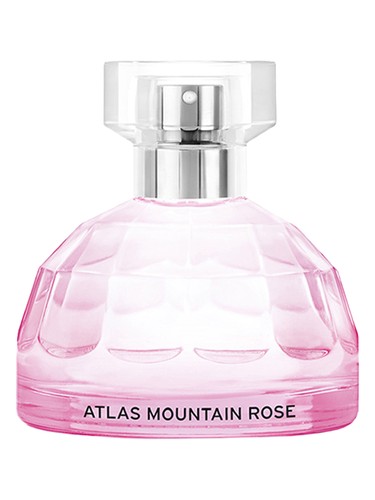
The first spray of Atlas Mountain Rose delivers something unexpected in the crowded world of rose fragrances: honesty. This isn''t the jammy sweetness of a hundred generic florals, nor is it the harsh green stem of overly botanical interpretations. Instead, what greets you is a rose that feels plucked from actual mountainous terrain—crisp, tart, and touched by citrus brightness. There''s an immediate freshness here, a clean quality that speaks to dewy petals rather than potpourri bowls. The composition announces itself without shouting, settling into a wearable rose accord that manages to feel both familiar and refreshingly different.
The Scent Profile
While The Body Shop never disclosed the specific note breakdown for Atlas Mountain Rose, the fragrance''s DNA reveals itself clearly through wear. The rose accord dominates completely—and this is precisely as it should be. At 100% intensity in the main accords, this is unapologetically a rose soliflore, but one with intelligent supporting players.
The citrus element, registering at 37%, provides that crucial tartness that early admirers noticed. This isn''t a token lemon top note that vanishes in minutes; rather, it''s woven throughout the composition, keeping the rose from tipping into cloying sweetness. There''s a spicy-fresh quality that emerges, likely from this citrus interplay with the rose itself.
The musky backbone at 33% gives the fragrance its clean skin-scent quality, while the general floral accord at 30% rounds out the rose without competing with it. What''s particularly noteworthy is the subtle powdery element at 19%—just enough to provide a hint of vintage elegance without veering into grandmotherly territory. The amber base, though modest at 18%, adds warmth and prevents the fragrance from becoming too sharp or linear.
The overall effect is a rose that evolves gently rather than dramatically. This isn''t a fragrance of distinct chapters but rather a continuous story of fresh, authentic rose with shifting emphases on its citrus brightness and musky warmth as it wears.
Character & Occasion
Atlas Mountain Rose is overwhelmingly a spring fragrance, scoring 96% for that season—and one spray makes it abundantly clear why. This is a scent of renewal, of garden walks after rain, of flowers in their prime rather than their decay. Summer claims 66% suitability, where its crisp character would cut through humidity with grace, though its reportedly soft projection might struggle in heat.
The day/night split tells an even clearer story: 100% day, just 23% night. This is a fragrance for sunlight hours, for office environments, for casual brunches and afternoon errands. It lacks the intensity or sensuality typically associated with evening wear, but that''s precisely its strength. This is the rare rose you could wear to a professional setting without raising eyebrows.
The fragrance skews decidedly feminine in marketing and execution, though its clean simplicity could easily work for anyone drawn to uncomplicated rose scents. This is a signature scent for those who want to smell distinctly like themselves—just a slightly more floral version.
Community Verdict
The r/fragrance community''s sentiment score of 8.2/10 reflects genuine affection tinged with loss. Twenty-one community members weighed in, and their consensus is remarkably consistent: Atlas Mountain Rose was something special, and The Body Shop made a mistake discontinuing it.
The praise centers on its uniqueness—that "tart, crisp rose scent that stands out from typical rose perfumes." Reviewers appreciated the "clean, authentic rose smell with interesting spicy-fresh notes," exactly the qualities the accord breakdown suggests. The value proposition was another major plus, with community members noting it was "excellent, especially on sale."
But the criticism is equally clear-eyed. The projection and longevity are weak—this is "not very potent." For those seeking a fragrance that announces their presence or lasts through a full workday, Atlas Mountain Rose disappoints. And then there''s the elephant in the room: discontinuation. The fragrance is now "hard to find," and The Body Shop''s replacement, British Rose, is widely dismissed as "inferior and soapy."
The regret is palpable in community discussions. Multiple users mention wishing they''d stocked up before it vanished, and some actively hunt for it on resale markets. When a £12 Body Shop fragrance inspires that kind of devotion, it''s clearly doing something right.
How It Compares
Being compared to Chloé Eau de Parfum, Flowerbomb, and Coco Mademoiselle places Atlas Mountain Rose in rarified air—these are fragrances that cost five to ten times more. The connection likely lies in shared DNA: soft florals with rose elements that remain wearable and modern. Flower by Kenzo shares that clean, uncomplicated approach to florals, while Bright Crystal offers similar daytime freshness.
What distinguished Atlas Mountain Rose was its straightforward focus. Where those luxury fragrances weave complex narratives, this one told a simpler story—and at a fraction of the price. It occupied the sweet spot between drugstore generics and department store prestige.
The Bottom Line
With a rating of 4.11 out of 5 from 539 votes, Atlas Mountain Rose achieved something remarkable: broad appeal for a soliflore rose at accessible pricing. This wasn''t a niche darling appreciated by dozens; this was a genuinely popular fragrance that connected with hundreds.
Should you seek it out on resale markets? If you''re a rose lover craving something authentic and unpretentious for daily wear, absolutely—provided you''re not paying inflated vintage prices. Its weak performance means you''ll need to reapply, but for office environments or close-proximity situations, that''s hardly a dealbreaker.
The real tragedy is that The Body Shop had a genuine cult favorite on their hands and replaced it with something the community considers markedly inferior. Atlas Mountain Rose deserved better than discontinuation. It proved that thoughtful simplicity and accessible pricing could create something worth remembering—and worth mourning.
AI-generated editorial review