First Impressions
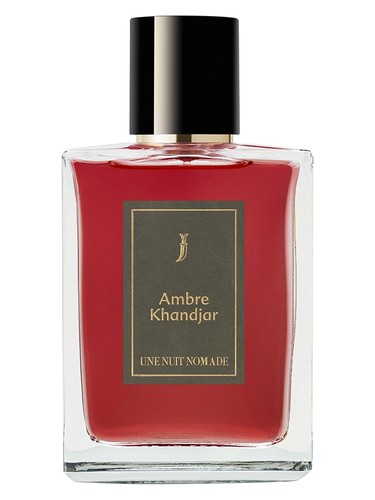
The name translates to "amber dagger," and there''s truth in that paradox—something both luxurious and sharp announces itself the moment Ambre Khandjar touches skin. The opening delivers an unexpected punch of ripe plum sweetness, brightened by mandarin orange, but this isn''t your grandmother''s fruit bowl. Within seconds, that initial fruity burst begins its transformation into something darker, more resinous, more insistent. It''s the kind of entrance that makes people lean in closer, trying to identify what just shifted in the air. This is Une Nuit Nomade''s interpretation of amber for those who find traditional amber fragrances too polite, too predictable, or simply too quiet.
The Scent Profile
Ambre Khandjar reveals itself in waves, each more complex than the last. That opening duo of plum and mandarin creates an almost jammy sweetness—think preserved fruits in a Moroccan souk rather than fresh orchard pickings. The plum, in particular, carries a wine-dark richness that hints at the intensity to come.
The heart is where this fragrance truly earns its name. Labdanum anchors everything with its characteristic sticky, leathery amber warmth, while vanilla pod adds a creamy sweetness that never quite tips into dessert territory. The inclusion of orris brings a subtle powdery sophistication, grounding the composition with its rooty, slightly grey elegance. Ylang-ylang weaves through with its heady, slightly narcotic floral quality, though it plays a supporting role rather than stealing the spotlight. This middle phase is dense, enveloping, and unapologetically rich—the amber accord reaches its full expression here, dominating at 100% intensity alongside significant woody and warm spicy undertones.
The base extends into benzoin''s vanilla-balsamic sweetness, layered with patchouli''s earthy depth and sandalwood''s creamy woodiness. This final stage isn''t a dramatic departure but rather a slow settling into skin, where the fragrance becomes more intimate. The woody accords (registering at 70%) provide structure to all that amber and vanilla, preventing the composition from becoming too soft or shapeless. The patchouli here feels refined rather than hippie-ish, adding just enough darkness to keep things interesting for hours.
Character & Occasion
This is unequivocally a cold-weather companion. The data tells the story clearly: perfect for winter, nearly essential for fall, but leave it in the drawer when summer arrives. At 11% summer suitability, Ambre Khandjar would likely feel suffocating in heat, but wrapped in cashmere as temperatures drop, it becomes the olfactory equivalent of amber jewelry catching firelight.
The day-to-night split is revealing—while it''s certainly wearable during daylight hours (50%), it truly comes alive after dark (83%). This is a fragrance that thrives in low lighting, intimate dinners, evening gatherings where the air is cool and the mood is warm. Picture it in art gallery openings, late autumn walks through city streets, fireside conversations that stretch past midnight.
The feminine designation feels somewhat arbitrary here. Yes, the fruity opening and vanilla-amber heart lean traditionally feminine in marketing terms, but the labdanum and patchouli give it enough weight and darkness that anyone drawn to rich, resinous orientals could wear it confidently. This is for people who want their presence felt, who appreciate complexity over simplicity, warmth over freshness.
Community Verdict
With 880 ratings averaging 4.08 out of 5, Ambre Khandjar has earned genuine appreciation from a substantial audience. This isn''t a niche curiosity with twelve devoted fans—nearly 900 people have weighed in, and the overwhelming majority find it compelling. That rating suggests a fragrance that delivers on its promises without major flaws or polarizing elements. It''s not quite reaching for the stars at 4.5+, but it''s solidly in "very good" territory, indicating a well-executed vision that resonates with its intended audience.
How It Compares
The company Ambre Khandjar keeps is illustrious and telling. Its similarity to Portrait of a Lady by Frederic Malle places it in conversation with one of modern perfumery''s most celebrated rose-patchouli orientals. The connection to Maison Martin Margiela''s By the Fireplace and Maison Francis Kurkdjian''s Grand Soir situates it firmly in the cozy-luxe category—fragrances designed to envelop and comfort while maintaining sophistication. The Tom Ford Black Orchid comparison hints at shared DNA in the dark, fruity-oriental space, while the Ambre Sultan reference points to its relationship with labdanum-forward amber constructions.
What distinguishes Ambre Khandjar is that fruity opening—the plum particularly—which gives it a more immediately accessible entry point than some of its more austere cousins. It''s less challenging than Ambre Sultan, less rose-forward than Portrait of a Lady, but it shares their commitment to richness and depth.
The Bottom Line
Ambre Khandjar is a successful expression of modern amber perfumery, balancing immediate appeal with lasting complexity. That 4.08 rating from 880 voters represents genuine consensus—this is a fragrance that works. It won''t revolutionize the category, but it doesn''t need to. What it does, it does very well: delivering a wearable yet distinctive amber-oriental with enough fruit to keep it interesting and enough resin to keep it grounded.
For those building a cold-weather wardrobe, especially if you''re drawn to the fragrances mentioned in its comparison set, Ambre Khandjar deserves serious consideration. It''s particularly appealing for anyone who finds straight amber fragrances too linear or traditional orientals too heavy-handed. The price-to-quality ratio for Une Nuit Nomade generally sits in the accessible-luxury range, making this a lower-risk exploration than some of its luxury-house comparisons.
Skip it if you''re heat-averse, vanilla-phobic, or prefer your fragrances light and fresh. But if winter nights call for something golden, warm, and subtly complex—something with just a bit of an edge—this amber dagger might be exactly what you need.
AI-generated editorial review