First Impressions
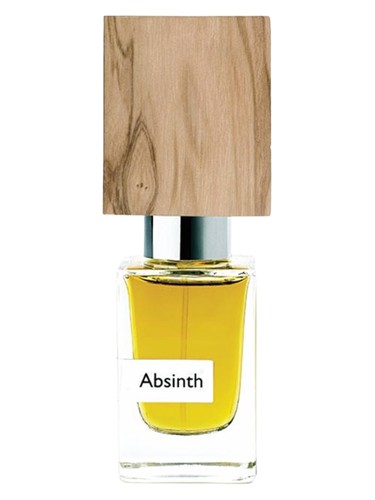
The first spray of Nasomatto''s Absinth is nothing short of confrontational. This is not a fragrance that whispers — it speaks in full-throated declarations of green. There''s an immediate aromatic punch that evokes the hallucinogenic spirit from which it takes its name, though perhaps without the anise that one might expect. Instead, what emerges is something more complex and enigmatic: a verdant bitterness that feels simultaneously medicinal and bewitching. The opening has the quality of crushed herbs still dewy with morning moisture, stems broken to release their essential oils. It''s bracingly fresh yet darkly grounded, as if Alessandro Gualtieri decided to bottle the moment before dawn in an overgrown garden where the air itself tastes green.
The Scent Profile
Here''s where Absinth becomes particularly intriguing — and perhaps intentionally mysterious. Nasomatto provides no official breakdown of top, heart, or base notes, leaving wearers to decode this olfactory puzzle through experience alone. What we can discern from the accord structure tells its own story: this is overwhelmingly aromatic (registering at maximum intensity), with a profound green character that dominates the composition at 81%.
The fragrance unfolds as a study in contrasts. That initial green aromatic blast — think wormwood, bitter herbs, perhaps vetiver — maintains remarkable persistence throughout the wear. There''s a woody undercurrent that accounts for 41% of the profile, providing structure and preventing the composition from floating away into pure abstraction. This woodiness feels dark rather than polished, more forest floor than sandalwood drawer.
The fresh spicy element (39%) adds a peppery bite that enhances rather than softens the bitterness. This isn''t the warming spice of cinnamon or cardamom; it''s sharper, more angular, like the snap of green peppercorns or the edge of galbanum. An earthy quality (36%) anchors everything, bringing a mineral-like depth that suggests damp soil and moss-covered stone. And threading through it all is that distinctive bitter accord (29%) — the signature of the absinthe liqueur itself, that peculiar astringency that makes the mouth water and the senses sharpen.
Without traditional note pyramids to guide us, Absinth wears more like a unified field than a progression. It doesn''t so much evolve as reveal different facets depending on your proximity, your skin chemistry, and the ambient temperature.
Character & Occasion
With a spring rating of 100% and fall at 93%, Absinth has found its sweet spot in the transitional seasons. This makes perfect sense — it captures that liminal quality of nature in flux, when green things either emerge from or retreat back into the earth. Spring''s new growth and fall''s decay both share that bitter-green character, and Absinth bottles that duality beautifully.
Surprisingly, it maintains 56% suitability for summer, likely thanks to that fresh, aromatic quality that can cut through humidity. Winter, at 40%, is its weakest season, perhaps because the composition lacks the warming sweetness or richness that cold weather typically demands.
The day/night split is particularly revealing: 95% for daytime wear versus 54% for evening. This is fundamentally a daylight fragrance, one that makes sense in natural light and outdoor contexts. It''s for garden parties, countryside walks, gallery openings where intellectualism trumps glamour. While labeled feminine, Absinth reads decidedly unisex to contemporary sensibilities — it requires confidence and an appreciation for the unconventional rather than adherence to traditional gender categories.
Community Verdict
With a rating of 4.04 out of 5 from 1,979 votes, Absinth has earned solid respect within the fragrance community. This isn''t a mass-pleasing crowd-favorite hitting 4.5+, nor is it a polarizing experiment struggling below 3.5. Instead, that 4.04 suggests a fragrance that delivers on its artistic promise while acknowledging it won''t be for everyone. The substantial vote count indicates this isn''t a obscure curiosity — nearly 2,000 people have experienced and rated it, giving that score genuine weight. This is a fragrance that has earned its devoted following without compromising its singular vision.
How It Compares
The company Absinth keeps is revealing. Lalique''s Encre Noire shares that dark, woody, intensely green character built around vetiver. Tauer''s L''Air du Desert Marocain and Hermès'' Terre d''Hermès both explore aromatic earthiness with philosophical depth. Dior''s Fahrenheit brings unexpected green-gasoline-leather contrasts, while Tom Ford''s Oud Wood offers woody sophistication. What unites these comparisons is their refusal to play it safe — these are thinking person''s fragrances that prioritize character over likability.
Where Absinth distinguishes itself is in its bitter herbal intensity and that distinctive absinthe-inspired greenness. It''s rawer than Terre d''Hermès, stranger than Oud Wood, and more bracingly green than any of its companions.
The Bottom Line
Nasomatto''s Absinth is not a fragrance for the tentative. It''s for those who appreciate perfumery as an art form that can challenge as much as comfort. The 4.04 rating reflects genuine admiration tempered by acknowledgment that this is an acquired taste — and there''s no shame in that. Alessandro Gualtieri has created something that smells like nothing else in your collection, a green-aromatic composition that captures the mystique of its namesake spirit without resorting to literal translation.
Should you try it? If you''re drawn to fragrances that prioritize atmosphere over approachability, if you wear Encre Noire and wish it were even more uncompromising, if you want something that announces your presence as someone who doesn''t follow trends — then yes, absolutely. Sample it in spring, wear it during the day, and prepare for something genuinely different. Just don''t expect it to play nice.
AI-generated editorial review