First Impressions
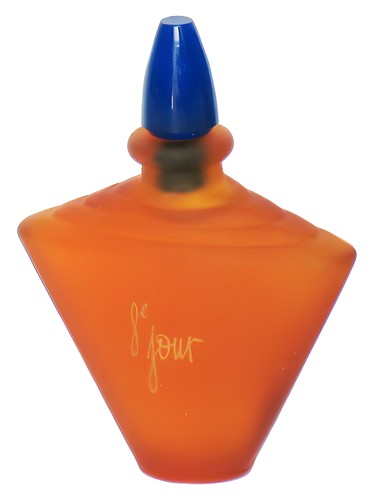
The first spray of 8e Jour transports you directly into the heart of a ''90s perfumery revolution—that gilded era when fragrances didn''t whisper, they announced. This Yves Rocher creation from 1993 opens with an immediate rush of sweetness, but this isn''t the candied, fruity sweetness of modern gourmands. Instead, it''s a golden, resinous warmth that feels like stepping into a spice merchant''s vault. The dominant impression is one of enveloping comfort, with cinnamon leading the charge alongside a luxurious honey accord that gives the composition an almost edible quality. There''s an instant recognition here for anyone who wore orientals during that decade—this is perfume with a capital P, unapologetic and full-bodied.
The Scent Profile
While specific note breakdowns remain elusive for 8e Jour, the accord profile tells a vivid story of its composition. The fragrance operates as a masterclass in oriental layering, with sweetness registering at maximum intensity and warm spices close behind at 95%. This isn''t a fragrance that reveals itself in distinct phases so much as it unfolds like a tapestry, with each thread visible from the start.
The cinnamon accord—prominent at 78%—provides the fragrance''s signature spice, likely appearing early and persisting throughout the wear. It''s not the sharp, Red Hots cinnamon of some fragrances, but rather a rounded, slightly dusty interpretation that melds seamlessly with the honey accord (77%). This honey note brings viscosity and warmth, creating a syrupy foundation that prevents the spice from becoming too aggressive.
The amber accord, weighing in at 74%, provides the oriental backbone, that classic resinous depth that defined countless fragrances of the era. It adds a slightly powdery, balsamic quality that grounds the sweeter elements. Yellow florals make an appearance at 57%—likely jasmine or ylang-ylang—adding a subtle indolic richness that keeps 8e Jour from becoming purely gourmand. These florals provide breathing room within the dense composition, a hint of freshness that prevents the fragrance from becoming cloying.
The overall evolution is less about dramatic transformation and more about gradual mellowing, as the initial spice intensity softens into a skin-close amber-honey veil that can linger for hours.
Character & Occasion
The community has spoken decisively about when 8e Jour shines: this is a cold-weather companion through and through. With perfect scores for fall wear and 89% approval for winter, it''s clearly a fragrance that thrives when temperatures drop and the air grows crisp. Spring and summer receive minimal endorsement at 17% and 13% respectively—and for good reason. That dense sweetness and heavy spice would likely overwhelm in heat, but wrapped in a wool coat on a October evening? Pure magic.
The day-versus-night breakdown reveals an interesting versatility. While 92% of wearers embrace it for evening occasions—making it an excellent choice for dinner dates, cultural events, or any scenario where you want to leave an impression—54% also find it appropriate for daytime. This suggests that with a lighter hand, 8e Jour can work for cooler autumn days, perhaps at the office or weekend errands, though it will always carry a certain drama.
This is a fragrance for the woman who isn''t afraid of presence. It suits someone who appreciates vintage oriental character, who perhaps has fond memories of the powerhouse fragrances of the ''80s and ''90s, or a younger wearer curious about what perfume used to mean before minimalism took hold.
Community Verdict
With a rating of 4.17 out of 5 from 641 voters, 8e Jour has earned genuinely impressive marks—especially noteworthy for a fragrance from a brand often associated with accessibility rather than prestige. This isn''t a niche darling with a handful of devoted fans inflating its score; this is a substantial community endorsement. That 641 people have taken the time to rate it speaks to both its longevity in the market and its ability to generate strong opinions. The rating suggests consistent performance, good longevity, and a composition that delivers on its promises without major flaws or disappointments.
How It Compares
8e Jour finds itself in formidable company, drawing comparisons to some of the most iconic orientals ever created: LouLou by Cacharel, Coco by Chanel, Poison by Dior, the original Opium by Yves Saint Laurent, and Samsara by Guerlain. This is the pantheon of ''80s and early ''90s oriental perfumery—fragrances that defined an aesthetic and continue to influence compositions today.
What distinguishes 8e Jour within this heavyweight category is its particular emphasis on cinnamon and honey, giving it a slightly more gourmand lean than pure resinous orientals like Opium or the aldehydic sophistication of Coco. It shares LouLou''s sweetness and Poison''s unapologetic intensity, while offering a warmer, less sharp-edged experience than either. For those who find the classics prohibitively expensive or simply want to explore the genre, 8e Jour offers a compelling entry point from a brand known for accessibility.
The Bottom Line
8e Jour deserves its strong rating. This is a well-crafted oriental that delivers exactly what its accord profile promises: unabashed sweetness, cozy spice, and vintage charm. While Yves Rocher may not carry the prestige of luxury houses, this 1993 release proves that excellent perfumery can come from unexpected sources.
The fragrance''s greatest strength is its honesty—it knows what it is and makes no apologies. Its limitation is the same: if you prefer modern minimalism or have a low tolerance for sweetness and spice, 8e Jour will overwhelm. But for autumn and winter wear, for those evenings when you want to smell unmistakably like perfume, it''s a treasure worth seeking out.
Given Yves Rocher''s typically accessible pricing, 8e Jour represents exceptional value for anyone curious about classic oriental perfumery. Whether you''re a vintage fragrance collector, someone seeking an alternative to pricier orientals, or simply a lover of all things cinnamon and amber, this nearly 30-year-old composition still has plenty to say.
AI-generated editorial review