First Impressions
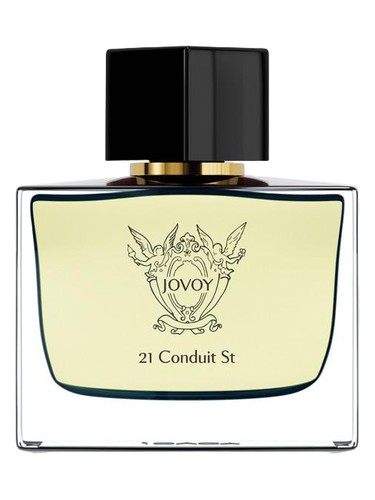
The first spray of 21 Conduit St is a deliberate provocation. Grapefruit zest collides with lavender''s herbal bite while tart rhubarb weaves through bergamot''s sunny disposition—this is not the demure, floral-sweet opening you''d expect from a fragrance marketed as feminine. Instead, Jovoy Paris has crafted something considerably more interesting: a citrus-aromatic composition that borrows liberally from masculine territory while maintaining its own distinctive identity. The opening reads bright and confident, almost bracingly fresh, with that lavender note lending an aromatic backbone that announces this fragrance won''t be following conventional rules.
The Scent Profile
The architecture of 21 Conduit St reveals itself as a study in contrasts. Those top notes—grapefruit, rhubarb, lavender, and bergamot—create an opening that''s simultaneously tart, herbal, and luminous. The grapefruit provides bitter-bright citrus energy, while rhubarb adds an unusual green-pink tartness that keeps the composition from veering too traditionally cologne-like. Lavender, often relegated to masculine fougères or sleepy linen sprays, here acts as the aromatic anchor, its camphoraceous qualities amplified by bergamot''s peppery facets.
The heart is where 21 Conduit St takes its most intriguing turn. Balsam fir introduces a resinous, almost coniferous quality—imagine the snap of evergreen needles underfoot—while amaretto brings an unexpected gourmand whisper. This pairing shouldn''t work on paper, yet in practice, the almond-cherry sweetness of amaretto softens the fir''s sharp green edges, creating a heart that feels both outdoorsy and surprisingly cozy.
The base grounds everything in contemporary woody-amber territory. Ambroxan lends that now-ubiquitous mineral warmth and skin-like radiance that''s become shorthand for modern luxury. Woody notes provide structure without heaviness, while tonka bean rounds out the composition with its vanilla-hay sweetness, never quite tipping into full gourmand territory but offering just enough warmth to balance the persistent freshness above.
What makes this progression compelling is how elements from each phase linger and overlap. The citrus never fully disappears; the aromatic lavender threads through the drydown; the amber and woods are present almost from the start, waiting patiently beneath the brighter notes.
Character & Occasion
21 Conduit St has declared itself a spring and summer fragrance, and the community data supports this emphatically—spring wearability hits 100%, with summer following closely at 85%. That said, the 85% fall rating suggests this isn''t purely warm-weather territory. The fresh spicy and aromatic accords give it enough depth to transition into cooler months, though the 39% winter score confirms what your nose already suspects: this lives primarily in the brighter, warmer seasons.
The day versus night breakdown tells an even clearer story: 97% day, 39% night. This is a daytime fragrance through and through, perfect for when you want to smell polished, energetic, and approachable rather than seductive or mysterious. It''s the scent of productive mornings, outdoor meetings, spring lunches that stretch into afternoon, summer workdays that don''t require buttoned-up formality.
Despite its feminine classification, 21 Conduit St reads decidedly unisex—perhaps even masculine-leaning to some noses. The dominant citrus (100%) and aromatic (97%) accords place it firmly in territory often associated with men''s fragrances, though the execution feels modern enough to transcend such binary thinking. This is for someone who finds traditional feminine florals cloying, who wants freshness without simplicity, who appreciates fragrances that challenge rather than comfort.
Community Verdict
With a rating of 3.91 out of 5 from 521 votes, 21 Conduit St occupies that interesting space of being well-regarded without achieving universal acclaim. This isn''t a polarizing fragrance—you won''t find people declaring it either revolutionary or unwearable—but rather one that''s earned steady appreciation from those who''ve discovered it. That rating suggests quality and thoughtful composition, while the vote count indicates this remains somewhat under the radar compared to mainstream releases. For explorers willing to venture beyond the usual suspects, that''s actually promising territory.
How It Compares
The comparison fragrances reveal 21 Conduit St''s eclectic positioning. Terre d''Hermès shares that citrus-woody-aromatic DNA, though Hermès'' creation skews more overtly masculine and mineral. Ani by Nishane connects through the gourmand-vanilla elements, though Nishane''s creation is considerably sweeter and heavier. The inclusion of Tauer''s L''Air du Desert Marocain suggests shared aromatic-spicy territory, while Layton and Bois Impérial point to that modern woody-amber foundation.
What this comparison set tells us is that 21 Conduit St exists in a fascinating middle ground—fresher and more citrus-forward than the gourmands, more aromatic than pure citrus scents, less aggressively masculine than traditional woody fragrances. It''s carved out its own niche.
The Bottom Line
21 Conduit St deserves more attention than its current profile suggests. At 3.91 stars, it''s clearly resonating with those who''ve tried it, and the distinctive composition justifies exploration for anyone tired of predictable feminine releases. This isn''t for those seeking soft florals or sweet comfort scents—it''s for the lavender-lovers, the citrus-obsessives, the people who appreciate aromatic freshness with enough depth to remain interesting.
The unknown concentration leaves some questions about longevity and projection, but the ambroxan and woody base notes suggest reasonable staying power. If you find yourself drawn to the freshness of Terre d''Hermès but want something less aggressively earthy, or if you appreciate the modern woody-amber trend but need more brightness, 21 Conduit St might be exactly the address you''re looking for. Sometimes the most interesting discoveries happen when perfumers refuse to color within traditional lines.
AI-generated editorial review