First Impressions
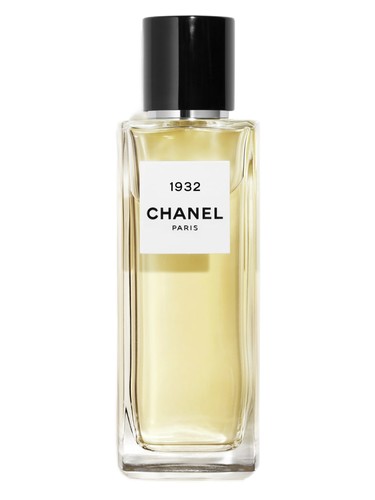
The first spray of Chanel 1932 feels like stepping into a photograph preserved in sepia tones—not faded, but rather refined by time into something more essential than the original moment. There''s an immediate effervescence, a sparkle of aldehydes that conjures the image of light refracting through cut crystal. But this isn''t the assertive aldehydic blast of its famous ancestor; instead, it arrives with the confidence of someone who has nothing left to prove. A whisper of pear softens the edges, while grapefruit adds a barely-there citric brightness that disappears almost as quickly as it arrives, like sunlight dancing across a wall before the clouds shift.
This is a fragrance that demands patience. In an era of aggressive projection and tenacious longevity, 1932 takes a different approach entirely—one that feels almost revolutionary in its restraint.
The Scent Profile
The opening act is deceptively simple. Those aldehydes—registering at 95% in the main accords—create a soapy, effervescent veil, but they''re tempered by the subtle sweetness of pear and the clean brightness of grapefruit. It''s a triptych of freshness that never veers into sharp territory, instead maintaining an almost creamy quality that hints at the floral heart waiting beneath.
As the top notes settle, the true character emerges: iris takes center stage, commanding 84% of the accord profile. This isn''t the buttery, carrot-like iris of some modern interpretations, nor is it the aggressively powdery iris of vintage compositions. Instead, it occupies a middle ground—cool, slightly metallic, with a papery quality that evokes pressed flowers between book pages. Jasmine weaves through the iris, adding just enough indolic warmth to prevent the composition from becoming too austere, while unspecified floral notes create a diffused halo effect around these primary players.
The base reveals unexpected complexity. Musk provides the foundation, soft and skin-like, while woody notes and vetiver add structure without weight. A whisper of vanilla rounds the edges, and incense—barely perceptible—adds a contemplative quality that elevates the entire composition beyond mere prettiness. The powdery accord, registering at 78%, becomes most apparent in this final stage, creating that signature Chanel effect of expensive cosmetics and old-world elegance.
Character & Occasion
The data tells a clear story: this is a spring fragrance first and foremost (100%), followed by summer (73%) and fall (69%), with winter trailing at 47%. That seasonal versatility stems from its balanced freshness—it''s substantial enough for cooler weather without becoming heavy, yet refined enough for warmth without wilting.
More telling is the day/night split: 94% day versus 39% night. This isn''t a fragrance for seduction or drama. It''s for boardrooms and brunch, gallery openings and garden parties. It''s the olfactory equivalent of a well-cut white shirt—impeccably elegant, endlessly appropriate, quietly confident.
The floral-aldehydic profile (100% and 95% respectively) positions it firmly in classic Chanel territory, but the substantial iris component (84%) gives it a modern, almost minimalist edge. This makes it particularly suited to those who appreciate vintage sensibilities but find older formulations too heavy or assertive for contemporary life.
Community Verdict
With a rating of 4.07 out of 5 from 759 votes, 1932 sits in that interesting territory of being well-regarded without inspiring fanaticism. This isn''t a criticism—rather, it reflects the fragrance''s inherent nature. It''s not trying to be anyone''s signature scent or to inspire passionate devotion. Instead, it offers something perhaps more valuable: consistency, reliability, and quiet sophistication.
The respectable vote count suggests a fragrance that''s been genuinely explored by the community rather than simply purchased and forgotten. That 4.07 rating indicates broad approval, even if it doesn''t inspire the five-star rapture of more distinctive or polarizing compositions.
How It Compares
Chanel has positioned 1932 within a constellation of related fragrances: Chanel No 5 Eau de Parfum, 1957 Eau de Parfum, Paris – Venise, No 5 L''Eau, and No 5 Eau Premiere (2015). The connection is unmistakable—these are all variations on the house''s aldehydic-floral signature.
Where 1932 distinguishes itself is in that prominent iris accord. While No 5 and its various iterations lean heavily on aldehydes and ylang-ylang, 1932 takes a cooler, more restrained approach. Compared to 1957''s bolder musk-forward composition, this feels more introspective. It''s less about making a statement and more about inhabiting a mood.
Within the broader iris category, 1932 sits between the butter-rich interpretations (like Prada''s Infusion d''Iris) and the aggressively rooty versions. It occupies a Goldilocks zone that makes it accessible without being bland.
The Bottom Line
Released in 2016 as part of Chanel''s Les Exclusifs collection, 1932 represents the house at its most self-referential—a fragrance inspired by Gabrielle Chanel''s only jewelry collection, the Bijoux de Diamants. That provenance matters because it explains the composition''s philosophy: like diamonds, this fragrance achieves its effect through clarity and precise cutting rather than sheer size.
At 4.07 stars, it''s not a desert island fragrance for most wearers, but it''s something potentially more useful—a reliable choice that consistently delivers understated elegance. The Eau de Parfum concentration provides adequate presence without overwhelming, though those seeking serious projection should look elsewhere.
This is for the person who owns quality basics, who appreciates the difference between looking expensive and looking flashy, who understands that sometimes the most sophisticated choice is also the quietest one. If you''ve ever found yourself drawn to vintage Chanel but wished for something lighter, more wearable, more now—1932 deserves your attention. It may not set your heart racing, but it will make you feel like the best version of yourself. And sometimes, that''s exactly enough.
AI-generated editorial review