First Impressions
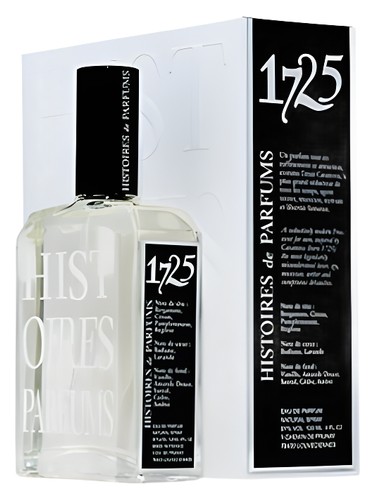
The first spray of 1725 delivers an unexpected greeting—a rush of black licorice wrapped in bright citrus, as if Casanova himself had candied the rinds of bergamot and grapefruit in his Venetian palazzo. This is not the aggressive masculinity of modern sport fragrances, nor the austere minimalism of niche darlings. Instead, Histoires de Parfums'' 2001 creation opens with a paradox: simultaneously playful and worldly, sweet yet refined, announcing itself with the confidence of someone who has nothing left to prove.
That opening licorice note—polarizing to some, intoxicating to others—acts as a velvet curtain parting to reveal the complexity beneath. The citruses don''t merely brighten; they caramelize against the anisic sweetness, creating an almost gourmand effect that stops short of dessert territory. This is a fragrance that understands restraint, even as it indulges.
The Scent Profile
As 1725 settles into its heart, lavender emerges not as a barbershop cliché but as an aromatic bridge between the opening''s sweetness and what''s to come. Star anise reinforces that initial licorice impression, the two creating a soft spicy accord (registering at a full 100% in the composition''s DNA) that feels both comforting and deliberately exotic. The lavender here reads herbal rather than soapy, its natural camphoraceous quality tempered by the surrounding warmth.
This middle phase reveals the fragrance''s true architecture. The anisic character (64% of the accord profile) interweaves with lavender (79%) to create something that feels simultaneously familiar and foreign—like encountering a childhood memory refracted through adult sensibilities. There''s a powdery quality emerging (62%), subtle but unmistakable, that adds a vintage sensibility without tipping into dated territory.
The base is where 1725 truly earns its place among serious masculines. Vanilla (61% of the overall impression) arrives not as a sweet punctuation mark but as a creamy foundation, supporting rather than dominating. Almond adds a marzipan-like richness that could veer gourmand but is grounded by the woody trio of sandalwood, amber, and cedar. These base notes don''t announce themselves dramatically; instead, they create a soft, skin-like warmth that lingers for hours. The sandalwood provides creaminess, the cedar a pencil-shaving dryness, and the amber a resinous glow that ties everything together. This is a base built for longevity, for the slow reveal across a full day or evening.
Character & Occasion
Here''s where 1725 proves versatile enough to earn its 4.1-star rating from 1,680 voters. Designated as suitable for all seasons, it nonetheless shows its true colors in cooler weather, where those spicy, vanilla-laced notes can bloom without becoming cloying. The data shows no particular skew toward day or night wear, and in practice, this ambiguity becomes an asset—1725 transitions seamlessly from afternoon meetings to evening dinners.
This is a masculine fragrance in the classical sense, but one that plays with traditionally feminine notes (lavender, vanilla, powder) in a way that feels transgressive in the best possible sense. It recalls an era when men wore powdered wigs and silk breeches without questioning their masculinity. The modern wearer who gravitates toward 1725 likely appreciates this historical wink, this refusal to conform to contemporary masculine fragrance tropes of aquatics and aggressive woods.
For fall and winter wardrobes—cashmere sweaters, wool coats, leather boots—1725 provides an olfactory complement that enhances rather than competes. It''s sophisticated without being unapproachable, distinctive without being deliberately weird.
Community Verdict
The Reddit fragrance community has spoken clearly on 1725, awarding it a positive sentiment score of 7.8 out of 10 across 37 opinions. What''s particularly telling is the qualitative feedback: multiple users report that 1725 "renews interest in fragrance discovery," suggesting it delivers something genuinely different in an oversaturated market.
The pros are substantial: collectors praise its well-crafted complexity, its impressive performance and longevity, and its unique composition. Several community members specifically noted replacing other fragrances with 1725 in their rotation—perhaps the highest compliment a fragrance can receive. It''s earned a reputation as a daily signature scent for those seeking something off the beaten path.
The cons are notably sparse and mostly circumstantial. It''s not widely owned within the community sample, though whether this reflects limited availability, marketing, or simply niche appeal remains unclear. Some users suggest it may struggle in warmer seasons, though the official designation contradicts this. The most significant criticism might simply be its relative obscurity compared to designer heavy-hitters.
How It Compares
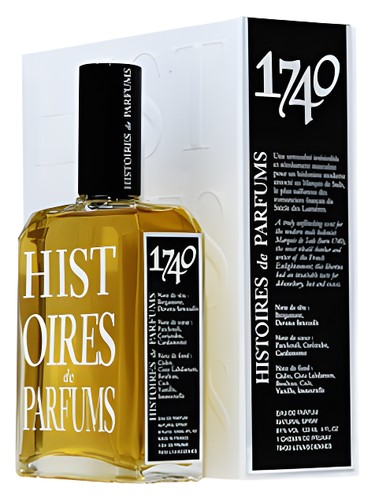
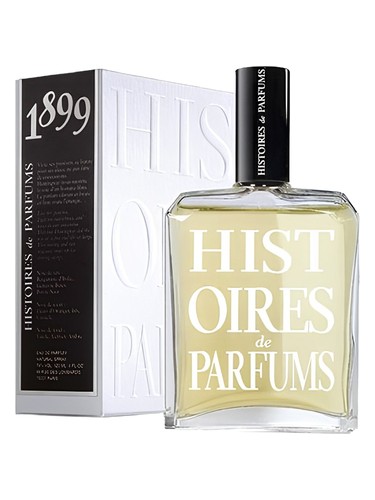
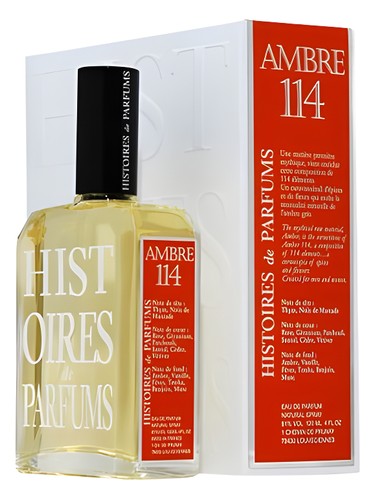
The comparison set positions 1725 in rarefied air: Musc Ravageur by Frederic Malle, Oud Wood by Tom Ford, and Tauer''s L''Air du Desert Marocain are all cult favorites commanding serious respect. Within the Histoires de Parfums line itself, connections to Ambre 114 and 1899 Hemingway suggest a house style that favors rich, unconventional compositions over safe commercial plays.
Where 1725 distinguishes itself is in that opening licorice-citrus combination and the way it navigates between gourmand and aromatic territories without fully committing to either. It''s sweeter than the austere Tauer, more approachable than the animalic Musc Ravageur, less woody than Oud Wood—occupying its own sweet spot for those who want complexity without confrontation.
The Bottom Line
With a 4.1 rating from nearly 1,700 voters, 1725 has achieved that difficult balance of critical respect and popular approval. This isn''t a fragrance that will convert those who prefer linear, fresh masculines. But for the wearer seeking something that rewards attention, that reveals new facets across multiple wearings, 1725 delivers exceptional value.
The price point (typical for niche but not stratospheric) feels justified given the quality of ingredients and the genuine artistry in composition. This is a fragrance that could serve as a daily signature or a special-occasion statement, depending on your existing collection and personal style.
Should you try it? If you''ve ever found yourself bored by conventional masculine fragrances, if you appreciate historical references in modern compositions, or if you simply want something that smells expensive without screaming for attention—yes, absolutely. Sample first if the licorice note gives you pause, but give it time on skin. 1725 is a slow seduction, not a quick conquest, and entirely worth the courtship.
AI-generated editorial review