First Impressions
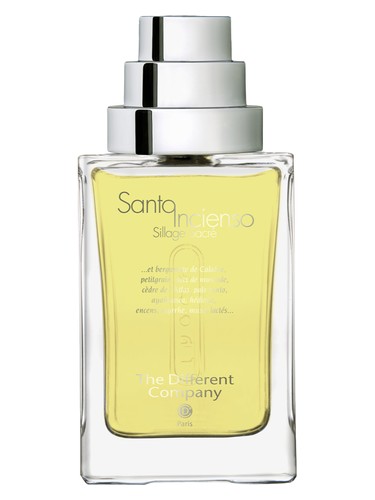
The first spray of Santo Incienso, Sillage Sacré feels like stepping into a sunlit chapel where morning light streams through stained glass onto centuries-old wooden pews. There's an immediate brightness—Calabrian bergamot radiating with Mediterranean warmth—but it's quickly tempered by the quiet spirituality of nutmeg and petitgrain. This isn't the heavy, oppressive incense of dimly lit cathedrals; rather, it's incense reimagined for daylight hours, wearable and surprisingly fresh despite its sacred intentions. The Different Company has crafted something that manages to feel both contemplative and utterly contemporary, a contradiction that becomes its greatest strength.
The Scent Profile
The opening is a masterclass in brightness meeting warmth. That Calabrian bergamot doesn't simply announce itself and vanish—it lingers, creating a citrus framework that supports everything that follows. Nutmeg adds a gentle spice that never veers into Christmas territory, while petitgrain contributes a subtle green bitterness that keeps the composition from becoming too sweet or predictable. It's an opening that suggests complexity without overwhelming the senses.
As the fragrance settles into its heart, the titular palo santo emerges alongside Atlas cedar and hedione. This is where Santo Incienso reveals its true character. Palo santo—that sacred South American wood burned in spiritual cleansing rituals—brings a creamy, slightly citrusy woodiness that differs entirely from the sharp ecclesiastical frankincense most associate with religious settings. The Atlas cedar grounds this ethereal quality with its dry, pencil-shaving texture, while hedione works its transparent magic, creating air and lift. It's during this phase that you understand why this fragrance scores so highly in woody (100%) and aromatic (52%) accords while maintaining that substantial citrus presence (53%).
The base is where devotion meets earth. Incense finally steps forward, but it's woven seamlessly with vetiver, myrrh, guaiac wood, and musk. The result is smoky (30% accord) without being heavy, amber-toned (48%) without being sweet, and persistently woody without becoming austere. The myrrh adds a resinous quality that complements the incense rather than competing with it, while guaiac wood introduces a subtle rose-like facet that softens the composition's more ascetic tendencies. Vetiver and musk create a skin-like base that keeps everything tethered to wearability rather than pure conceptual artistry.
Character & Occasion
The community data tells a compelling story about Santo Incienso's versatility. With perfect spring scores (100%) and near-perfect fall ratings (97%), this is fundamentally a transitional fragrance—best when the weather asks for something substantial but not stifling. That strong summer showing (77%) speaks to its fresh spicy character (36%) and persistent citrus, making it remarkably wearable even in warmer months when many woody fragrances would feel oppressive. Winter (50%) is its weakest season, likely because it lacks the heavy sweetness or dense projection that cold weather often demands.
The day/night split is even more telling: 97% day versus just 37% night. This is unequivocally a daytime fragrance, suited to office environments, casual weekends, and situations where you want to smell refined without demanding attention. Despite its name suggesting sacred evening rituals, Santo Incienso is surprisingly office-appropriate and accessible.
Marketed as feminine, this fragrance laughs at such boundaries. The composition is thoroughly unisex, appealing to anyone drawn to intelligent woody fragrances with citrus brightness. It's for the person who wants something spiritual without being mystical, woody without being masculine-coded, and complex without being challenging.
Community Verdict
With a 3.95 out of 5 rating based on 381 votes, Santo Incienso sits comfortably in "very good" territory. This isn't a polarizing love-it-or-hate-it composition; rather, it's a well-executed fragrance that delivers exactly what it promises. The solid vote count suggests genuine community engagement rather than a niche curiosity, and the rating indicates consistent appreciation rather than wild swings of opinion. This is the kind of fragrance that doesn't necessarily become anyone's signature scent, but earns respect and regular wear from those who own it.
How It Compares
The comparison fragrances reveal Santo Incienso's position in the woody-citrus-aromatic landscape. It shares Terre d'Hermès's sophisticated citrus-over-wood structure but trades that fragrance's mineral quality for something more overtly spiritual. Like Tauer's L'Air du Desert Marocain, it explores dry, contemplative woods, but Santo Incienso is significantly brighter and more wearable for daytime. Serge Lutens's Fille en Aiguilles offers a similar incense-and-forest experience, but leans more gothic where Santo Incienso remains luminous. Against Lalique's Encre Noire, this fragrance feels almost cheerful—same vetiver foundation, vastly different mood. And while Timbuktu explores exotic woods, Santo Incienso feels more refined, less raw.
What sets it apart is that persistent citrus brightness throughout the wear. Many woody incense fragrances lose their top notes quickly and settle into somber territory; Santo Incienso maintains its optimism from first spray to final fade.
The Bottom Line
Santo Incienso, Sillage Sacré succeeds by refusing to be one thing. It's spiritual but wearable, woody but bright, complex but accessible. At 3.95/5, it's not claiming to revolutionize the incense category—instead, it offers a thoughtful, well-executed take that prioritizes wearability without sacrificing depth.
This is worth exploring for anyone who finds traditional incense fragrances too heavy or church-like, or who wants the sophistication of woody aromatics without sacrificing daytime versatility. It's particularly valuable for spring and fall wear, when its balanced profile can truly shine. While it may not inspire obsessive devotion, it earns something perhaps more valuable: consistent respect and reach-for-ability. Sometimes, being very good is exactly what's needed.
AI-generated editorial review