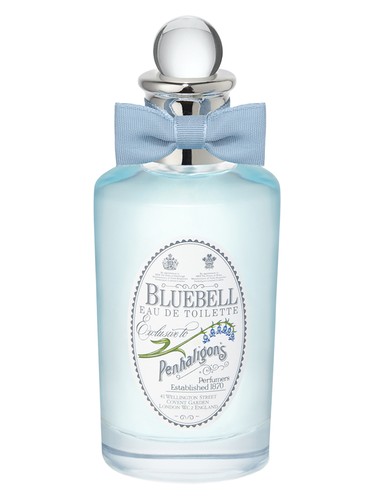
Premières Impressions
Le premier vaporisateur de Bluebell, c''est comme pousser un portail de jardin après une pluie matinale. Il y a un éclat immédiat d''agrumes frais, certes, mais ce qui vous arrête, c''est la verdure écrasante—verdoyante, humide de rosée, presque agressivement vivante. Ce n''est pas le vert poli d''une pelouse parfaitement entretenue. C''est le vert sauvage et riche en chlorophylle des tiges écrasées et de l''ombre forestière, où des fleurs délicates percent la terre humide vers la lumière filtrée. Penhaligon''s a créé ceci en 1978, et près de cinq décennies plus tard, cela ressemble toujours à capturer quelque chose d''indomptable dans une bouteille.
La maison britannique du patrimoine a bâti sa réputation sur des parfums excentriques et caractérisés, et Bluebell porte cet héritage avec fierté. C''est un parfum qui s''annonce avec conviction—l''accord vert s''enregistre à pleine intensité, dominant tout ce qui suit. Si vous vous attendez à une impression douce et aquarellée des fleurs de printemps, préparez-vous à recalibrer. Bluebell est le printemps en couleur audacieuse et saturée.
Le Profil Olfactif
Ces agrumes d''ouverture servent davantage de luminosité que de vedettes, un éclair de soleil qui cède rapidement la place au cœur de la composition. Et quel cœur c''est : un généreux bouquet de jacinthe, muguet, rose, cyclamen et jasmin. Sur le papier, cela ressemble à tout l''inventaire printanier d''un fleuriste. En pratique, ces florales se tissent ensemble en quelque chose de surprenamment cohérent, bien que le muguet ait tendance à dominer avec sa douceur caractéristique et cette qualité légèrement savonneuse et pristine.
La jacinthe ajoute une verdeur florale terreuse, tandis que la rose fournit la structure et la familiarité. Le jasmin chuchote plutôt que de crier ici, offrant une légère crémosité sans tirer la composition vers le sensuel ouvertement. Le cyclamen—souvent décrit comme ayant un caractère vert et légèrement poivré—renforce cette qualité verdoyante dominante qui rend Bluebell si distinctive.
Mais voici où les choses deviennent intéressantes : la base. Au lieu des muscs doux ou des bois doux attendus, Penhaligon''s a osé avec le galbanum, les clous de girofle et la cannelle. Ce galbanum amplifie le caractère vert de manière exponentielle—c''est une note résineuse, vert amer qui peut être polarisante. Les épices (clous de girofle et cannelle) ajoutent une chaleur inattendue et une légère piquance qui empêche les florales de devenir trop sucrées ou unidimensionnelles. Cette combinaison explique pourquoi le parfum enregistre des accords épicés chauds et épicés frais notables (45% et 44% respectivement) malgré être fondamentalement une florale verte.
L''évolution n''est pas dramatique—Bluebell ne se transforme pas radicalement au cours de son port. Au lieu de cela, c''est plus comme regarder une journée de printemps progresser : la luminosité s''adoucit, les florales s''installent dans leur rythme, et ces notes de base épicées-vertes fournissent une ancre terrestre cohérente tout au long.
Caractère et Occasion
Les données racontent une histoire claire : c''est un parfum de printemps par excellence, enregistrant 100% d''affinité saisonnière pour ces mois qui se réchauffent quand les jardins s''animent. L''été revendique 46% de convenance, ce qui a du sens étant donné le caractère frais et vert, bien qu''en chaleur, ces épices pourraient sembler un peu lourdes. L''automne et l''hiver traînent de manière significative à 22% et 19% respectivement—ce n''est pas un parfum confortable et réconfortant pour le temps froid.
La division jour versus nuit est encore plus prononcée : 95% jour, seulement 15% nuit. Bluebell est fondamentalement un compagnon diurne, mieux adapté aux rendez-vous matinaux, aux garden-parties, aux courses de fin de semaine, ou à toute occasion où vous voulez vous sentir poli mais accessible. Il n''y a rien de séducteur ou de mystérieux ici—c''est transparent, lumineux, correct au meilleur sens britannique.
Pour qui est-ce ? La personne qui gravite vers les compositions florales classiques mais veut plus de colonne vertébrale et de caractère que les best-sellers typiques n''en offrent. Cela penche plus vers le formel que le casual, plus vers la structure que le bohème. C''est l''équivalent olfactif d''un blazer en lin bien coupé—intemporel, axé sur la qualité, confidemment sans prétention.
Verdict de la Communauté
Avec une note de 3,56 sur 5 de la part de 1 156 votants, Bluebell se situe confortablement dans le territoire « bon, pas formidable ». C''est un retour honnête qui mérite d''être considéré. Ce n''est pas un succès universel ou un best-seller moderne, et la note reflète cette réalité. Le caractère vert prononcé et les notes de base épicées raviront certains porteurs tandis qu''elles en laisseront d''autres froids.
Ces 1 156+ votes représentent des décennies de porteurs, de ceux qui l''ont découvert à la fin des années 70 aux explorateurs de parfums contemporains échantillonnant des compositions de style vintage. La cohérence des retours au fil du temps suggère que c''est un parfum qui est resté fidèle à lui-même—aucune reformulation dramatique ou ajustement de modernisation n''a adouci son caractère distinctif.
Comment Cela se Compare
La comparaison la plus évidente est Diorissimo de Dior, le légendaire soliflore muguet. Où Diorissimo est plus singulier dans son approche—une étude pristine, presque abstraite d''une fleur—Bluebell est plus complexe et de jardin, avec ce cadre vert-épicé prononcé. Parmi les autres parfums similaires listés—24 Faubourg, Un Jardin Sur Le Nil, Organza, Poème—Bluebell se tient comme peut-être le plus résolument vert et le moins intéressé par l''attrait commercial moderne.
Il occupe un espace intéressant dans la catégorie des florales vertes : plus agressif que les parfums de jardin anglais pastoraux, plus floral que les parfums purement verts, plus vintage dans la construction que les lancements de printemps contemporains. Pour ceux qui explorent les florales vertes classiques, c''est un point de référence important, montrant comment les épices et les notes résineuses peuvent ajouter de la dimension aux compositions axées sur les fleurs.
Le Verdict Final
Bluebell ne plaira pas à tout le monde—ou à tout vase de fleurs. Cette note de 3,56 et le caractère vert-épicé prononcé signifient que vous devriez absolument l''essayer avant de vous engager. Mais pour ceux qui se connectent à sa vision particulière du printemps, c''est un parfum gratifiant et bien élaboré qui a résisté à l''épreuve du temps.
Il offre quelque chose de plus en plus rare : un refus de plaire à tout le monde. À une époque de lancements largement testés et largement attrayants, la verdure sans compromis de Bluebell et sa colonne vertébrale épicée semblent presque rebelles. Oui, c''est correct et britannique et indéniablement classique, mais il y a une sauvagerie sous ce vernis.
Mieux adapté au port diurne de printemps, pour ceux qui apprécient les florales de style vintage avec du caractère et qui n''ont pas peur des notes vertes avec des dents. À plus de quatre décennies, Bluebell reste une voix distinctive dans la conversation florale—pas la plus bruyante, pas la plus populaire, mais indéniablement elle-même.
Critique éditoriale générée par IA