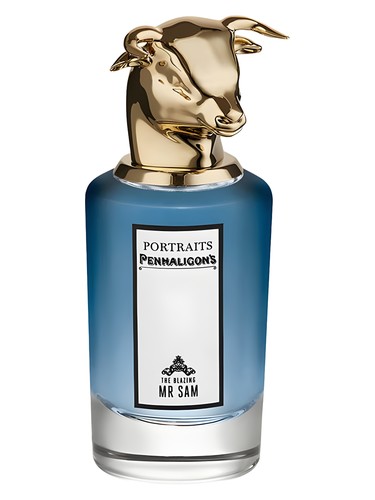
First Impressions
There's something decidedly gothic about spraying on a fragrance called "The Tragedy of Lord George." Penhaligon's 2016 creation doesn't shy away from its dramatic namesake, opening with an immediate declaration of intent: this is a fragrance that understands the weight of narrative. The first moments reveal a composition dominated by rich, burnished woods—an accord so prominent it registers at maximum intensity. There's an amber glow threading through those woody depths, creating an impression that's simultaneously austere and inviting, like stepping into a dimly lit library where leather-bound books line mahogany shelves. This isn't a fragrance that announces itself with citrus fanfare or aromatic brightness. Instead, Lord George speaks in lower registers, with the confidence of someone who knows they needn't shout to command attention.
The Scent Profile
Without a detailed breakdown of individual notes, The Tragedy of Lord George reveals itself through its dominant accords, and what a revealing portrait they paint. The woody accord stands at absolute full strength, forming the structural backbone of the entire composition. This isn't the fresh, crisp woodiness of cedar forests; it reads more mature, more complex—polished wood with age and character, perhaps sandalwood's creamy depth or the subtle smokiness of guaiac.
The amber accord follows at a substantial 72% intensity, wrapping those woods in resinous warmth. This is where the fragrance gains its golden glow, that particular luminosity that makes amber-forward compositions feel both ancient and timeless. The interplay between wood and amber creates a foundation that's utterly captivating—substantial without being heavy, warm without turning cloying.
Vanilla emerges at a moderate 33%, adding just enough sweetness to soften the composition's more austere tendencies. It's a supporting player here, never dominating but providing crucial balance. At 27%, warm spices weave through the structure, likely contributing pepper's bite or perhaps the subtle heat of cardamom. These spices don't announce themselves boldly but rather enhance the overall warmth, adding dimension and preventing the composition from feeling one-dimensional.
A modest sweetness (22%) and barely-there aromatic quality (14%) round out the profile, suggesting this is a fragrance that prioritized depth and warmth over traditional masculine freshness. The evolution appears relatively linear—this is a composition that establishes its character early and maintains it with unwavering consistency, like a novel where you understand the protagonist immediately and watch their story unfold with inevitable, compelling logic.
Character & Occasion
The seasonal data tells an unambiguous story: The Tragedy of Lord George is a cold-weather companion par excellence. With fall registering at 100% and winter at a near-perfect 94%, this is unquestionably a fragrance designed for months when warmth is something you wear rather than escape. Spring shows moderate 45% suitability—perhaps for those cooler transitional days—while summer's meager 18% confirms what the nose already knows: this isn't a fragrance for heat and humidity.
The day/night split proves particularly interesting. While perfectly acceptable for daytime wear at 63%, Lord George truly comes alive in evening settings, scoring an impressive 86% for night. This makes intuitive sense—the woody-amber-vanilla trinity speaks to dimmed lights, intimate gatherings, cooler air against skin. Picture it worn to autumn dinner parties, winter evenings at the theater, late-night conversations over whiskey. It's a fragrance for the man who appreciates narrative in his scent choices, who wants something with substance and story rather than mere pleasantness.
This is decidedly masculine territory, though the sweetness and vanilla prevent it from reading as aggressively so. It suits the man comfortable with richer, more complex compositions—someone who's graduated beyond fresh aquatics and wants their fragrance wardrobe to reflect maturity and depth.
Community Verdict
With 2,974 votes yielding a 4.12 out of 5 rating, The Tragedy of Lord George has clearly resonated with a substantial audience. This is a strong score, placing it firmly in "very good" territory—impressive for a fragrance that makes no concessions to mass appeal. The fact that nearly three thousand people have taken the time to rate it speaks to its reach beyond Penhaligon's typical audience, while the rating itself suggests broad satisfaction. It's not quite achieving universal acclaim, but the score indicates that those who appreciate this style of composition find much to love here.
How It Compares
The comparison list reads like a who's who of modern niche bestsellers. Baccarat Rouge 540's inclusion suggests shared DNA in the amber-sweet territory, while By the Fireplace points to similar cozy warmth. Oud Wood and Noir Extreme comparisons highlight the woody-amber-spice structure, and Angels' Share suggests parallel vanilla-rich depth. Lord George sits comfortably in this distinguished company, offering a British take on themes that have proven immensely popular. It perhaps lacks Baccarat Rouge's ethereal quality or Oud Wood's exotic luxe, positioning itself instead as more traditionally masculine and grounded—less conceptual, more wearable.
The Bottom Line
The Tragedy of Lord George deserves its strong 4.12 rating. Penhaligon's has crafted a fragrance that delivers exactly what its dramatic name promises: substance, depth, and character. It's not revolutionary, nor does it need to be. Instead, it executes a woody-amber-vanilla composition with skill and restraint, creating something eminently wearable that still possesses genuine personality.
This is a fragrance for those who appreciate their scents rich and warming, who want something special for cooler months without venturing into challenging territory. If you've enjoyed any of its comparable fragrances but want something with a more traditionally masculine lean, Lord George warrants investigation. At this rating level with substantial community input, you're looking at a safe bet—a fragrance that delivers satisfaction without surprises. Sometimes, that's precisely what tragedy's aftermath requires: something dependable, warming, and quietly magnificent.
Critique éditoriale générée par IA