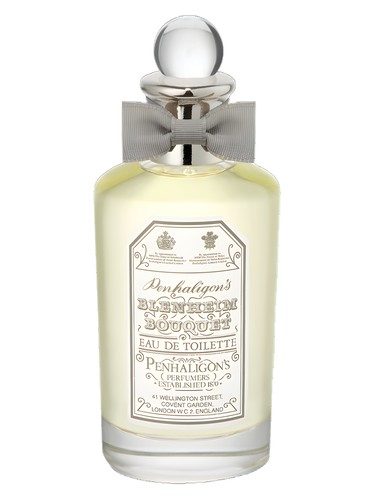
First Impressions
The first spray of Blenheim Bouquet transports you not to a modern fragrance counter, but to a wood-paneled gentleman''s club circa 1902. There''s an immediate burst of bright, unapologetic citrus—the kind that feels squeezed rather than synthesized—followed by a wave of aromatic herbs that suggest crisp linen and freshly stropped razors. This is a cologne in the truest sense: clarifying, bracing, and utterly uncompromising in its pursuit of clean elegance. Where contemporary masculines often announce themselves with bombast, Blenheim Bouquet whispers with the confidence of 120 years'' worth of refinement.
The Scent Profile
Without specific note breakdowns available, we must let the accord structure tell the story—and what a story it reveals. Citrus dominates completely at 100%, establishing Blenheim Bouquet as fundamentally a citrus composition, but this isn''t a fleeting cologne splash. The 65% aromatic accord suggests a substantial herbal backbone, likely pine and black pepper given the supporting accords, while the 46% fresh spicy element adds bite and complexity.
The opening is all brightness—imagine standing in an orchard with pine trees nearby, citrus oils still clinging to your fingertips. But as the initial effervescence settles, the aromatic and woody elements (45%) emerge with purpose. There''s a coniferous quality (33%) that brings to mind juniper and pine needles, creating an outdoorsy, almost gin-like clarity. The lavender accord (31%) weaves through the composition, never dominating but adding a classic barbershop sophistication.
What''s remarkable is how these elements don''t follow a traditional pyramid structure so much as they layer and intermingle. The citrus never fully departs; instead, it becomes a bright thread running through a increasingly complex tapestry of aromatics and woods. This is old-school perfumery at work—composition through blending rather than distinct top-heart-base progression.
Character & Occasion
Blenheim Bouquet''s versatility is legendary, and the data confirms why: it''s suitable for all seasons. This is the hallmark of a true classic—a fragrance that adapts rather than dominates. In summer, that citrus-aromatic profile feels refreshing and appropriate; in winter, the woody and conifer elements provide surprising warmth without heaviness.
This is decidedly a daytime fragrance, though the data doesn''t show specific day/night preferences. The bright citrus and aromatic character naturally gravitate toward morning and afternoon wear—think business meetings, weekend brunches, or long country walks. It''s the scent of productivity and polish, of someone who has their life together without needing to announce it.
The masculine designation feels accurate but not restrictive. Blenheim Bouquet comes from an era before fragrance marketing calcified gender boundaries, and its clean, aromatic profile would suit anyone who appreciates classic cologne structures. It''s particularly well-suited to those who find modern masculines too sweet, too loud, or too obviously "perfume-y."
Community Verdict
With a solid 3.94 out of 5 rating from 1,877 voters, Blenheim Bouquet occupies an interesting position in the fragrance canon. This isn''t quite "desert island" territory, but it''s well-loved nonetheless. The rating suggests a fragrance that appeals strongly to those who seek it out—classic cologne enthusiasts, Penhaligon''s devotees, and perfume historians—while perhaps not converting those who prefer richer, more contemporary compositions.
Nearly 1,900 votes for a 120-year-old fragrance speaks to enduring relevance. This isn''t a forgotten relic occasionally rediscovered; it''s a living piece of perfume history with an active, engaged audience. The rating also suggests realistic expectations: this is excellent at what it does, but what it does is deliberately restrained and uncompromisingly traditional.
How It Compares
The similar fragrances list reads like a who''s-who of masculine classics: Eau Sauvage, Terre d''Hermès, Guerlain''s Vetiver. What these share with Blenheim Bouquet is compositional integrity—they''re fragrances with clear points of view, built on quality materials rather than market-tested focus groups.
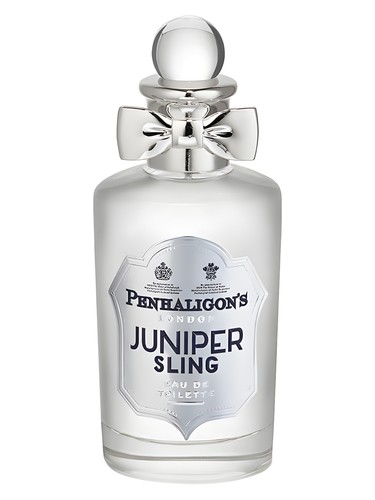
Compared to Eau Sauvage, Blenheim Bouquet leans more aromatic and less floral. Against Terre d''Hermès, it''s brighter and less mineral. The two Penhaligon''s siblings—Endymion and Juniper Sling—offer interesting contrasts within the house style, with Blenheim Bouquet representing the purest expression of the brand''s British heritage.
In its category, Blenheim Bouquet stands as something of an elder statesman: not the most exciting option, perhaps, but arguably the most historically significant. It''s the template against which many subsequent citrus-aromatic masculines are measured.
The Bottom Line
Blenheim Bouquet isn''t for everyone, and that''s precisely its strength. In an era of crowd-pleasing blue fragrances and sweet gourmands, it offers something increasingly rare: uncompromising classical elegance. The 3.94 rating reflects not mediocrity but specificity—this fragrance knows exactly what it is and refuses to be anything else.
Value depends on perspective. You''re paying for over a century of heritage and a formula that has survived essentially unchanged because it didn''t need improvement. Those seeking projection, longevity, or modern sensibilities should look elsewhere. Those seeking a piece of living perfume history, a genuine Edwardian cologne that still feels relevant, will find exactly what they''re looking for.
Who should try it? Anyone curious about fragrance history, anyone exhausted by contemporary masculine tropes, anyone who''s ever wondered what "proper cologne" actually means. Blenheim Bouquet rewards patience and appreciation for subtlety—qualities that, like the fragrance itself, never go out of style.
Critique éditoriale générée par IA