First Impressions
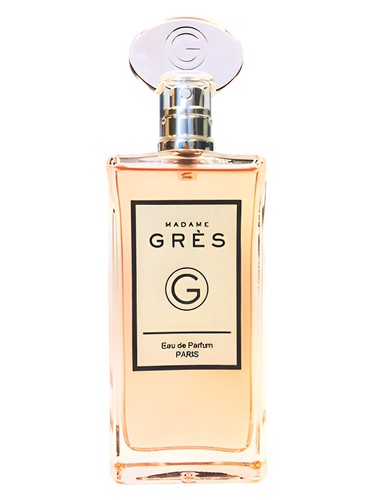
The first spray of Madame Grès lands like a champagne toast at an autumn garden party—unexpected tropical brightness cutting through crisp air. That opening burst of pineapple and grapefruit feels almost deliberately contrarian for a fragrance bearing such a storied couture name, yet it works precisely because cardamom enters immediately to add weight and complexity. This isn''t the sweet, sun-drenched fruitiness of beach vacation perfumes; it''s fruit with architecture, with intention. Within moments, you sense this is a fragrance built on contrasts: the warmth of spice against cool citrus, the promise of flowers tempered by something darker underneath.
The Scent Profile
The evolution of Madame Grès reads like a carefully choreographed reveal, each phase distinct yet seamlessly connected. Those opening notes—pineapple''s juicy brightness, grapefruit''s bitter-sweet tang, and cardamom''s resinous warmth—create an unusual trinity that avoids the trap of purely gourmand fruit or simple citrus freshness. The cardamom is crucial here, its green-spicy character serving as a bridge between the tropical top and what''s coming next.
The heart is where Madame Grès fully announces its classical heritage. Magnolia, peony, and freesia compose a floral trio that leans decidedly white and creamy rather than heady or indolic. The magnolia brings lemony freshness and satin texture, while peony adds a gauzy, slightly peppery quality. Freesia contributes that characteristic soapy-clean aspect that keeps the florals from becoming too heavy or baroque. This is the fragrance''s dominant personality—100% floral according to community assessment—and it wears its petals with confident femininity that recalls couture rather than department store conventions.
But it''s the base where Madame Grès truly distinguishes itself from simpler floral compositions. Patchouli and sandalwood provide the woody foundation that rates at 87% in the accord profile, grounding those airy flowers with earthy richness. The patchouli isn''t the aggressive, head-shop variety but rather a refined, slightly sweet version that blends seamlessly with creamy sandalwood. Vanilla adds sweetness—accounting for that 62% sweet accord—without tipping into dessert territory. Then comes the surprise: leather. It''s subtle, more of a textural element than a pronounced animalic note, but it adds an unexpected edge that keeps the composition from being too pretty, too safe.
The warm spicy accord (80%) persists throughout the wear, that initial cardamom threading through the florals and into the base, while the fruity character (60%) gradually fades but never entirely disappears, leaving a ghost of tropical brightness even in the drydown.
Character & Occasion
Madame Grès is decisively a cool-weather companion. The community consensus places it squarely in fall territory (100%), with winter a strong secondary season (81%). This makes perfect sense—those warm spices and woody-vanilla base notes want the contrast of cold air, the richness of layered clothing, the coziness of indoor gatherings. Spring scores respectably at 64%, suggesting it works during transitional weather, but summer''s low 32% rating confirms what your nose already tells you: this isn''t built for heat.
The day/night split is revealing: 92% day versus 62% night. This is primarily a daytime fragrance, sophisticated enough for professional settings yet warm enough for weekend brunches and gallery openings. That said, the 62% night rating suggests it has enough presence and sensuality for evening wear—you''re not limited to sunlight hours.
Who is this for? The woman who appreciates classic femininity but refuses to smell like a relic. Someone who owns tailored pieces alongside contemporary cuts, who understands that elegance doesn''t require stuffiness. The floral dominance makes it unmistakably feminine, but the patchouli and leather add modern grit.
Community Verdict
With 753 votes landing at 3.89 out of 5, Madame Grès occupies solid territory—well-liked but not universally adored. This rating suggests a fragrance with clear personality that resonates strongly with its target audience while perhaps being too specific for broader appeal. It''s not trying to be everyone''s everyday fragrance, and that focused identity likely contributes to both its devoted fans and its more moderate overall score. For those who connect with its particular blend of tropical fruit, creamy florals, and woody warmth, this rating likely undersells its appeal.
How It Compares
The comparison list reads like a who''s who of modern floral-oriental blockbusters: Angel, La Vie Est Belle, Euphoria, Casmir, Coco Mademoiselle. What Madame Grès shares with these powerhouses is boldness—none of these are shy, apologetic fragrances. Like Angel and Euphoria, it isn''t afraid of sweetness and fruit. Like La Vie Est Belle and Coco Mademoiselle, it balances florals with sophistication. Casmir''s oriental warmth perhaps comes closest to Madame Grès''s overall character.
Where it carves its own space is in that specific combination of tropical fruit opening and leather-tinged base. It''s less aggressively sweet than Angel, more floral than Coco Mademoiselle, warmer than La Vie Est Belle. If you love that family but want something less ubiquitous, Madame Grès deserves consideration.
The Bottom Line
Madame Grès (2013) represents a successful revival of a historic name—not by copying vintage formulas but by creating something that captures couture sensibility in contemporary language. That 3.89 rating reflects a well-crafted fragrance with distinct personality rather than a crowd-pleaser designed by committee.
It won''t be for everyone, particularly those who prefer linear simplicity or summer-weight florals. The fruity opening might surprise those expecting pure classicism, while the woody-patchouli base might be too much for strict floral purists.
But for those seeking a floral fragrance with backbone, something that transitions beautifully from crisp autumn days into winter''s depth, Madame Grès offers sophisticated warmth without sacrificing femininity. At its core, it''s a fragrance that understands contrast—light and dark, fruit and flower, softness and structure—and uses those tensions to create something more interesting than the sum of its parts. Sample it when the weather turns cool, and give it time to reveal its layers. You might find yourself reaching for it all season long.
KI-generierte redaktionelle Rezension