First Impressions
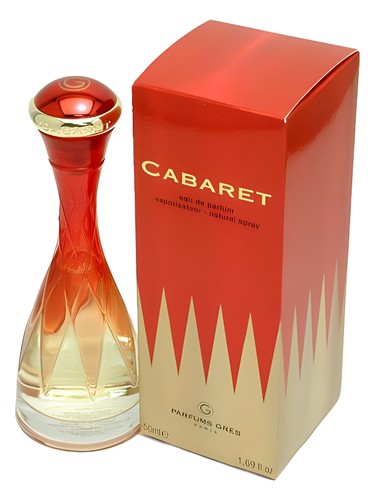
The first spray of Cabaret Grès feels like stepping into a theater after hours—velvet seats still warm, stage lights dimmed to amber, the ghost of a performance lingering in the air. Rose announces itself immediately, but this is no dewy garden rose. It arrives already dressed for the evening, dusted with something almost talc-like, flanked by the green sweetness of lily-of-the-valley and the soft sigh of peony. There''s a maturity here, a deliberate refusal to sparkle or charm in obvious ways. Within moments, you sense the incense waiting in the wings, and you know this fragrance has stories to tell.
The Scent Profile
Cabaret Grès opens with a floral trinity that manages to feel both classic and slightly subversive. The rose is front and center, but it''s tempered by peony''s powdery softness and lily-of-the-valley''s green, almost soapy freshness. This isn''t a photorealistic rose—it''s abstracted, stylized, more the idea of rose captured in a theatrical spotlight than an actual bloom.
The heart is where things get genuinely interesting. Incense sweeps across the composition like smoke across a stage, adding a resinous, contemplative quality that transforms those opening florals entirely. Iris and violet deepen the powdery impression, creating a almost makeup-compact effect—vintage face powder, lipstick cases clicked shut, the ghost of Guerlain''s golden age. This is the perfume''s most complex phase, where the sweetness of flowers meets the solemnity of church resins, and somehow they dance rather than clash.
The base settles into a warm, woody embrace that explains why the community rates this fragrance as 100% woody in its dominant accord. Patchouli provides earthy depth, while sandalwood adds its creamy, milk-soft texture. Musk keeps everything close to the skin, intimate rather than projecting. Amber glows beneath it all, warming the powdery florals like candlelight through frosted glass. The inclusion of nerium oleander—a note you don''t encounter often—adds a slightly bitter, green-almond nuance that keeps the base from becoming too sweet or predictable.
What''s remarkable is how seamlessly these transitions occur. Cabaret Grès doesn''t announce its phases with bold demarcation lines; instead, it shifts like changing light, each accord bleeding into the next until you realize you''re wearing an entirely different perfume than you were an hour ago.
Character & Occasion
The community has spoken clearly on this point: Cabaret Grès is a fall perfume first and foremost (100% seasonal match), with strong winter credentials (65%) and respectable spring showing (64%). Summer, at 36%, is where this fragrance struggles—and honestly, it should. This is not a perfume for heat and humidity. It wants cooler air, darker mornings, the excuse to wear wool and think deep thoughts.
Interestingly, day wearability scores at 97%, suggesting this isn''t quite the evening bombshell its name might suggest. Instead, think of it as sophisticated daywear for someone with presence—gallery openings, literary lunches, the kind of workday where you''re giving presentations rather than answering emails. That said, at 70% night wearability, it certainly doesn''t disappear after dark. The incense and amber give it enough weight for evening occasions, particularly in colder months when its woody-powdery character can fully bloom.
This is a fragrance for someone who appreciates perfumery''s history, who doesn''t need their scent to announce them from across the room. It''s for the person who considers rose a serious note rather than a romantic cliché, who finds comfort in patchouli rather than associating it solely with head shops.
Community Verdict
With a rating of 3.97 out of 5 from 1,095 votes, Cabaret Grès sits comfortably in "well-liked" territory. This isn''t a cult sensation with a small, fanatical following, nor is it a polarizing love-it-or-hate-it composition. Instead, it''s gathered a substantial community of admirers who appreciate what it does without necessarily crowning it as anyone''s desert island scent. That rating suggests consistency, wearability, and quality—the marks of a perfume that delivers on its promise without trying to be everything to everyone.
How It Compares
The comparison list reads like a who''s-who of sophisticated, woody-floral compositions. Dior''s Dune shares that same sun-warmed wood quality, while Paloma Picasso offers similar rose-inflected drama. The inclusion of Black Orchid by Tom Ford and Coco Eau de Parfum by Chanel suggests Cabaret Grès plays in elevated company—perfumes with weight, complexity, and a certain unapologetic femininity. Samsara''s sandalwood richness provides another reference point for the base notes'' creamy warmth.
Where Cabaret Grès distinguishes itself is in that incense-iris heart, which gives it a more contemplative, almost spiritual quality than some of its richer, more opulent cousins. It''s less overtly luxurious than Coco, less mysterious than Black Orchid, but it carves out its own space as the intellectual of the group.
The Bottom Line
Cabaret Grès deserves more attention than it seems to receive. Released in 2002, it represents a style of perfumery that was already becoming less common—complex, unapologetic, built for development rather than immediate impact. The near-4-star rating from over a thousand voters suggests this is a fragrance that rewards wearing, that reveals itself slowly to those patient enough to listen.
Is it for everyone? Absolutely not. If you want fresh, clean, or obviously romantic, look elsewhere. If you find powder and incense old-fashioned or heavy, this won''t convert you. But if you appreciate rose as a architectural element rather than a pretty face, if you want a perfume that feels like it has a past and possibly a philosophy degree, Cabaret Grès is worth exploring. It''s a fragrance that understands the difference between being noticed and being remembered—and confidently chooses the latter.
KI-generierte redaktionelle Rezension