First Impressions
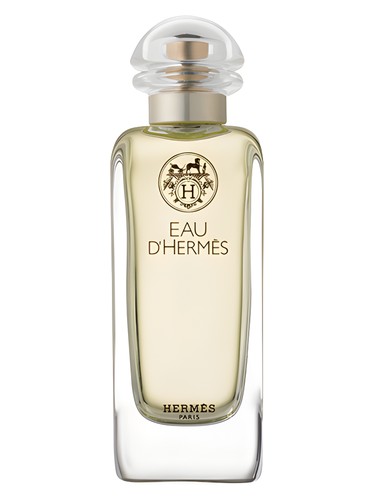
The first spray of Eau D''Hermès delivers an immediate jolt of clarity—a bracing collision of bergamot and lavender that feels simultaneously fresh-pressed and sun-warmed. There''s an herbal intelligence here, a sage-inflected brightness that reads more as refined restraint than aggressive freshness. Within moments, the citrus trio of bergamot, lemon, and petitgrain establishes an aromatic framework that''s unmistakably classical, yet the lavender adds an unexpected softness that hints at the complexity beneath. This is 1951 bottled: post-war optimism tempered with Old World sophistication, a fragrance that refuses to announce itself with volume but commands attention through perfect articulation.
The Scent Profile
The opening act is dominated by that aromatic-citrus combination that the community data confirms as the fragrance''s signature (aromatic at 100%, citrus at 84%). The lavender and petitgrain create an almost cologne-like transparency, but there''s nothing simple about this composition. The sage adds a green, slightly medicinal edge that keeps the citrus from veering into conventional territory.
As the top notes settle, Eau D''Hermès reveals its true character: a spice market wrapped in suede. The heart unfolds with remarkable complexity—cardamom and coriander provide brightness, while cinnamon and cloves add warmth without sweetness. The cumin introduces an almost animalic undertone, earthy and subtly sweaty in the most compelling way, while bourbon geranium brings a rosy, slightly metallic floralcy. A whisper of jasmine appears, not as a traditional floral centerpiece but as a supporting player that amplifies the spices'' exotic qualities. This middle phase explains the fresh spicy (84%) and warm spicy (77%) accord ratings—there''s a remarkable duality of temperature at play.
The base is where Eau D''Hermès stakes its claim as a leather fragrance (83% accord rating). This isn''t the diesel-fuel intensity of modern leather bombs; instead, birch and leather notes create a refined, saddle-smooth foundation. Sandalwood and cedar provide woody scaffolding (62% woody accord), while moss adds a vintage, slightly dusty character that firmly anchors this perfume in mid-century sensibilities. The tonka bean, vanilla, and labdanum offer just enough sweetness to soften the composition''s edges without compromising its essential dryness.
Character & Occasion
Marketed as feminine in 1951, Eau D''Hermès reads decidedly unisex to contemporary noses—perhaps even masculine-leaning to those accustomed to the fruity-floral paradigm of modern women''s perfumery. The community data reveals its true calling: this is primarily a cool-weather companion, with fall scoring 100% and spring following at 81%. Summer wearability sits at 77%, impressive for a leather-spice composition, likely due to that persistent aromatic-citrus brightness that keeps it from feeling heavy. Winter, surprisingly, scores lowest at 47%—this fragrance prefers the transitional seasons where its complexity can breathe.
The day/night split is telling: 98% day versus 48% night. Eau D''Hermès is a daylight fragrance through and through, better suited to weekend markets and afternoon meetings than candlelit dinners. There''s a propriety to it, a buttoned-up elegance that belongs to sunlit hours. The leather and spice give it enough substance for professional settings, while the aromatic freshness prevents it from feeling overpowering in close quarters.
Who should wear this? Anyone comfortable with vintage sensibilities and aromatic complexity. This isn''t a fragrance for those seeking immediate gratification or easy compliments. It rewards patience and sophisticated tastes.
Community Verdict
With a rating of 4.28 out of 5 based on 825 votes, Eau D''Hermès enjoys strong community approval—a remarkable achievement for a fragrance over seven decades old. This isn''t a niche curiosity with fifty devoted fans inflating its score; nearly a thousand reviewers have weighed in, and the consensus is decisively positive. That rating places it firmly in "very good" territory, suggesting a composition that has aged gracefully and continues to find relevance among modern wearers who discover it.
How It Compares
The similar fragrances list reads like a who''s who of masculine classics: Declaration by Cartier, Bel Ami by Hermès, Fahrenheit by Dior, Vetiver by Guerlain, and Eau Sauvage by Dior. Notice a pattern? Despite its feminine marketing, Eau D''Hermès shares DNA with some of perfumery''s most iconic men''s fragrances. It occupies a fascinating space—more aromatic and leathery than Eau Sauvage, less aggressive than Fahrenheit, and arguably more complex than its stablemate Bel Ami. In the context of modern aromatic-leather hybrids, it feels like the sophisticated grandparent teaching a masterclass in restraint.
The Bottom Line
Eau D''Hermès represents mid-century perfumery at its most assured—a time when compositions could embrace complexity without apology and gender categories felt more like suggestions than mandates. At 4.28/5, it''s clearly not just a historical curiosity but a living, wearable fragrance that continues to captivate.
The value proposition depends on your perspective. Vintage Hermès bottles can be found at varying price points, and availability may require some hunting. Is it worth the search? If you appreciate aromatic leathers with genuine depth, absolutely. This isn''t a fragrance for those seeking safe, crowd-pleasing scents or modern synthetic power. It''s for the wearer who values articulation over volume, heritage over hype.
Should you try it? If you''ve ever felt confined by contemporary gender marketing, if you love the idea of citrus and leather shaking hands, if you want to smell like someone who reads actual newspapers and wears well-maintained shoes—yes. Eau D''Hermès is a reminder that true style transcends both time and the arbitrary boundaries drawn around it.
KI-generierte redaktionelle Rezension