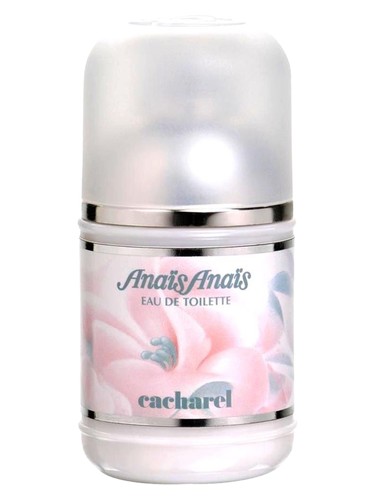
First Impressions
The first spray of Anais Anais feels like opening a velvet-lined jewelry box from your grandmother''s vanity—there''s an immediate rush of white lily so unapologetic, so unabashedly feminine, that it stops you mid-breath. This isn''t the whisper-soft, self-conscious florals of today''s market. This is 1978 speaking at full volume, when Cacharel decided that white flowers deserved center stage and every supporting note would simply have to fall in line. The hyacinth and honeysuckle dance around that commanding lily presence while galbanum adds just enough green bite to remind you this is a perfume, not a bouquet. There''s something almost defiant about it—a fragrance that knows exactly what it is and has no interest in being anything else.
The Scent Profile
Anais Anais opens with a surprisingly complex burst that belies its singular white floral reputation. Yes, the white lily dominates from the first moment, but it''s flanked by an impressive guard of hyacinth, honeysuckle, and orange blossom that create a heady, almost intoxicating sweetness. The galbanum provides a necessary green counterpoint—earthy and slightly bitter—while lavender, bergamot, and lemon offer fleeting moments of freshness that quickly surrender to the floral onslaught. There''s even a whisper of black currant, though it''s more of a fruity suggestion than a full statement.
The heart is where Anais Anais truly reveals its ambition. This isn''t just a lily perfume; it''s a full white floral symphony. Lily-of-the-valley joins its more robust cousin, while Moroccan jasmine and tuberose add creaminess and depth. The ylang-ylang brings its characteristic banana-like sweetness, carnation adds a spicy green facet, and rose and iris soften the edges with their powdery elegance. Orris root grounds everything with its earthy, slightly violet-tinged character. It''s a maximalist approach to perfumery—more is more, and restraint is for other decades.
What surprises most newcomers is the base. After all that floral exuberance, Anais Anais settles into something unexpectedly complex. Oakmoss provides that classic chypre-adjacent earthiness, while sandalwood, cedar, vetiver, and patchouli create a woody foundation that''s far more substantial than you''d expect. There''s incense adding a ceremonial quality, musk for warmth, and even leather and amber for depth. This base is what transforms Anais Anais from a simple floral into something with genuine staying power and character.
Character & Occasion
The data suggests Anais Anais works across all seasons, and there''s truth to that claim—this is a fragrance with enough substance to hold its own in any weather. The white floral dominance (registering at 100% in the accord analysis) makes it naturally suited to warmer months when flowers actually bloom, but the woody and earthy base notes (30% and 24% respectively) provide enough weight for cooler seasons. The green accord at 45% keeps it from feeling too heavy or suffocating even in heat.
This is decidedly a daytime fragrance, though the vintage formulation has enough presence for early evening occasions. It speaks to a certain kind of femininity—romantic, unabashed, perhaps a touch old-fashioned in the best possible way. It''s for garden parties and summer dresses, for moments when you want to be noticed but not in a calculated, modern way. There''s an innocence to it, despite the sophistication of its construction.
The woman who wears Anais Anais today is likely making a deliberate choice—she''s either returning to something that holds personal meaning or she''s actively seeking an alternative to contemporary fragrance trends. This isn''t a safe reach for a business meeting or a first date in the modern sense. It''s a statement of preference for a different era''s aesthetic values.
Community Verdict
The fragrance community rates Anais Anais at a respectable 3.52 out of 5 across more than 9,000 votes, and the Reddit sentiment sits at 7.5 out of 10—both solid if not spectacular numbers. What''s telling is the nature of the praise: this is a fragrance beloved for its vintage aesthetic and nostalgic appeal. Commenters describe it as "iconic," "memorable," and "unique compared to modern fragrances."
The devotion is real but quiet. As one key criticism notes, Anais Anais is "rarely discussed or mentioned in modern fragrance communities." It has a devoted following rather than a loud fanbase. The perfume holds significant personal meaning for those who wear it—it''s associated with memories, with specific moments in time, with mothers and grandmothers.
The reformulation issue looms large in the community discussion. Multiple reformulations have caused confusion about what exactly "Anais Anais" means anymore, and availability varies significantly by region. This isn''t a fragrance you''ll easily find in department stores, which adds to both its mystique and its accessibility problem.
How It Comparisons
Anais Anais sits in interesting company among its similar fragrances. Givenchy''s Organza and Amarige both share that unapologetic white floral approach, though Amarige skews even sweeter and louder. Dior''s Pure Poison takes the white floral concept in a more modern, polished direction. Mugler''s Alien, perhaps the most contemporary of the comparisons, shows how the white floral category evolved—more focused on singular notes (jasmine sambac) presented with modern minimalism rather than vintage abundance.
Within Cacharel''s own line, Noa offers a softer, more contemporary take on white florals—the brand''s acknowledgment that not everyone wants to smell like 1978. But that''s precisely what makes Anais Anais special: it is unrepentantly, completely itself.
The Bottom Line
Anais Anais deserves its 3.52 rating—it''s a well-constructed fragrance that does exactly what it sets out to do, but it''s not for everyone. In an era of skin scents and minimalist compositions, this feels almost transgressive in its fullness. The value proposition depends entirely on what you''re seeking. If you want a piece of perfume history, something that captures a specific moment in fragrance evolution, it''s invaluable. If you''re looking for something modern, office-appropriate, or subtle, look elsewhere.
This is a fragrance for vintage enthusiasts, for those who find "nostalgic occasions" worth dressing for, and for anyone tired of the self-conscious restraint of modern perfumery. It''s for people who understand that not everything old needs updating, that sometimes a time capsule is more valuable than a trend. Anais Anais isn''t trying to be relevant—and that, paradoxically, might be exactly what makes it so.
KI-generierte redaktionelle Rezension