First Impressions
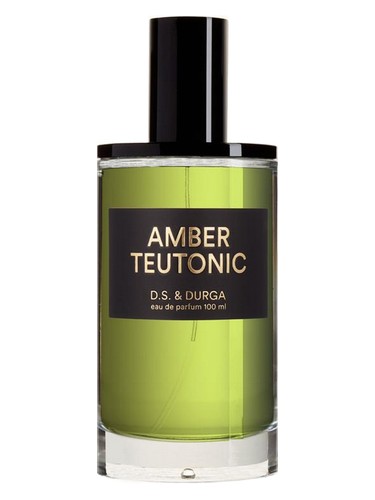
The first spray of Amber Teutonic feels like stepping into a cathedral of evergreens after the first snowfall. This isn''t the amber you know—no honeyed vanilla, no powdery sweetness, no incense-laden temples. DS&Durga has done something audacious here: they''ve taken the very concept of amber and dragged it northward, deep into Germanic forests where the air bites cold and the trees grow tall and resinous. Cedar and cardamom announce themselves immediately, the former providing a dry, pencil-shaving sharpness while the latter adds a whisper of aromatic spice. Green mandarin cuts through with citrus brightness, but it''s restrained, almost shy—a pale winter sun rather than Mediterranean radiance.
The Scent Profile
Amber Teutonic unfolds like a deliberate hike through increasingly dense woodland. Those opening notes of cedar and cardamom quickly establish this as a perfume with backbone—the cedar is not plush or soft but architectural, structural. The green mandarin provides just enough lift to keep the composition from feeling heavy, though "heavy" is relative here; this is a fragrance that embraces weight without apology.
As the scent settles, the heart reveals its true nature. Silver fir and larch step forward, flanking the composition with coniferous character that feels authentic rather than air-freshener synthetic. There''s a slightly medicinal, camphoraceous quality here—green sap and needle-sharp freshness. Geranium adds an unexpected floral-herbal dimension, its slightly minty, rose-adjacent character providing a bridge between the aromatic top and the increasingly balsamic base. This middle phase is where Amber Teutonic earns its "Teutonic" descriptor: austere, precise, almost stoic in its refusal to charm.
The base is where the "amber" finally makes sense, though not in conventional terms. Opoponax—that underappreciated resin—brings a warmer, slightly sweet balsamic quality without tipping into gourmand territory. Pine reinforces the coniferous thread that runs through the entire composition, while musk provides a soft, skin-like finish that keeps this from smelling like a forest floor and anchors it firmly in the realm of wearable perfume. The amber accord here is constructed rather than literal, built from resins and woods rather than the typical labdanum-vanilla foundation.
Character & Occasion
This is emphatically a cold-weather composition. The community data confirms what the nose already knows: fall sees this fragrance at its absolute peak (100% seasonal alignment), with winter following close behind at 84%. Spring wearers will find it workable at 66%, but at only 23% summer compatibility, leave this one in the drawer when temperatures rise. The coniferous, balsamic character simply demands cooler air to properly express itself.
Interestingly, Amber Teutonic straddles the day-night divide nearly perfectly—71% day versus 68% night. This versatility speaks to its restrained character; it''s woody and present without being aggressive, sophisticated without being overtly seductive. It works equally well for a autumn morning coffee run as it does for an evening gallery opening. The fragrance skews feminine in official categorization, but its woody-aromatic profile (100% woody, 70% aromatic) reads decidedly unisex, perhaps even masculine-leaning to some noses.
This is a perfume for those who find conventional amber fragrances too sweet, too safe, or too predictable. It rewards patience and appreciation for subtlety over projection.
Community Verdict
With a rating of 4.05 out of 5 from 406 votes, Amber Teutonic has found its audience—a solid, enthusiastic following rather than mainstream ubiquity. This rating suggests a fragrance that divides slightly: those who connect with its austere, coniferous interpretation of amber love it deeply, while those seeking traditional warmth may find it remote. The vote count indicates this isn''t a blockbuster seller, but rather a connoisseur''s choice, the kind of fragrance that builds loyalty through distinctiveness rather than broad appeal.
How It Compares
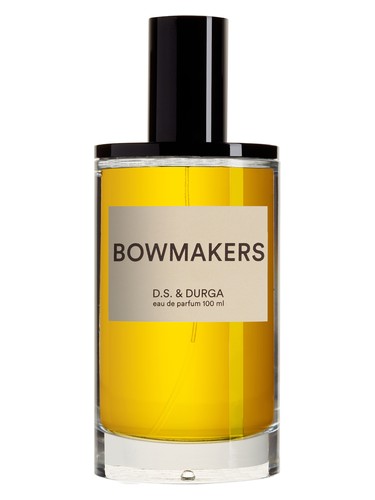
The similarity to Serge Lutens'' Fille en Aiguilles is immediately apparent—both share that commitment to authentic pine and fir notes over sweetness. Lalique''s Encre Noire appears in the comparison list for good reason: both embrace darkness and woody austerity. The mention of Bowmakers and Mississippi Medicine—both DS&Durga stablemates—speaks to brand DNA: this house consistently favors conceptual rigor over commercial palatability. Tauer''s L''Air du Desert Marocain shares the resinous, opoponax-rich base, though Tauer''s creation skews warmer and more traditionally ambery.
Where Amber Teutonic distinguishes itself is in that successful marriage of cold coniferous elements with balsamic warmth. It occupies a niche space: too woody for amber lovers, too ambery for hardcore woody fragrance devotees, yet perfectly balanced for those who want both.
The Bottom Line
Amber Teutonic isn''t trying to please everyone, and that''s precisely its strength. DS&Durga has created a fragrance that challenges the amber category while remaining wearable and sophisticated. At 4.05/5, it''s clearly resonating with those who seek it out, even if it hasn''t achieved mass appeal.
This is a fragrance for autumn walks through northern forests, for those who prefer Scandinavian minimalism to baroque excess, for anyone tired of amber''s usual tricks. It''s also proof that DS&Durga, launched in 2018, continues to carve out territory that mainstream houses won''t touch. If you''ve ever wished amber could be less golden and more green, less honeyed and more resinous, Amber Teutonic awaits. Just wait until the leaves start turning.
KI-generierte redaktionelle Rezension