First Impressions
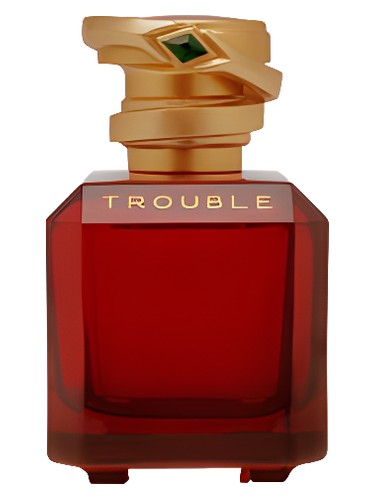
The name promises mischief, but the first spray of Trouble reveals something more nuanced than simple rebellion. There''s an immediate burst of lemon—bright, clean, almost defiant—that mingles with the herbal greenness of dyer''s greenweed, a note so rarely encountered it feels like discovering a secret ingredient. This opening feels like sunlight streaming through a window, deceptively innocent, yet there''s something knowing in its warmth. Within moments, you sense the amber lurking beneath, a golden undertow that hints at the transformation to come. Boucheron, known for their jeweler''s precision, has crafted something that sparkles on the surface while promising depth.
The Scent Profile
Trouble''s evolution is a study in contrasts. That opening lemon isn''t the sharp, fleeting citrus of a typical cologne; it''s sustained, almost creamy, bolstered by the dyer''s greenweed—a flowering shrub that adds a subtle aromatic quality and an unexpected yellow-green luminosity. These top notes don''t simply evaporate; they shimmer and fade like a slow sunrise.
As the citrus recedes, jasmine emerges as the solitary heart note, and here''s where Boucheron''s confidence shows. A single floral carrying the entire middle phase could feel sparse, but this jasmine is generous, indolic, and rich. It bridges the bright opening with the warm base, adding a white floral intensity that registers at 82% in the accord analysis. The jasmine here isn''t demure—it''s full-bodied and sensual, justifying why this fragrance earns perfect scores for nighttime wear.
The base is where Trouble settles into its true character. Amber dominates completely—the data shows it at 100%—creating a golden, resinous foundation that''s both comforting and seductive. Cedar adds structure and a subtle woodiness (39% in the overall accord profile), preventing the amber from becoming too sweet or cloying. This isn''t the sharp, pencil-shaving cedar of masculine fragrances; it''s smooth and integrated, creating a sophisticated warmth that clings to skin for hours. The interplay between amber and cedar creates that perfect autumn-winter balance: cozy without being heavy, elegant without being distant.
Character & Occasion
The numbers tell a clear story: Trouble is a cold-weather companion. With 90% winter suitability and 84% for fall, this is decidedly not a beach fragrance. That 18% summer rating makes sense once you consider the amber dominance—in heat, this could feel suffocating. But when temperatures drop and skin craves warmth, Trouble comes alive.
The day/night split is particularly revealing: 56% day versus 100% night. This fragrance transforms with the fading light. During daylight hours, the citrus and aromatic elements keep it office-appropriate and sophisticated, perfect for a winter workday or autumn errands. But as evening approaches, that amber base deepens, the jasmine grows more intoxicating, and Trouble earns its name. This is a fragrance that looks stunning under candlelight, that leaves a trail when you walk into a dinner party, that whispers rather than shouts but still commands attention.
Who is Trouble for? Someone who appreciates complexity, who wants more than a simple floral or a straightforward oriental. The 4.26 rating from 1,322 votes suggests broad appeal, but this isn''t a crowd-pleaser in the safe, generic sense—it''s a fragrance that rewards those who appreciate the interplay between light and dark, fresh and warm.
Community Verdict
Here''s where we encounter trouble with Trouble: the fragrance community data available doesn''t provide specific feedback on this Boucheron creation. The discussions analyzed focused on fragrance naming conventions rather than evaluating this particular scent. This absence is itself noteworthy—despite a solid 4.26 rating from over a thousand voters, Trouble hasn''t generated the passionate discourse that surrounds some of its contemporaries.
This silence could suggest several things: perhaps it''s a fragrance that speaks for itself without controversy, or maybe it''s been somewhat overlooked in favor of louder, more attention-grabbing releases. The respectable rating indicates those who''ve tried it generally approve, but the lack of detailed community conversation hints that Trouble may be one of those quiet achievers—well-crafted but not commanding the spotlight in today''s fragrance conversations.
How It Compares
The similar fragrances list reads like a who''s-who of sophisticated feminine orientals: Alien by Mugler, Coco Eau de Parfum by Chanel, Dune by Dior. These are serious, grown-up fragrances with devoted followings. Trouble shares their warmth and complexity but distinguishes itself with that unusual citrus-to-amber trajectory. Where Alien goes intensely woody-amber and Coco is a baroque spice opera, Trouble maintains a lighter touch, more accessible while still substantial.
The Coco Mademoiselle comparison is interesting—both feature citrus openings and warm bases, but Mademoiselle leans more patchouli-forward and contemporary-fresh, while Trouble embraces a more classical amber structure. Among these heavyweights, Trouble positions itself as perhaps the most versatile, the most willing to play between categories rather than dominating one.
The Bottom Line
A 4.26 rating from well over a thousand voters isn''t accidental—Trouble delivers quality. Released in 2004, it represents that interesting moment in perfumery when houses were creating substantial, well-constructed fragrances before the market fragmented into endless flankers and celebrity ventures.
Is it revolutionary? No. Is it beautiful, wearable, and surprisingly sophisticated? Absolutely. For the price point of a twenty-year-old fragrance from a respected house, Trouble offers remarkable value. It won''t be the loudest bottle in your collection, but it might become the one you reach for when you want to feel polished, warm, and quietly confident.
Try Trouble if you love amber fragrances but find many too heavy, if you appreciate jasmine but want it supported rather than spotlighted, or if you''re seeking a versatile cold-weather signature that transitions seamlessly from boardroom to bedroom. Just don''t expect it to cause actual trouble—this is the good kind, the kind you choose deliberately, the kind that makes you smile when you catch its whisper hours after application.
AI-generated editorial review