First Impressions
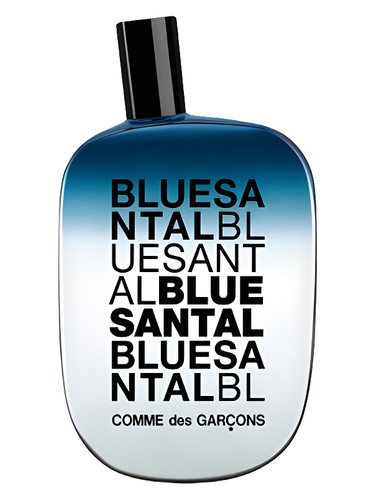
The first spray of Blue Santal is an exercise in contradiction—or perhaps more accurately, in deliberate ambiguity. This is Comme des Garçons at their most philosophical, presenting sandalwood not as the creamy, familiar whisper you might expect, but as something cooler, more cerebral, almost austere. There''s an immediate woody presence that reads clean rather than opulent, aromatic rather than sweet. The "blue" in the name isn''t just poetic license; there''s genuinely something chromatic about the way this fragrance projects, as if sandalwood has been filtered through a cool, mineral lens. It''s the scent equivalent of Japanese minimalism—every element carefully considered, nothing superfluous, everything intentional.
The Scent Profile
What makes Blue Santal particularly intriguing is what it doesn''t tell you. Without specified top, heart, and base notes, the fragrance exists as a holistic composition that resists conventional pyramidal analysis. This is entirely in keeping with Comme des Garçons'' avant-garde philosophy: why should a fragrance announce itself in predictable chapters?
What we do know is captured in its accord structure: an overwhelming woody dominance at 100%, grounded by a substantial aromatic quality at 67%. This creates a foundation that''s simultaneously substantial and airy. The fresh spicy accord at 52% provides the "blue" coolness—think cardamom''s bright bite or pink pepper''s metallic snap rather than the warmth of cinnamon. At 30%, the warm spicy element offers just enough contrast to prevent the composition from becoming too austere, while the powdery accord at 23% adds an unexpected softness that keeps the fragrance from skewing overtly masculine despite its woody intensity.
Perhaps most telling is the conifer note at 19%—a subtle but crucial element that introduces an outdoorsy, almost resinous quality. It''s the scent of clean wood shavings and forest air rather than Christmas trees, adding dimension without overwhelming the sandalwood core.
The fragrance wears close to the skin in that distinctly minimalist way, unfolding gradually rather than announcing itself boldly. Sandalwood serves as both protagonist and setting, with the aromatic and spicy accords acting as shifting light across its surface. There''s a meditative quality to its development—or perhaps more accurately, its lack of dramatic development. Blue Santal is content to simply exist, quietly confident in its own aesthetic.
Character & Occasion
Blue Santal''s versatility is remarkable for something so conceptually specific. The community data reveals a fragrance that transitions seamlessly through seasons: spring leads at 96%, with fall close behind at 89%. Even winter claims 70% approval, and surprisingly, summer garners 63%—impressive for such a woody composition. This adaptability stems from that cool, aromatic treatment of the wood notes. There''s none of the heavy, suffocating quality that makes some sandalwood fragrances summer liabilities.
The day versus night split is even more revealing: 100% day approval versus 47% night. This is decidedly a daylight fragrance, suited to studio work, gallery openings, minimalist cafés, and contemplative walks. It''s professional without being corporate, artistic without being precious. The restraint that makes it perfect for daytime wear might read as too understated for evening drama.
Marketed as feminine, Blue Santal exists in that increasingly common territory where gender distinctions feel arbitrary. The woody-aromatic profile would sit comfortably on anyone drawn to clean, contemplative scents. It''s for the person whose wardrobe consists of quality basics in neutral tones, who appreciates architecture and negative space, who finds beauty in reduction rather than accumulation.
Community Verdict
With a rating of 3.99 out of 5 from 662 votes, Blue Santal occupies interesting territory. This isn''t a polarizing love-it-or-hate-it fragrance, nor is it a crowd-pleasing blockbuster. Instead, it''s earned a solid, respectable appreciation from a substantial community. That near-4.0 rating suggests a fragrance that delivers on its promises without necessarily exceeding expectations or converting skeptics. For a niche, conceptual release from a fashion house known for challenging conventions, this represents genuine success. These are voters who understood the assignment and found the execution worthy, even if it didn''t inspire passionate devotion.
How It Compares
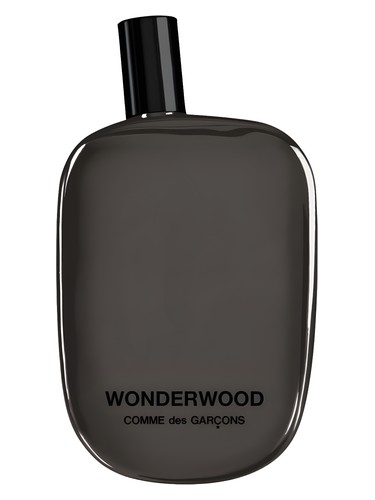
Blue Santal exists in distinguished company. Its sibling Wonderwood shares that Comme des Garçons approach to deconstructing woody compositions. Encre Noire by Lalique offers a darker, more gothic take on woody minimalism, while Fille en Aiguilles by Serge Lutens brings coniferous notes into more overtly feminine, resinous territory. Grey Vetiver by Tom Ford provides comparable refined restraint with a grassier focus, and Oud Wood by Tom Ford demonstrates how luxury woody fragrances can balance opulence with wearability.
Where Blue Santal distinguishes itself is in that particular coolness—the "blue" isn''t metaphorical. Among its peers, it''s perhaps the most explicitly cerebral, the most committed to restraint as an aesthetic choice rather than a compromise.
The Bottom Line
Blue Santal won''t be everyone''s sandalwood revelation, and it doesn''t try to be. This is a fragrance for those moments when you want to wear something rather than announce something. At 3.99 out of 5, it''s a fragrance that knows exactly what it is and executes that vision with admirable consistency. The lack of specified notes might frustrate traditionalists, but it''s also liberating—you experience the scent as a unified whole rather than checking off ingredients.
For those building a collection of intelligent, wearable woody fragrances, Blue Santal deserves consideration. It won''t be your showstopper, but it might become your most-reached-for option for those days when you want quality, restraint, and just enough character to feel intentional. In typical Comme des Garçons fashion, it asks you to meet it on its own terms. For those willing to do so, it offers quiet rewards.
AI-generated editorial review