First Impressions
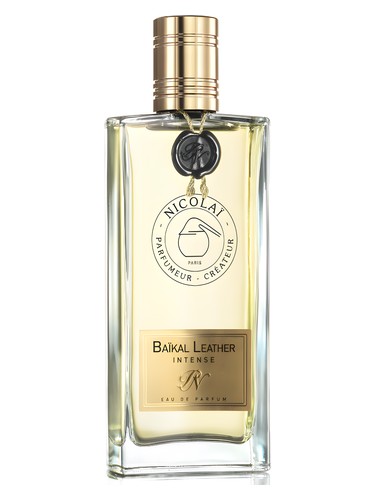
The first spray of Baikal Leather Intense doesn''t announce itself with fanfare—it murmurs. A bright burst of yuzu cuts through the air, its citrus edge sharpened by the metallic glint of saffron and the crackling heat of pepper. But this opening clarity lasts only moments before something more complex emerges: a powdery-woody presence that feels simultaneously rooted and ethereal. This isn''t leather in the aggressive, biker-jacket sense. Instead, imagine soft suede gloves left on a windowsill overlooking a pine forest, dusted with violet pollen and warmed by autumn sun. Patricia de Nicolaï, with her lineage steeped in perfumery royalty (she''s the great-granddaughter of Pierre-François Pascal Guerlain), has created something that defies easy categorization—a leather fragrance that prioritizes refinement over rawness.
The Scent Profile
That yuzu-saffron-pepper trinity opens like a door cracking into cold air, but the heart reveals where this fragrance truly lives. The leather note arrives not as a slap but as an embrace, wrapped immediately in the powdery softness of iris and violet. This is where Baikal Leather Intense performs its most interesting trick: the leather feels almost translucent, filtered through layers of floral powder until it becomes something gentler, more approachable. The iris brings its characteristic rooty, almost metallic quality, while violet adds a sweet, slightly green facet that keeps the composition from veering too serious.
Then comes the pine tar—an unexpected player that adds a smoky, resinous backbone without overwhelming the delicate balance. A whisper of rose threads through, never dominating but adding a classical femininity that grounds the more unconventional elements. This heart phase is where the fragrance settles into its identity: woody and powdery in equal measure (the data confirms this with 100% woody and 80% powdery accord ratings), with leather playing a supporting rather than starring role at 78%.
The base unfolds gradually, revealing a woody triumvirate of guaiac, vetiver, and sandalwood. The guaiac brings a subtle smokiness that echoes the pine tar from the heart, while vetiver adds its characteristic earthy, slightly grassy texture. Sandalwood provides creamy warmth, and musk lends skin-like intimacy. Finally, tonka bean rounds everything out with a subtle sweetness that never tips into gourmand territory. The entire composition maintains remarkable coherence—each phase flows into the next without jarring transitions, creating a seamless woody-powdery envelope that wears close to the skin.
Character & Occasion
With an 88% day-wear rating versus 50% for night, Baikal Leather Intense clearly prefers natural light. This is the fragrance you reach for when you want presence without projection, sophistication without ostentation. The community data reveals its true season: fall scores a perfect 100%, and it''s easy to understand why. This is September personified—crisp mornings, leather boots on fallen leaves, the gentle melancholy of summer''s end.
Spring comes in second at 72%, and the violet-iris combination makes perfect sense for those transitional months when you want something substantial but not heavy. Winter follows at 69%—the woody-musky base provides enough warmth for colder days, though it might feel slightly understated against the heaviest winter coats. Summer, predictably, scores only 24%. This isn''t a fragrance that tolerates heat well; the powdery-woody composition wants cool air to breathe.
Who wears this? Despite its feminine classification, Baikal Leather Intense feels quietly androgynous. It''s for someone who appreciates complexity over volume, who understands that strength doesn''t require aggression. This works beautifully in professional settings where you want to be remembered for competence, not your perfume trail.
Community Verdict
A rating of 3.85 out of 5 from 706 voters tells a specific story: this is a well-regarded fragrance that sparks appreciation rather than obsession. It''s not a crowd-pleaser in the traditional sense—it''s too subtle, too nuanced, too committed to its powdery-woody vision to achieve universal acclaim. But for those who connect with it, that rating represents genuine respect. The substantial vote count indicates this isn''t an obscure niche release languishing in the shadows; it has found its audience, and that audience finds it worthy of exploration without quite reaching "holy grail" status.
How It Compares
The similar fragrances list reveals Baikal Leather Intense''s interesting position in the perfume landscape. It shares DNA with Byredo''s Bal d''Afrique (woody-floral elegance), Serge Lutens'' Feminité du Bois (the cedar-violet connection), Hermès'' Terre d''Hermès (earthy vetiver refinement), Lalique''s Encre Noire (dark woody intensity), and Essential Parfums'' Bois Impérial (sophisticated woodwork). What unites these comparisons is refinement—these aren''t bombastic crowd-pleasers but compositions that reward patient attention.
Where Baikal Leather Intense distinguishes itself is in that powdery-leather balance. It''s softer than Encre Noire''s darkness, more leather-forward than Bal d''Afrique''s brightness, and more feminine than Terre d''Hermès despite sharing its earthy quality.
The Bottom Line
Baikal Leather Intense succeeds on its own terms: as a meditation on how leather can be reimagined through a powdery, iris-violet lens. At 3.85 stars, it''s a fragrance that delivers quality and interest without quite achieving masterpiece status—and that''s perfectly fine. Not every perfume needs to be revolutionary; some simply need to be very good at what they do.
This is worth trying if you''ve been searching for a leather fragrance that doesn''t scream "leather," if you appreciate woody-powdery compositions, or if you''re drawn to Patricia de Nicolaï''s refined aesthetic. It offers excellent fall and spring versatility, professional appropriateness, and enough complexity to keep you interested through repeated wearings. Just don''t expect massive projection or universal compliments—this one rewards those who lean in to listen.
AI-generated editorial review