First Impressions
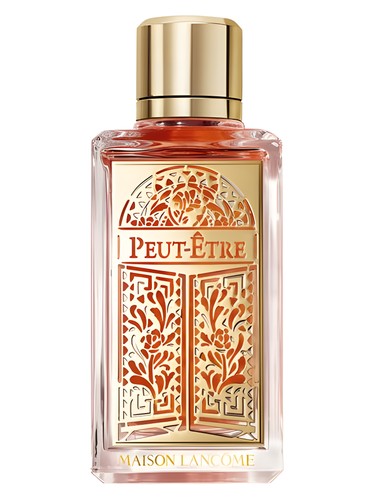
Perhaps. Maybe. Possibly. The French "peut-être" captures something English never quite manages—that delicious space between yes and no, between certainty and mystery. Lancôme''s 2020 release inhabits this liminal territory with remarkable grace. The first spray reveals a fragrance that refuses to announce itself with fanfare. Instead, Peut-Être settles onto skin like a secret whispered in a crowded room—intimate, personal, and deliberately ambiguous.
What strikes you immediately is the musk. Not the sharp, synthetic musk of commercial perfumery, but something softer, almost tactile. It''s the dominant force here, wrapping around everything else like cashmere around bare shoulders. Within moments, rose emerges—not the green-stemmed garden variety, but something more abstracted, warmed by amber and softened by powder. This is a fragrance that feels like a memory of something you might have smelled before, though you can''t quite place where.
The Scent Profile
Without specified top, heart, and base notes, Peut-Être presents itself as more of a unified impression than a traditional pyramidal structure. This is intentional modern perfumery—a blurred photograph rather than a technical drawing.
The musk accord dominates the composition at every stage, creating an enveloping softness that defines the fragrance''s character from first spray to final fade. Think of it as the canvas upon which everything else is painted. The rose, present at 64% intensity according to community perception, never takes center stage in the traditional sense. Instead, it weaves through the musk like a thread of pink silk through cream fabric—visible, beautiful, but always part of a larger whole.
The amber contribution brings warmth without heaviness, that peculiar golden glow that makes a fragrance feel like late afternoon light filtering through honey. At 56% presence, it''s substantial enough to give Peut-Être its enveloping quality, that sense of being wrapped in something comforting. The powdery aspect, registering at exactly half intensity, adds a vintage softness reminiscent of face powder compacts and silk slips—there''s something deliberately retro here, though never dated.
The warm spicy notes (28%) appear as gentle punctuation rather than exclamation points—a whisper of something that keeps the composition from becoming too sweet or too soft. And vanilla, at just 20%, acts as a subtle sweetener, rounding edges without announcing itself as a gourmand element. This is sophisticated restraint in action.
Character & Occasion
Here''s where Peut-Être reveals its versatility. The community data tells a compelling story: this is a spring fragrance first and foremost (100% seasonal appropriateness), but it translates beautifully into fall (86%) and winter (72%), with summer trailing at a still-respectable 66%. What does this mean in practice? You''re holding a rare thing—a fragrance that adapts.
In spring, the rose-musk combination feels like the first warm day when you can finally leave your coat at home. Come fall, those same notes deepen, the amber warming them into something more contemplative. Winter? The powder and vanilla emerge more prominently against cold air, creating an intimate cloud that stays close to skin. Even summer, typically hostile territory for musk and amber, works if you spray lightly—the warmth enhances rather than overwhelms.
The day-to-night breakdown is equally revealing: 94% day appropriate versus 47% night. Peut-Être is fundamentally a daytime fragrance, best suited to everything from morning coffee to late afternoon meetings. It''s present without being imposing, noticeable without demanding attention. That it drops to 47% night suitability doesn''t indicate failure—it simply means this isn''t trying to be a seduction bomb or evening statement piece.
This is a fragrance for women who''ve moved beyond the need to announce themselves with scent. It''s for the woman who knows that "perhaps" can be more intriguing than "definitely."
Community Verdict
With 520 votes resulting in a 4.21 out of 5 rating, the community has spoken clearly: Peut-Être is very good, bordering on excellent. This isn''t a cult fragrance with limited appeal sitting at 4.8, nor is it a disappointing release languishing below 4.0. Instead, it occupies that sweet spot of broad appeal combined with genuine quality.
The substantial vote count (520 is significant for a 2020 release) suggests this isn''t flying under the radar—people are finding it, trying it, and appreciating what it does. The 4.21 rating indicates consistent satisfaction across different preferences and skin chemistries. This is a fragrance that delivers on its promises, whatever those promises might be.
How It Compares
The listed similarities paint an interesting picture of Peut-Être''s neighborhood in the fragrance landscape. Guerlain''s Angélique Noire and Cuir Béluga suggest a kinship with sophisticated, skin-like fragrances that blur traditional categories. Serge Lutens'' Chergui points toward that same warm, ambiguous territory where spice meets sweetness meets skin. Tom Ford''s Noir Pour Femme and Amouage''s Lilac Love indicate a connection to contemporary luxury fragrances that prioritize wearability alongside artistry.
Where Peut-Être distinguishes itself is in its restraint. It''s less dramatically animalic than Cuir Béluga, less overtly spiced than Chergui, less intense than Tom Ford''s offering. It''s the introvert in a group of eloquent speakers—quietly compelling rather than commanding attention.
The Bottom Line
Lancôme has created something genuinely lovely with Peut-Être—a fragrance that understands the power of ambiguity in an era of bold statements. The 4.21 rating from over 500 voters confirms this isn''t just clever marketing; it''s a well-crafted scent that performs consistently across diverse conditions.
Should you try it? If you''re drawn to musk-forward fragrances that feel like second skin, absolutely. If you want something that works from February to November without reformulation, yes. If you need your fragrance to announce your presence before you enter a room, perhaps not—and perhaps that''s exactly the point.
Peut-Être is for the woman comfortable with questions rather than declarations, with subtlety rather than certainty. Sometimes "maybe" is the most honest answer, and sometimes it''s the most intriguing one too.
AI-generated editorial review