First Impressions
Spray Fahrenheit for the first time and you''ll understand why it''s survived over three decades while gentler fragrances have faded into obscurity. There''s a harshness to that initial blast—the alcohol hits assertively, almost defensively—but beneath it pulses something genuinely strange and magnetic. It''s the smell of gasoline rainbows in parking lot puddles, of violet stems crushed against warm leather, of cedar shavings scattered across a mechanic''s workbench. This is not a fragrance that wants to be liked immediately. It wants to be remembered.
The opening reveals Dior''s audacious 1988 vision: nutmeg flower and lavender wrestle with cedar and citrus notes of mandarin, bergamot, and lemon, while chamomile and hawthorn add herbaceous whispers. But these notes don''t behave as they should. The lavender isn''t soapy and clean; it''s petrol-soaked and industrial. The citrus doesn''t sparkle; it smolders. From the first moment, Fahrenheit announces itself as an outlier, a fragrance built on contradictions.
The Scent Profile
The evolution of Fahrenheit reads like a perfumer''s fever dream. Those aggressive opening minutes—dominated by that controversial gasoline-tinged floralcy—give way to something unexpectedly tender at its heart. Violet leaf takes center stage alongside nutmeg, cedar, and sandalwood, creating a woody-floral core that oscillates between masculine and androgynous. Carnation, honeysuckle, jasmine, and lily-of-the-valley weave through this middle phase, but they''re muted, almost abstracted, as if viewed through frosted glass.
What makes this heart phase remarkable is how it contradicts traditional masculine perfumery. While other fragrances of the era doubled down on bombastic spice and wood, Fahrenheit went soft and strange, letting that violet leaf create an almost powder-like texture against the cedar''s roughness. It''s simultaneously dated and futuristic, a quality that explains both its cult following and its detractors.
The base is where Fahrenheit finds its anchor. Leather dominates—earning a perfect 100% in the main accords—supported by vetiver, musk, amber, patchouli, and tonka bean. This is where the fragrance earns its warmth, that enveloping quality that makes it such a compelling cold-weather scent. The leather isn''t aggressive or animalic in the traditional sense; it''s broken-in and lived-in, with the tonka bean adding a subtle sweetness that keeps the composition from turning austere. The woody accord (85%) and ozonic quality (73%) persist throughout, creating that signature Fahrenheit character: part workshop, part wilderness, wholly unique.
Character & Occasion
The data speaks clearly here: Fahrenheit is a cold-weather champion. It scores perfect or near-perfect marks for winter (100%) and fall (99%), drops to moderate territory in spring (55%), and becomes genuinely challenging in summer heat (28%). That leather-woody-ozonic combination simply needs cooler air to breathe properly. In humidity, it can turn cloying; in crisp autumn air, it transforms into something approaching magic.
Interestingly, while it performs adequately during the day (68%), Fahrenheit truly comes alive at night (99%). This makes intuitive sense—it''s a bold, projecting fragrance with excellent longevity that commands attention rather than whispers. The 63% animalic accord adds a subtle edge that reads more intriguing under evening lights than in boardroom fluorescents.
Who should wear it? The community data suggests mature men 30 and older who want a statement fragrance, who''ve moved beyond crowd-pleasers and safe choices. This isn''t a fragrance for the timid or the trend-conscious. It''s for those who appreciate the unconventional, who understand that being distinctive matters more than being universally liked.
Community Verdict
With 21,718 votes averaging a solid 4/5 stars and a sentiment score of 7.2/10, Fahrenheit inspires respect even from those who don''t love it. The Reddit community''s assessment reveals a fragrance that demands patience and rewards loyalty.
The praise centers on its uniqueness—"unlike any other fragrance"—and its staying power, both literally (excellent longevity and projection) and culturally (historical significance since 1988). Multiple users note that it "grows on you over time," suggesting that Fahrenheit doesn''t reveal itself immediately. It''s a fragrance that requires multiple wearings to understand, a nose education unto itself.
The criticisms are equally telling. That initial alcohol harshness isn''t imagined—it''s real and takes time to settle. The scent is "polarizing and not mass-appealing," which will be a dealbreaker for some and a selling point for others. Perhaps most significantly, longtime fans lament that modern formulations lack the strength and complexity of vintage versions, a common complaint with reformulated classics. The final critique cuts deepest: Fahrenheit "requires maturity and nose development to appreciate fully." It''s not a beginner''s fragrance.
How It Compares
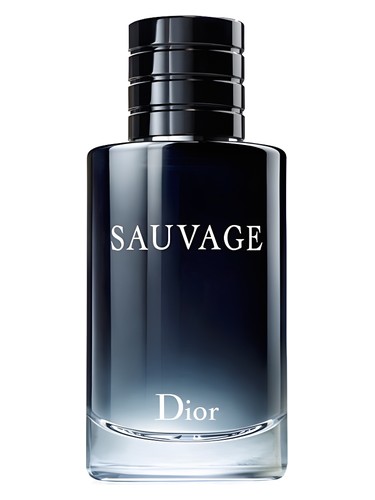
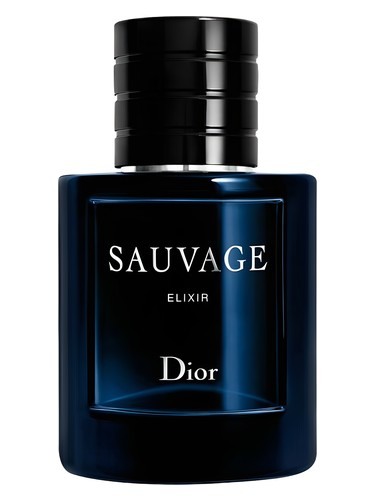
Positioned alongside similar fragrances like Bleu de Chanel, Terre d''Hermès, and its own Dior sibling Sauvage, Fahrenheit stands as the eccentric uncle at the family reunion. While Bleu de Chanel offers sophisticated versatility and Sauvage delivers mass-appeal freshness, Fahrenheit remains defiantly strange. It shares the aromatic complexity of L''Eau d''Issey Pour Homme and the refined masculinity of Egoiste Platinum, but it''s darker, stranger, more challenging than either.
In the leather fragrance category specifically, Fahrenheit occupies a unique space—more abstract and futuristic than traditional leather scents, with that gasoline-violet-cedar combination creating something genuinely original that hasn''t been successfully replicated, though many have tried.
The Bottom Line
Fahrenheit isn''t perfect. The reformulation issues are real, that opening can be off-putting, and it absolutely won''t appeal to everyone. But three decades on, it remains one of the most distinctive masculine fragrances ever created—a fragrance that took genuine risks and mostly succeeded.
That 4/5 rating from nearly 22,000 voters tells the story: this is a very good fragrance that inspires passionate devotion rather than universal acclaim. For the right person—someone who values character over consensus, who has the patience to let it settle and develop, who wants their scent to be recognized rather than just appreciated—Fahrenheit offers something increasingly rare in modern perfumery: true originality.
Should you blind buy it? Absolutely not. This needs to be tested, worn multiple times, lived with before commitment. But should it be on your sampling list if you''re exploring beyond safe choices? Without question. Fahrenheit remains what it was in 1988: a gasoline dream that shouldn''t work but somehow does, a beautiful contradiction that smells like nothing else.
AI-generated editorial review