First Impressions
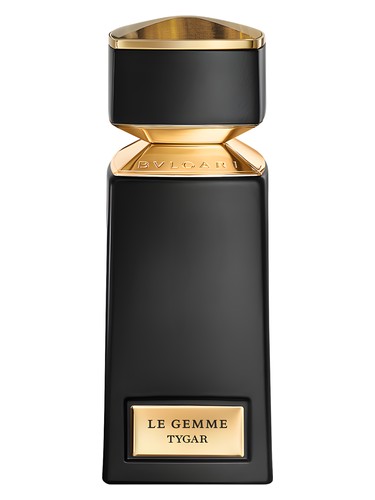
The first spray of Bvlgari Tygar delivers an immediate rush of bright, sun-drenched grapefruit—not the sharp, astringent citrus of a morning cologne, but something softer, more refined. There''s a crystalline quality to that opening, a sparkle that catches the light before settling into something warmer and more intimate. Within moments, the ginger begins to whisper at the edges, adding a subtle heat that keeps the composition from drifting into generic freshness. This is citrus with intention, with depth, with an unmistakable luxury feel that announces Bvlgari''s high-end aspirations from the very first moment.
What strikes you immediately is the quality. There''s a seamlessness to Tygar''s construction, a polish that speaks to skilled perfumery. The grapefruit doesn''t scream; it glows. And underneath, you sense the presence of something more substantial waiting to emerge—that amber-musky foundation that will define the fragrance''s character for hours to come.
The Scent Profile
Tygar''s evolution is less a journey than a gradual unfurling. The grapefruit top note dominates the opening act with near-total authority, justifying that 100% citrus accord rating. But this isn''t a fleeting cologne splash—the ginger and ambrette in the heart ensure the transition is smooth rather than abrupt. The ginger adds a fresh-spicy dimension (53% according to accord data) that keeps things interesting, while ambrette brings a subtle, almost fuzzy quality that begins to hint at the musky direction ahead.
As Tygar settles into its base, the composition reveals its true character: a sophisticated amber-musk accord (94% musky, 82% amber) built on a foundation of ambroxan, musk, vetiver, and patchouli. The ambroxan does the heavy lifting here, providing that modern, skin-like warmth that''s become a signature of contemporary masculine fragrances. The vetiver and patchouli add just enough earthiness to ground the composition without pulling it into overtly woody territory. There''s a powdery quality (16%) that emerges in the drydown, giving Tygar a refined, almost cosmetic finish.
The overall effect is linear—beautifully so, or disappointingly so, depending on your expectations. This isn''t a fragrance of dramatic twists and transformations. It''s a singular vision executed with precision.
Character & Occasion
Tygar is fundamentally a warm-weather fragrance, and the data confirms what your nose tells you: it''s perfectly suited for summer (100%) and spring (91%), maintaining relevance into fall (61%) but losing steam in winter (27%). That bright grapefruit opening and clean musky base make it an ideal companion for sunshine and heat, offering refreshment without the typical aquatic clichés.
The daytime preference is strong (89%), though it maintains surprising versatility for evening wear (54%). This is a fragrance for the office, for lunch meetings, for afternoon gatherings that might extend into dinner. It''s restrained enough for professional settings yet distinctive enough to make an impression. The citrus-amber-musk profile reads decidedly masculine without being aggressive, making it appropriate for anyone who appreciates bright, clean compositions with a warm foundation.
Think special occasions rather than daily rotation—not because Tygar demands formality, but because, as we''ll discuss, the price tag suggests strategic deployment.
Community Verdict
Here''s where Tygar''s story becomes complicated. With a rating of 4.44 out of 5 from 3,418 votes, the fragrance clearly has admirers. But dig into the community sentiment (a more modest 6.8/10), and a different picture emerges—one of conflicted appreciation.
The pros are genuine: users consistently praise Tygar''s beautiful scent, particularly that bright grapefruit opening and warm woody character. There''s recognition that Bvlgari, often overlooked in discussions of luxury houses, has created something legitimately high-quality. When found at discounted prices around $300, some find the value proposition acceptable.
But the cons are substantial and repeated frequently. At full retail—approximately $400—Tygar faces harsh scrutiny. The primary complaint centers on performance: weak projection and poor longevity, with many reporting the fragrance fades significantly after just 1-2 hours. For a $400 fragrance, that''s difficult to justify. Critics also note the linear nature and relative lack of complexity at this price point.
Most damaging, perhaps, is the proliferation of dupes. Community members regularly cite Alexandria Black Panther, Afnan Turathi Blue, and Sospiro Vibrato as near-identical alternatives at a fraction of the cost—often with superior longevity. When a fragrance can be convincingly replicated for under $50, its $400 price tag becomes nearly impossible to defend.
How It Compares
Tygar finds itself in distinguished company among similar fragrances: Bleu de Chanel Eau de Parfum, Louis Vuitton Imagination, Roja Dove Elysium Pour Homme, Terre d''Hermès, and Maison Francis Kurkdjian Grand Soir. These comparisons reveal both the quality of Tygar''s scent profile and the challenge it faces in justifying its positioning.
Like Bleu de Chanel, Tygar offers a modern, sophisticated take on masculine freshness with an amber-woody foundation. But Chanel''s offering typically delivers stronger performance. Terre d''Hermès operates in a similar citrus-amber space but has achieved iconic status that Tygar hasn''t matched. The comparison to Grand Soir—one of MFK''s most praised creations—feels aspirational rather than competitive.
The Bottom Line
Bvlgari Tygar presents a genuine dilemma. The scent itself deserves praise: it''s a beautiful, well-crafted composition that delivers exactly what it promises—bright citrus elegance with warm, musky depth. For those who prioritize scent quality above all else and find it at significant discount, Tygar can be a worthwhile acquisition.
But honesty demands acknowledging the elephant in the room: at full retail, Tygar''s price-to-performance ratio simply doesn''t compete. With weak longevity, linear development, and numerous excellent alternatives at much lower prices, spending $400 requires either deep devotion to this specific scent or complete indifference to value considerations.
Who should try it? Those curious about modern citrus-amber masculines who can sample before committing. Those who find it heavily discounted. Those exploring Bvlgari''s high-end offerings. But for most, exploring the frequently mentioned dupes or established alternatives like Terre d''Hermès makes more practical sense. Tygar is beautiful—but beauty alone doesn''t justify every price tag.
AI-generated editorial review