First Impressions
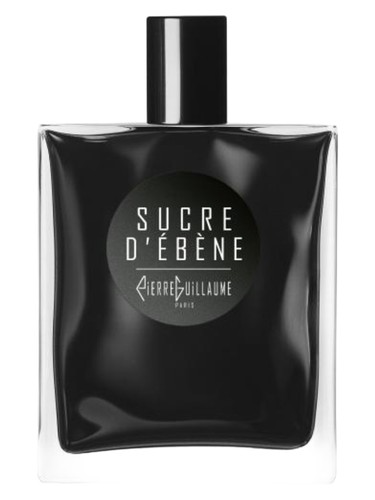
The name alone conjures paradox: ebony sugar, dark sweetness, the marriage of indulgence and restraint. Sucre d''Ebene doesn''t choose between these poles—it inhabits both simultaneously. From the first spray, there''s an immediate warmth that reads as sweet without being cloying, woody without turning austere. This is Pierre Guillaume demonstrating his particular genius: creating fragrances that exist in the liminal space between categories, refusing to be easily pinned down. The opening feels like discovering a hand-carved wooden box lined with velvet, containing something precious and slightly illicit—perhaps candied chestnuts dusted with exotic spices, or caramelized wood shavings from a master craftsman''s workshop.
The Scent Profile
While Pierre Guillaume has kept the specific note breakdown close to the vest—perhaps intentionally, knowing that mystery serves this fragrance well—the dominant accords tell a compelling story of progression and balance. The sweetness that registers at full intensity isn''t the sugary, headache-inducing variety that plagues lesser gourmands. Instead, it''s tempered immediately by a robust woody character at 83%, creating a foundation that feels simultaneously comforting and sophisticated.
As Sucre d''Ebene settles into the skin, the interplay between amber and vanilla becomes apparent, each at roughly two-thirds strength. This isn''t vanilla as a solo performance—no simple cupcake tribute here. The amber lends a resinous, slightly smoky quality that darkens the vanilla, while the vanilla softens what might otherwise be a more austere amber. The result is something that hovers beautifully between dessert and incense.
The nutty accord at 46% provides crucial texture to the composition, adding a toasted, almost caramelized quality that bridges the gap between the sweetness and the woods. There''s a suggestion of praline, perhaps, or roasted chestnuts—something that evokes autumn markets and the pleasure of something warming cupped in cold hands. A whisper of warm spice at 32% adds just enough complexity to keep the composition from ever feeling one-dimensional, though it never dominates. This is spice as accent, not statement.
What makes the structure remarkable is how these elements never fully separate into distinct phases. Rather than a traditional pyramid progression, Sucre d''Ebene maintains its core character throughout its wear, with different facets catching the light depending on your body chemistry and the ambient temperature.
Character & Occasion
The community has spoken clearly on this point: Sucre d''Ebene is a cold-weather champion. With perfect marks for winter and near-perfect scores for fall, this is decidedly not a fragrance for sweltering days. And rightfully so—that enveloping sweetness and woody warmth would feel suffocating in July heat, but comes into its own when temperatures drop and you''re layering cashmere against the chill.
Interestingly, while marketed as feminine, the substantial woody backbone and restrained sweetness make this eminently shareable. The 87% daytime wearing score suggests this isn''t exclusively boudoir territory—it''s office-appropriate if your workplace leans creative, perfectly suited for weekend brunches, museum visits, or afternoon coffee dates. The lower but still respectable 59% night score indicates it can transition into evening, though it might feel a touch too sweet and approachable for black-tie affairs.
This is a fragrance for someone who wants warmth without weight, sweetness without frivolity. It suits the person who appreciates gourmands but grew tired of the bakery-counter literalism that dominated the category in the 2000s. There''s intelligence here, and a certain European restraint that keeps it sophisticated.
Community Verdict
With 524 votes landing at a solid 4 out of 5 stars, Sucre d''Ebene has clearly found its audience. That rating suggests a fragrance that delivers consistently without necessarily being revolutionary—it''s very good at what it does, even if it doesn''t rewrite the rulebook. The substantial vote count indicates staying power in the market since its 2010 release, which is its own form of endorsement. In a landscape where releases come and go with alarming speed, lasting over a decade with continued community engagement speaks to real quality.
The rating also suggests this isn''t a "love it or hate it" polarizing composition. That 4-star sweet spot typically indicates broad appeal with some room for personal preference—some may wish for more projection, others for less sweetness, but most find something to appreciate.
How It Compares
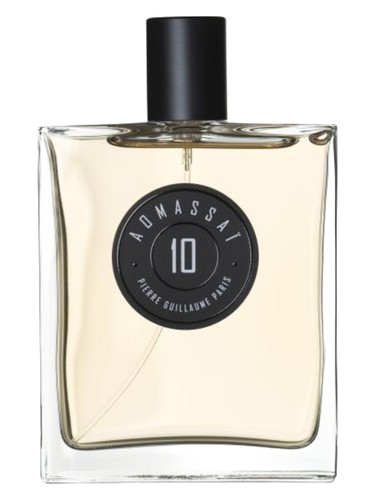
The company Sucre d''Ebene keeps is revealing. Un Bois Vanille and Spiritueuse Double Vanille are both vanilla heavyweights, while Coromandel and Ambre Narguile represent more complex, layered approaches to sweet-woody compositions. Pierre Guillaume''s own Aomassai 10 shares DNA, as expected from the same creative mind.
What distinguishes Sucre d''Ebene in this lineup is its particular balance point. It''s warmer and more immediately accessible than Coromandel, less overtly gourmand than Spiritueuse Double Vanille, and more refined than the straightforward woods-and-vanilla of Un Bois Vanille. It occupies a middle ground that makes it perhaps more versatile than its prestigious companions, if slightly less distinctive.
The Bottom Line
Sucre d''Ebene succeeds at being exactly what it set out to be: a sophisticated sweet-woody composition that brings warmth without sacrificing elegance. It''s not groundbreaking, but it''s very well executed—the olfactory equivalent of a perfectly tailored camel coat. You might own more exciting pieces, but you''ll reach for this one repeatedly because it simply works.
At 4 out of 5 stars with over 500 votes, the community consensus aligns with the quality: this is a reliable performer that delivers satisfaction without demanding attention. For those seeking a grown-up gourmand for cold weather, particularly one that functions as well at midday as it does in the evening, Sucre d''Ebene deserves consideration. It may not be the most exciting fragrance in Pierre Guillaume''s innovative catalog, but it might be one of the most wearable.
AI-generated editorial review