First Impressions
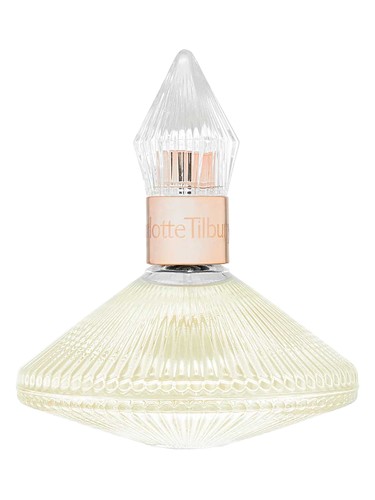
The first spray of Scent of a Dream announces itself with unexpected confidence for a daytime fragrance. There''s a crackling brightness—black pepper meeting bergamot in a flash of warmth—tempered immediately by the golden, almost honeyed richness of saffron. This isn''t the coy, tentative opening you might expect from a brand better known for makeup than perfumery. Instead, Charlotte Tilbury''s 2016 launch greets you with peach-flushed citrus and a whisper of mandarin that feels less like fruit basket and more like sunlight filtering through amber glass. It''s simultaneously approachable and intriguing, setting up expectations for something more complex than a simple pretty-girl fragrance.
The Scent Profile
The journey from top to base reveals a fragrance built on contrasts that somehow achieve harmony. Those opening notes—the pepper-saffron spark, the bergamot brightness, the soft stone-fruit sweetness of peach alongside lemon and mandarin—create a kaleidoscope effect, shifting between warm and cool, sweet and sharp.
As the citrus lifts away, the heart reveals its true ambition. Patchouli arrives not as earthy darkness but as a bridging element, its chocolate-tinged woodiness supporting rather than dominating. Tuberose brings creamy richness without veering into heady territory, while incense adds smoky depth that keeps everything grounded. Violet contributes a powdery-green softness, and jasmine weaves through it all with subtle floral elegance. This heart is where Scent of a Dream makes its case: it''s a white floral built on a woody-spicy foundation rather than the other way around.
The base is where Charlotte Tilbury reveals her hand completely. Ambroxan, Iso E Super, and Hedione—the modern perfumer''s trinity of skin-hugging molecules—create a warmth that feels less constructed and more intrinsic. Woody notes anchor everything, resulting in that dominant woody accord (registering at 100% in its profile) supported by amber warmth at 88%. The effect is enveloping without being heavy, present without shouting. It''s the kind of base that makes people lean closer to ask what you''re wearing, even hours after application.
Character & Occasion
The data tells a revealing story about Scent of a Dream''s identity. This is primarily a fall fragrance (100% seasonal alignment), with winter running a close second at 86%. Spring holds its own at 77%, but summer—at just 48%—is where this woody-amber composition starts to feel too heavy. The warm spicy accord (66%) and woody-amber backbone make perfect sense for cooler weather, when that golden warmth reads as comforting rather than cloying.
What makes this fragrance particularly versatile is its near-equal performance in day (88%) and night (86%) settings. That''s unusual for a woody-amber scent, which typically skews evening. The secret lies in those bright opening notes and the musky-woody drydown (51% musk accord) that stays close to skin rather than projecting aggressively. It''s substantial enough for evening but restrained enough for office wear—a genuine crossover performer.
The 47% patchouli accord and 57% citrus create interesting tension, preventing the fragrance from settling too comfortably into either fresh or resinous territory. This is a fragrance for someone who wants complexity in their daily rotation, who appreciates when a scent shifts subtly throughout the day rather than remaining static.
Community Verdict
The Reddit fragrance community''s relationship with Scent of a Dream is complicated by one unavoidable fact: it''s discontinued. With a sentiment score of 6.5 out of 10 based on 10 opinions, the response is decidedly mixed, though that rating comes with significant context.
The pros tell the story of a fragrance that worked beautifully for its fans: a legitimately good daytime option that inspired loyalty. Those who loved it are actively mourning its loss, searching for comparable alternatives in a market that offers some options—though finding an exact match proves elusive.
The cons are equally revealing. Beyond the obvious discontinuation issue, some users simply didn''t connect with the scent, finding it unremarkable or not to their taste. This wasn''t a universally beloved masterpiece; it was a well-executed fragrance that found its people. Limited availability now means those hunting for bottles are navigating inflated prices and questionable storage conditions.
The community consensus positions this squarely as an everyday casual fragrance, best deployed during daytime wear. For those who discovered it early, it became a signature. For those discovering it now, it''s a lesson in fragrance mortality.
How It Compares
The list of similar fragrances reads like a perfume hall of fame: Dune by Dior, Baccarat Rouge 540 by Maison Francis Kurkdjian, Shalimar by Guerlain, Coco by Chanel, Black Orchid by Tom Ford. These are significant comparisons—fragrances with decades of history or cult status.
Scent of a Dream doesn''t quite reach those heights (its 3.48 out of 5 rating from 399 votes suggests solid appreciation rather than obsessive devotion), but the comparison points are instructive. Like Dune, it offers woody-amber warmth with unexpected freshness. The Baccarat Rouge 540 connection likely comes from that Ambroxan-driven woody-amber drydown. The Shalimar and Coco comparisons suggest a classic femininity, while Black Orchid points to shared patchouli-woody darkness.
Charlotte Tilbury created something that touched on these reference points without copying any of them—a modern take on woody-amber femininity that borrowed from classic structures while feeling contemporary.
The Bottom Line
Scent of a Dream achieved something noteworthy: it created a space between fresh daytime fragrances and heavy evening orientals, offering woody-amber complexity that worked from morning coffee through evening drinks. That 3.48 rating reflects honest appreciation rather than hype, and the 399 votes suggest decent sampling despite limited distribution.
The tragedy is its discontinuation just as it was finding its audience. For those with bottles still tucked away, you own a small piece of fragrance history—a road not fully traveled. For those searching, the hunt might be worth it if you find bottles at reasonable prices, particularly if you''ve struggled to find a sophisticated woody scent that doesn''t overwhelm during daylight hours.
Should you try it? If you loved any of its comparison fragrances but wanted something warmer for day wear, absolutely. If you''re chasing the next viral sensation, look elsewhere. This was never that fragrance. It was something potentially better: a well-crafted, wearable scent that asked only to be appreciated, not worshipped. Sometimes, that''s exactly what a dream should be.
AI-generated editorial review