First Impressions
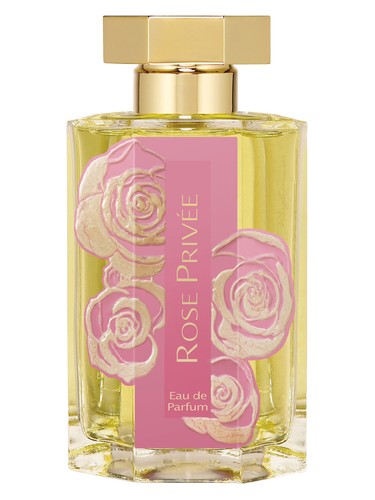
The first spray of Rose Privée delivers something rare in the rose fragrance category: surprise. Rather than the expected velvet curtain of petals, L''Artisan Parfumeur opens a French door onto a dew-soaked garden at dawn. The rose is there, certainly, but it''s seen through a filter of green stems, crushed herbs, and the sharp bite of morning air. This is a rose pulled from the earth with roots still attached, not arranged primly in a crystal vase. Within seconds, you understand why this 2015 release carries the word "privée" in its name—it feels like a secret, something intimate and unshared, a personal corner of nature rather than a public display.
The Scent Profile
While the specific note breakdown remains undisclosed by L''Artisan Parfumeur, the accord structure tells the story with clarity. At 100%, the floral element dominates, but it''s the 97% green accord that fundamentally shapes Rose Privée''s character. This isn''t a conventional rose treatment. The opening—which we can only deduce from the fragrance''s behavior—delivers an almost shocking verdancy. Imagine snapping a rose stem between your fingers: that crisp, chlorophyll-rich greenness precedes the flower itself.
The fresh spicy accord at 81% adds an aromatic lift, a peppery brightness that keeps the composition from settling into softness too quickly. This is where Rose Privée shows its modern sensibility. The rose accord, registering at 71%, appears less as a solo performer and more as part of an ensemble. It''s surrounded, supported, and occasionally challenged by its green companions.
As the fragrance develops, aromatic (51%) and herbal (50%) accords emerge with nearly equal strength, suggesting lavender-like facets or perhaps geranium''s minty-rose duality. The base remains elusive but light—there''s no heavy oriental foundation here, no thick musks or resins. Rose Privée stays close to its garden origins throughout its evolution, maintaining that just-cut freshness even as it dries down. The lack of specified base notes in the data suggests a composition that prizes transparency over depth, evaporation over persistence.
Character & Occasion
The seasonal data speaks volumes: spring claims this fragrance at 97%, with summer following closely at 83%. These numbers don''t lie. Rose Privée is a warm-weather rose through and through, engineered for sunshine and open windows. Fall compatibility drops to 43%, while winter manages only 18%—and rightfully so. This is not a fragrance that battles the cold or wraps you in comfort. It celebrates renewal, growth, and the particular pleasure of flowers still growing rather than already cut.
The day and night split is even more definitive: 100% day versus 27% night. Rose Privée is unabashedly a daylight fragrance, designed for natural light and casual elegance. Think garden parties, outdoor lunches, weekend markets, or simply the pleasure of wearing something beautiful while accomplishing ordinary tasks. There''s an effortlessness here that would feel oddly placed in evening scenarios requiring more dramatic, assertive compositions.
Marketed as feminine, Rose Privée nevertheless possesses enough green sharpness and herbal bite to transcend strict gender boundaries. Anyone who appreciates fresh, verdant florals over powdery or sweet interpretations will find common ground here.
Community Verdict
With a rating of 3.97 out of 5 across 505 votes, Rose Privée occupies solid territory—not revolutionary, but clearly accomplishing what it sets out to do. Nearly 4 stars suggests a fragrance that delivers on its promise without necessarily rewriting the rules. The vote count indicates a respectable following without viral popularity, which feels appropriate for a scent this deliberately understated. This isn''t a polarizing composition; it''s a well-executed idea that some will love deeply while others simply respect and move on from.
The rating suggests competence and quality without groundbreaking innovation. For a niche house like L''Artisan Parfumeur, known for artisanal approaches and natural-leaning compositions, this reception validates their particular vision of rose.
How It Compares
The comparison fragrances reveal interesting context. La Fille de Berlin by Serge Lutens and Un Jardin Sur Le Nil by Hermès both share Rose Privée''s green, fresh approach to florals—the Hermès particularly with its garden-inspired philosophy. Fille en Aiguilles offers a different kind of freshness, pine-driven rather than green-herbal. The inclusion of Coco Mademoiselle and Coco Eau de Parfum seems initially puzzling until you consider their fresh citrus-patchouli brightness, suggesting Rose Privée may share a certain modern crispness with these more mainstream compositions, even while working in an entirely different register.
Within the green rose category, Rose Privée distinguishes itself through restraint. It''s quieter than many competitors, more interested in suggestion than statement.
The Bottom Line
Rose Privée earns its nearly 4-star rating through honesty and execution rather than innovation. This is a fragrance for those who''ve grown weary of rose''s usual presentations—the jammy, the powdery, the Turkish delight sweetness. If you want rose but fear looking backward, Rose Privée offers a contemporary alternative rooted in nature rather than nostalgia.
It''s best suited for minimalists who appreciate quality over projection, for those whose lives include gardens (actual or aspirational), and for anyone seeking an everyday rose that won''t announce itself across a room. The price point, typical for L''Artisan Parfumeur''s range, positions this as an accessible niche option rather than an investment piece—appropriate for a fragrance meant to be worn liberally rather than hoarded.
Should you try it? If you own and love any of the comparison fragrances, absolutely. If spring is your season and roses are your flower but you''ve never found the right match, Rose Privée deserves a test. Just remember: this is a garden rose, not a hothouse bloom. Approach it with those expectations, and you''ll likely join the 505 voters who found something worth rating.
AI-generated editorial review