First Impressions
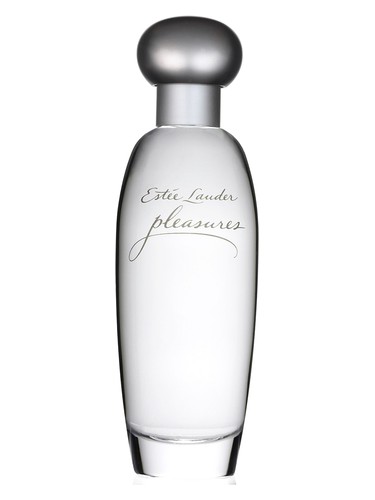
The first spray of Pleasures Estée Lauder is like stepping into a sunlit conservatory on an April morning. There''s an immediate burst of green freshness—dewy violet leaves and crisp freesia—that feels almost photorealistic in its brightness. This isn''t the languid, heady florals of vintage perfumery; it''s spring bottled at its most optimistic moment, when everything is budding and the air itself seems to shimmer with possibility. A whisper of pink pepper adds just enough spark to keep things interesting, while red berries provide a subtle, fruity sweetness that never crosses into candy territory. Within seconds, you understand why this became Estée Lauder''s answer to the fresh florals movement of the mid-90s.
The Scent Profile
Pleasures opens with an orchestra of green notes that set the stage for everything to come. The violet and violet leaf pairing creates a powdery-yet-crisp effect that''s distinctly retro in the best possible way, evoking the sophisticated minimalism of 1990s fashion. Freesia brings its characteristic peppery-floral brightness, while tuberose makes an early appearance—though here it''s stripped of its usual tropical intensity, rendered instead as a clean, soapy presence. The pink pepper adds a gentle spiciness (reflected in that 26% soft spicy accord) that keeps the opening from becoming too purely botanical.
As the fragrance settles into its heart, it reveals why the main accord registers at 93% white floral. Lily-of-the-valley takes center stage, that classic spring bloom that smells simultaneously innocent and refined. It''s joined by a bouquet that reads like a wedding invitation: peony, lilac, lily, jasmine, rose, and geranium create a layered floral experience that could have been overwhelming but instead feels remarkably balanced. The lilac is particularly noteworthy—a note that''s notoriously difficult to render in perfumery—lending a delicate sweetness that pairs beautifully with the green freshness that persists from the opening. The rose accord (42%) is present but never dominant, woven into the larger tapestry rather than demanding solo attention.
The base is where Pleasures shows its age in the most interesting way. Cedar, sandalwood, patchouli, and musk create a foundation that''s clean and understated, almost transparent. This isn''t the rich, resinous drydown of older perfumes; it''s the 1990s ideal of "your skin but better," providing just enough structure to keep the florals from floating away entirely. The sandalwood adds a creamy quality, while the cedar and patchouli contribute a subtle earthiness that grounds all that airiness without weighing it down.
Character & Occasion
The data tells a clear story: Pleasures is a spring fragrance first and foremost (99%), and it''s designed for daylight hours (100% day versus just 19% night). This is not a perfume that wants to compete with evening lights and dinner conversation. It''s meant for morning meetings, garden parties, weekend brunches, and any occasion where you want to smell fresh, approachable, and effortlessly put-together.
Summer rates at 63%, which makes sense—the green and fresh accords (73%) provide enough crispness to work in warmer weather, though you might find yourself wishing for something lighter in true heat. Fall and winter (27% and 19% respectively) are tougher sells unless you''re specifically seeking that spring-in-winter contrast.
This is a fragrance for someone who appreciates classic femininity without fussiness, who wants to make a good impression without making a statement. It''s professional but not corporate, romantic but not overtly seductive. Think of it as the olfactory equivalent of a crisp white shirt and well-tailored trousers—timeless, appropriate, and quietly confident.
Community Verdict
With a rating of 3.83 out of 5 from 9,578 votes, Pleasures sits comfortably in "very good" territory. This isn''t a polarizing fragrance—it''s too well-mannered for that—but it''s also not trying to be revolutionary. The substantial vote count suggests a perfume that''s been extensively worn and evaluated, and that rating represents a solid consensus: this is a dependable, well-crafted floral that does exactly what it promises.
The score reflects both its strengths and its limitations. It''s not reaching for the stratosphere of niche darlings or iconic masterpieces, but it''s also well above average, indicating a fragrance that consistently delivers quality and satisfaction.
How It Compares
Pleasures sits in distinguished company among fresh florals of its era. Its kinship with Elizabeth Arden''s 5th Avenue makes sense—both are polished, professional florals with green tendencies. Noa by Cacharel shares that clean, soapy white floral quality, while the comparison to J''adore and Chloé Eau de Parfum speaks to its lasting influence on the modern fresh floral category. Organza by Givenchy is perhaps the most interesting comparison, representing a slightly more opulent take on white florals.
What distinguishes Pleasures is its restraint. Where some of these fragrances have evolved into bolder iterations, Pleasures has maintained its original character—a time capsule of 1990s optimism and the "less is more" aesthetic that defined the decade.
The Bottom Line
Nearly thirty years after its launch, Pleasures remains remarkably relevant. It''s not trying to compete with the complex, challenging fragrances that dominate modern niche perfumery, nor is it a simple, forgettable freshie. Instead, it occupies a sweet spot: a well-constructed, beautiful floral that smells expensive and feels appropriate for countless occasions.
At this price point and with this level of craftsmanship, it represents genuine value—especially for anyone building a fragrance wardrobe who needs a reliable spring and summer daytime option. The 3.83 rating from nearly 10,000 votes suggests you''re unlikely to be disappointed, even if you''re not blown away.
Should you try it? If you appreciate green florals, if you need a professional signature scent, or if you''re curious about the aesthetic that defined 1990s femininity, absolutely. This is olfactory history that still earns its place on the vanity.
AI-generated editorial review