First Impressions
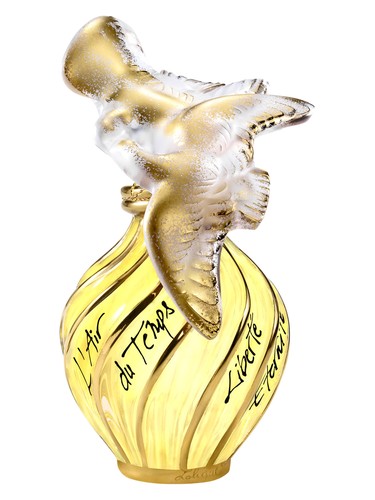
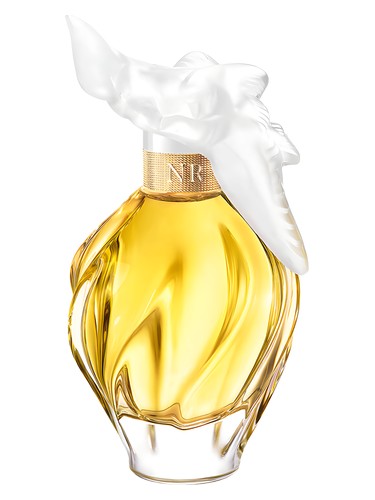
The first breath of L''Air du Temps Eau de Parfum arrives not with a whisper, but with a confident statement—a burst of warming spices tempered by the bright citrus clarity of neroli and bergamot. There''s an unexpected softness here too: a whisper of peach that rounds the edges, while Brazilian rosewood adds its distinctive rosy-woody complexity. This is not the demure floral you might expect from a 1948 classic. Instead, it announces itself with the kind of sophisticated spice that feels simultaneously vintage and startlingly modern, like discovering your grandmother''s jewelry box contains pieces that wouldn''t look out of place in today''s most fashionable boutiques.
The Scent Profile
The opening phase reveals why this fragrance leads with woody and warm spicy accords at full intensity. Those initial spices—peppery, aromatic, faintly clove-like—don''t simply fade away. They form the architectural backbone upon which everything else builds. The bergamot and neroli provide necessary brightness, preventing the composition from becoming heavy-handed, while the peach note adds an almost tactile softness, like cashmere against skin.
As the heart unfolds, L''Air du Temps reveals its true character: a complex bouquet that showcases perfumery as it once was, when floral arrangements were composed with both extravagance and restraint. Carnation takes center stage—that spicy, slightly clove-like bloom that was the darling of mid-century perfumery. It''s joined by an impressive supporting cast: creamy ylang-ylang, the green sophistication of iris, the romantic richness of May rose, and the ethereal qualities of lily and orchid. This isn''t a single-flower solifloquy but a full conversation between blooms, each adding depth without overwhelming the others. The powdery and white floral accords that register at 63% and 61% emerge here, creating that soft-focus effect that defined an era of feminine fragrance.
The base is where L''Air du Temps earns its woody designation—that accord that dominates at 100%. Sandalwood and cedar form the foundation, their creamy and pencil-shaving textures providing structure. Vetiver adds an earthy, slightly smoky dimension (reflected in that 46% earthy accord), while moss contributes a green, old-world chypre-adjacent quality. Musk and ambergris lend skin-like warmth and subtle animalic depth, and benzoin rounds everything out with its vanilla-tinged, resinous sweetness. This base doesn''t just anchor the florals—it transforms them, turning what could have been a simple flower arrangement into something far more substantial and lasting.
Character & Occasion
The data tells a compelling story about versatility. With spring scoring at 100% and fall at 98%, L''Air du Temps Eau de Parfum has found its sweet spot in the transitional seasons—those times when warmth and coolness coexist, when you want something substantial without being suffocating. The 77% winter score suggests it holds up admirably in cold weather, its spices and woods providing comfort without turning cloying. Even summer, at 55%, isn''t completely off the table, though the woody and spicy intensity might feel too warm for the hottest days.
The 98% day rating versus 69% night tells you this is primarily a daylight companion—appropriate for the office, for lunch dates, for art gallery openings and afternoon tea. Yet that respectable evening score indicates it won''t disappear under dim lights either. This is a fragrance that respects boundaries, that understands the difference between presence and projection.
Who wears this? Someone who appreciates that "feminine" doesn''t mean simple or sweet. Someone who understands that true elegance often lies in complexity rather than obviousness. This is for the woman who owns vintage pieces not as costume but as wardrobe staples, who sees value in things that have withstood the test of time.
Community Verdict
With 502 votes tallying to a 3.97 out of 5 rating, L''Air du Temps Eau de Parfum sits comfortably in "very good" territory. This isn''t a universally adored crowd-pleaser, nor is it a divisive polarizer. The score suggests a fragrance that rewards those who give it proper attention—one that might not deliver love at first sniff but grows increasingly compelling with wear. That nearly 4-star rating from a substantial voter base indicates consistent quality and a loyal following who genuinely appreciate what this perfume accomplishes.
How It Compares
The comparison to its Eau de Toilette counterpart—the original L''Air du Temps—is inevitable. This Eau de Parfum concentration naturally offers more intensity and longevity, amplifying those woody and spicy elements. The mention alongside Dune by Dior and Coco Eau de Parfum by Chanel places it squarely in the territory of sophisticated, complex florals with substantial bases. Like LouLou by Cacharel, it embraces a spiced floral sensibility that feels distinctly European. The Chanel No. 5 connection acknowledges their shared heritage as aldehydic florals that helped define feminine perfumery in the mid-20th century, though L''Air du Temps takes a decidedly spicier, woodier path.
The Bottom Line
L''Air du Temps Eau de Parfum proves that some fragrances don''t just survive their era—they transcend it. This isn''t a museum piece to be appreciated from behind glass; it''s a living composition that still has something to say. The 3.97 rating reflects what it is: a well-crafted, beautifully balanced fragrance that won''t necessarily blow you away on first encounter but will reward patience and repeated wearings.
Is it for everyone? No—and that''s perhaps its greatest strength. In an age of focus-grouped, safe releases, L''Air du Temps Eau de Parfum remains unapologetically itself: spicy, woody, floral, complex, and unafraid of a little powder and earthiness. If you''re curious about what sophisticated perfumery looked like in 1948—and how surprisingly relevant those ideals remain—this is essential exploration. At this rating level and with this much voting history, you''re getting a proven performer, not a risky gamble.
AI-generated editorial review