First Impressions
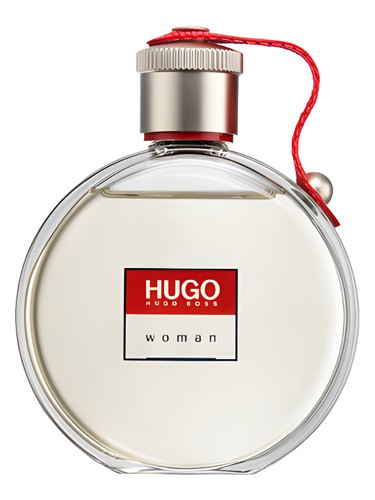
The first spray of Hugo Woman is an unabashed celebration of fruit—and not just any fruit, but the kind of glossy, bright, almost synthetic fruitiness that defined feminine fragrance in the late 1990s. Granny Smith apple leads the charge with its tart, crisp sweetness, immediately joined by a tropical medley of melon, peach, and papaya that feels like biting into a fruit salad served poolside. There''s a whisper of cassis adding depth, while cyclamen contributes a green, watery floralcy. Curiously, oakmoss makes an appearance in the top notes—an unusual choice that hints at some structural backbone beneath all that juicy exuberance. This is fragrance as pure mood: sunny, optimistic, and utterly uncomplicated.
The Scent Profile
Hugo Woman''s evolution follows the classic fruity-floral blueprint that dominated the era, though it executes the formula with surprising competence. Those opening fruits—apple, melon, peach, papaya—create what can only be described as a fruit cocktail effect, tempered slightly by the green qualities of cyclamen and a surprisingly robust oakmoss presence that keeps things from veering into candy territory.
As the fragrance settles, the heart reveals its aquatic-floral soul. Water hyacinth brings that distinctive clean, watery quality that epitomizes late-''90s freshness, while lily and jasmine add traditional white floral depth. Orris root lends a subtle powderiness and sophistication, elevating what could have been a purely synthetic composition into something with actual character. The floral heart (rated at 78% prominence) never fully escapes the fruit''s gravitational pull—this remains decisively fruity throughout, with florals playing a supporting rather than starring role.
The base is where Hugo Woman surprises. Virginia cedar and sandalwood provide genuine woody warmth (59% woody accord), while orchid, vanilla, resin, and amber create a soft, slightly sweet foundation. It''s not a powerhouse base by any means, but it offers enough substance to prevent the fragrance from disappearing into pure aquatic nothingness. The woods ground the composition just enough to make it wearable beyond its initial fruit-forward blast.
Character & Occasion
The data tells the story clearly: Hugo Woman is a daytime fragrance through and through, scoring 100% for day wear and a mere 10% for evening. This isn''t a fragrance for candlelit dinners or sophisticated soirées—it''s for Saturday morning farmers'' markets, brunches with friends, and casual office environments where you want to smell pleasant without making a statement.
Seasonally, it shines brightest in spring (78%) and summer (68%), which makes perfect sense given its fresh, fruity, aquatic character. The fall rating drops to 29%, and winter barely registers at 14%—this is definitively warm-weather territory. The fragrance lacks the depth and richness needed to cut through cold air or complement cozy sweaters. It''s built for sunshine and humidity, where its watery freshness feels like a relief rather than a mismatch.
With its 69% fresh accord and 61% aquatic presence, Hugo Woman is designed for women who want to smell clean, approachable, and effortlessly feminine. There''s nothing challenging here, no rough edges or artistic statements. It''s fragrance as accessory—competent, pretty, and utterly safe.
Community Verdict
Here''s where things get interesting: Hugo Woman is essentially invisible in contemporary fragrance discourse. Despite its solid 3.91/5 rating from nearly 3,000 votes, the Reddit fragrance community has nothing to say about it. Zero mentions. Complete silence. In 40 opinions surveyed, Hugo Boss''s 1997 feminine release didn''t merit a single comment, recommendation, or criticism.
This absence speaks volumes. Hugo Woman hasn''t aged into cult status or vintage desirability. It hasn''t become a cautionary tale of dated trends or a nostalgic favorite. It simply... exists, unmemorable enough that even dedicated fragrance enthusiasts pass it by without comment. In a community that will passionately debate the merits of obscure niche houses or resurrect forgotten classics, Hugo Woman''s complete absence from conversation suggests it occupies that unfortunate middle ground: too dated to feel current, too common to feel special, too competent to actively dislike.
How It Compares
The similar fragrances list reads like a who''s who of accessible feminine classics: J''adore by Dior, Chance Eau Tendre by Chanel, L''Eau par Kenzo, Noa by Cacharel, and Euphoria by Calvin Klein. These comparisons are generous—while Hugo Woman shares DNA with these fragrances (particularly the aquatic freshness of L''Eau par Kenzo and the fruity-floral nature of Chance Eau Tendre), it lacks the refinement and polish of its luxury counterparts.
Where J''adore achieves timeless sophistication and Chance Eau Tendre balances fruit with genuine elegance, Hugo Woman remains firmly planted in its 1997 origins. It''s the department store interpretation of a trend that others executed with more finesse or interesting twists.
The Bottom Line
Hugo Woman represents competent late-''90s perfumery—nothing more, nothing less. Its 3.91/5 rating from nearly 3,000 voters suggests it delivers exactly what it promises: a pleasant, fruity-fresh fragrance for casual daytime wear. For that specific purpose, it succeeds admirably.
Should you seek it out? Only if you''re specifically nostalgic for this particular era of fruity-floral fragrance, or if you need an uncomplicated, inoffensive daytime scent at what''s likely to be a bargain price. The complete absence of community engagement suggests that even at its accessible price point, there are more interesting options available. Hugo Woman isn''t bad—it''s simply unremarkable, a time capsule of an optimistic moment in fragrance history that hasn''t found renewed relevance in today''s more diverse, adventurous landscape.
For collectors of ''90s fragrances or Hugo Boss completists only. Everyone else can safely explore the many evolutions this genre has undergone in the quarter-century since Hugo Woman first appeared.
AI-generated editorial review