First Impressions
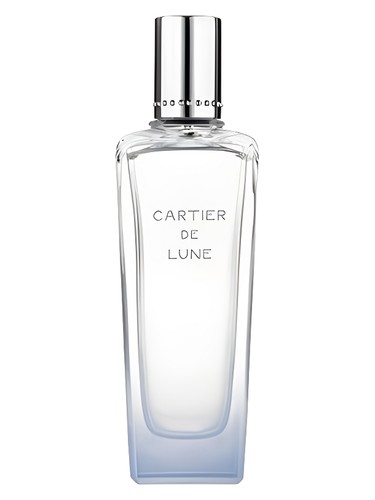
The first spray of Cartier De Lune feels like stepping into a garden at dawn, when the air still holds that peculiar coolness and clarity. There''s an immediate brightness—not citrus brightness, but something more aromatic and green. Juniper berries and pink pepper create an unusual opening for what reveals itself to be a quintessentially white floral fragrance. The juniper brings a gin-like crispness, while the pink pepper adds a subtle shimmer rather than heat. It''s a deceptive introduction, hinting at freshness before the bouquet fully unfolds.
This is Cartier translating their jewelry house elegance into scent: clean, luminous, and polished to a high shine. There''s nothing heavy or opulent here. Instead, De Lune announces itself with restraint, like moonlight filtering through sheer curtains—present, beautiful, but never overwhelming.
The Scent Profile
That bright opening with juniper berries and pink pepper quickly gives way to the fragrance''s true heart: a quartet of white and light florals that dominate the composition. Lily-of-the-valley takes center stage, lending its characteristic green freshness and delicate sweetness. This isn''t the indolic, heady lily-of-the-valley of vintage perfumes, but a cleaner, more transparent interpretation.
Rose weaves through the composition, though it never shouts. Instead, it adds a soft, powdery dimension that keeps the fragrance feminine without veering into traditional rose territory. Cyclamen and honeysuckle contribute an aqueous, dewy quality—cyclamen with its subtle aldehydic facets, honeysuckle with its nectar-like sweetness held in check. The overall effect is airy and weightless, a bouquet of flowers captured in their most ephemeral state.
The dry-down brings musk and woody notes that anchor the florals without adding significant weight. The musk here reads as clean skin-scent musk rather than anything animalic or sensual. The woody notes provide structure—a framework that prevents the florals from dissipating entirely—but they remain in the background. This base doesn''t transform the fragrance so much as cradle it, allowing those white florals to remain the star even hours into wear.
Character & Occasion
De Lune is overwhelmingly a spring fragrance, with data showing 96% suitability for the season when gardens come alive. It extends beautifully into summer at 70%, making it an excellent companion for warmer months when heavier fragrances feel stifling. The freshness and transparency that define this scent make it considerably less appropriate for fall (43%) and barely suitable for winter (23%)—this is not a fragrance that thrives in cold weather or cozy indoor settings.
The day and night percentages tell an equally clear story: this is 100% a daytime fragrance, dropping to just 35% for evening wear. There''s a reason for this stark difference. De Lune lacks the intensity, mystery, or sensuality typically associated with evening perfumes. Instead, it offers the kind of clean, appropriate elegance perfect for office settings, daytime events, brunch dates, or any occasion where you want to smell beautiful without making a statement.
This is a fragrance for someone who appreciates understated sophistication over bold personality. It suits the woman who already knows her style and doesn''t need her perfume to announce her presence before she enters a room.
Community Verdict
With a rating of 3.8 out of 5 stars from 820 votes, Cartier De Lune sits comfortably in "very good" territory without reaching "outstanding" status. This is a respectable rating that suggests a well-crafted fragrance that delivers on its promises, even if it doesn''t inspire passionate devotion. The vote count indicates steady interest rather than cult-favorite status—enough people have tried it to form a consensus, but it hasn''t achieved the blockbuster numbers of fragrances that become cultural phenomena.
That 3.8 rating likely reflects De Lune''s greatest strength and limitation: it''s refined and beautiful, but perhaps too polite to be thrilling. It''s the kind of fragrance that garners appreciation rather than obsession.
How It Compares
De Lune finds itself in excellent company among its similar fragrances. Noa by Cacharel shares that transparent white floral approach, while J''adore by Dior operates in a similar space with more opulence. Chance Eau Tendre by Chanel offers comparable freshness with a fruitier twist, and Narciso Rodriguez For Her introduces more sensuality through its distinctive musk heart. Pure Poison by Dior provides perhaps the closest comparison—both emphasize white flowers with modern clarity.
Within this category of clean, contemporary white florals, De Lune distinguishes itself through that unusual juniper opening and its particularly airy construction. It''s less immediately seductive than Narciso Rodriguez, less universally crowd-pleasing than J''adore, and less playful than Chance Eau Tendre. It occupies its own quiet space—elegant without trying too hard.
The Bottom Line
Cartier De Lune is a beautifully executed fragrance that knows exactly what it wants to be: a luminous, daytime white floral for spring and summer. It doesn''t try to be versatile across all seasons or occasions, and this focus is both its strength and limitation. At 3.8 stars, it represents solid craftsmanship and wearability rather than groundbreaking innovation.
This fragrance deserves exploration if you''re seeking a refined, office-appropriate scent for warmer months, if you appreciate transparent white florals over heavy Oriental compositions, or if you''re drawn to the Cartier aesthetic of understated luxury. It''s less essential if you prefer fragrances with more personality, need year-round versatility, or want something that transitions seamlessly from day to night.
De Lune won''t be everyone''s signature scent, but for those moments when you want to smell like the best version of a spring morning—fresh, clean, and gently beautiful—it delivers with quiet confidence.
AI-generated editorial review