First Impressions
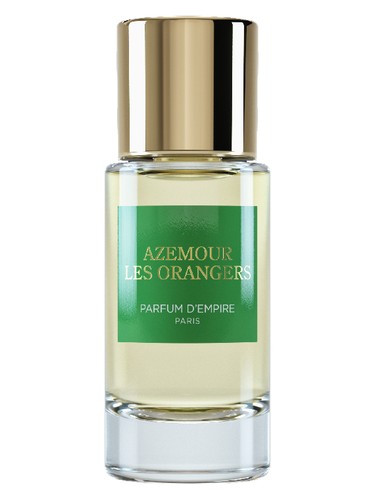
The first spray of Azemour Les Orangers is nothing short of an olfactory flash flood. Your senses are immediately drenched in a torrent of citrus—not the polite, breakfast-table variety, but something wilder and more insistent. Orange, clementine, tangerine, Amalfi lemon, and grapefruit converge in a bright cacophony, yet there's a sharpness cutting through the sweetness: galbanum's green bite, the herbal rasp of coriander and caraway, and a peppery tingle that keeps the composition from veering into candy territory. This isn't a citrus perfume that whispers. It announces itself with the confidence of North African sun hitting white-washed walls, with the tartness of cassis adding an unexpected berry-dark undertone to all that brightness.
The Scent Profile
What makes Azemour Les Orangers remarkable is how it handles the inherent fragility of citrus notes. Creator Marc-Antoine Corticchiato has engineered this parfum concentration to behave almost defiantly—where most citrus fragrances evaporate within minutes, this one persists, evolves, and transforms over hours.
The opening act is unmistakably citrus-dominant (scoring a perfect 100% in the citrus accord), but it's never one-dimensional. The galbanum and the dual pepper notes (black and pink) provide an aromatic backbone that scores 52% in intensity, creating a scaffold that prevents the composition from collapsing into simple freshness. The caraway and coriander contribute an unusual spicy-herbal quality that reads as distinctly Moroccan—think spice markets rather than European colognes.
As the fragrance settles into its heart, the citrus barrage softens but doesn't disappear. Instead, it makes room for one of perfumery's most precious materials: neroli, derived from orange blossoms. Here it's joined by African orange flower, creating a floral layer that feels like a natural extension of the opening rather than a departure from it. The suede accord adds an unexpected textural element—soft, slightly powdery, almost like skin warmed by sun. Geranium brings a green, minty-rosy facet, while rose itself appears in a supporting role, never overtaking the composition but adding depth and a traditional floral elegance.
The base is where Azemour Les Orangers reveals its true ambitions. Oakmoss provides a classic chypre-like foundation, earthy and sophisticated. Cypress introduces a resinous, woody character that evokes Mediterranean landscapes—you can almost smell the dry, dusty heat rising from ancient trees. Most intriguingly, hay appears in the base, adding a dry, tobacco-like quality that speaks to the perfume's green accord (34%) and creates an unusual drydown that's simultaneously fresh and warmly rustic.
Character & Occasion
Azemour Les Orangers occupies a fascinating niche in the perfume landscape. Community data suggests it performs equally well across all seasons—a rarity for a citrus-forward composition. This versatility stems from its complexity; the fresh opening makes it perfectly suited to summer heat, while the aromatic spices, suede, and woody base notes give it enough substance for cooler weather.
Interestingly, the perfume shows no particular leaning toward day or night wear, which speaks to its chameleon-like character. Early in the day, you'll notice the bright citrus and green notes more prominently. As hours pass and body heat works on the perfume, the suede, neroli, and woody base emerge, creating a more intimate, sophisticated aura suitable for evening.
This is marketed as feminine, but the composition challenges that designation. The aromatic, spicy, and green accords (scoring 52%, 46%, and 34% respectively) give it a unisex quality that would suit anyone drawn to intelligent, unconventional citrus fragrances. It's for those who find traditional citrus colognes too fleeting and floral perfumes too sweet, but who still crave that burst of light.
Community Verdict
With a solid 4.22 out of 5 stars from 739 voters, Azemour Les Orangers has earned genuine respect. This isn't a love-it-or-hate-it polarizer, nor is it a crowd-pleaser that sacrifices character for mass appeal. The rating suggests broad appreciation from those who've tried it—high enough to indicate quality and artistry, but not so universally adored that it lacks personality.
The substantial voter base (739 reviews) indicates this isn't an obscure curiosity but a well-explored fragrance within the niche community. That consistent rating across hundreds of opinions suggests reliability: what you smell in the bottle is what you'll experience on skin, and the quality remains consistent.
How It Compares
The comparison set is telling. Terre d'Hermès and Guerlain's Vetiver point to Azemour's sophisticated, aromatic character and its appeal to those who appreciate classic French perfumery with substance. Un Jardin Sur Le Nil shares the green, citrus-vegetal DNA. The inclusion of Shalimar suggests a shared chypre-like oakmoss foundation, while Tauer's L'Air du Desert Marocain is the most obvious parallel—both evoke North African landscapes through spice, citrus, and dry woody notes.
Where Azemour distinguishes itself is in its relentless focus on citrus without sacrificing longevity. It's brighter than Terre d'Hermès, more wearable than the intense L'Air du Desert Marocain, and more substantial than the ethereal Jardin fragrances.
The Bottom Line
Azemour Les Orangers succeeds because it solves a problem: how to make citrus last without mummifying it in amber or musks. The parfum concentration, combined with the aromatic and green supporting accords, creates a citrus fragrance with genuine staying power and evolution. At 4.22 stars, it represents strong quality without astronomical hype.
This is essential testing for anyone who's given up on citrus fragrances because they disappear too quickly, or for those who love neroli and orange flower but want something less conventionally floral. If you've enjoyed any of its comparable fragrances—particularly the Hermès masculines or Tauer's Moroccan vision—Azemour deserves a place on your sampling list. It's proof that citrus can be both radiant and enduring, bright and complex, fresh and deeply satisfying.
AI-generated editorial review