First Impressions
Spraying Farina''s 1709 Original Eau de Cologne is like opening a window onto the past. The liquid springs from the bottle in a burst of unapologetic citrus—bright, sharp, and impossibly clean. This is cologne in its truest, most original form: the scent that quite literally gave birth to the entire category in the German city of Köln (Cologne) over three hundred years ago. There''s no modern sweetness here, no contemporary smoothing of edges. What you get instead is a green-tinged, aromatic freshness that feels both ancient and oddly contemporary, as if simplicity itself has become revolutionary again. The first moments are dominated entirely by that citrus accord—registered at a perfect 100% in its DNA—but there''s something more nuanced lurking beneath, a subtle complexity that reveals why this formula has survived centuries while countless imitators have faded.
The Scent Profile
Farina''s 1709 doesn''t follow the traditional pyramid structure so much as it presents variations on a theme. The opening, predictably for an authentic eau de cologne, is pure citrus radiance—think bright bergamot, sharp lemon, perhaps neroli adding a bitter-sweet dimension. This isn''t the rounded, candied citrus of modern fragrances; it''s astringent, herbal, almost medicinal in its clarity.
As the initial burst settles, the green accord (24%) emerges more prominently, lending a crisp, garden-like freshness that keeps the composition from feeling purely fruity. There''s an aromatic quality (17%) woven through the heart—likely from herbs like rosemary or lavender—that adds structure and a slightly spicy dimension (20% fresh spicy accord). This isn''t spice in the warm, oriental sense, but rather the peppery snap of fresh herbs crushed between fingers.
The floral element (16%) remains subtle, almost ghostly, adding softness without ever dominating. A whisper of sweetness (8%) rounds out the edges without compromising the fragrance''s fundamentally dry, refreshing character. Without specified base notes, the cologne follows the historical pattern: it doesn''t so much develop a traditional base as it gradually fades into a clean, soapy skin scent that lingers surprisingly well for such a light concentration.
Character & Occasion
This is unequivocally a warm-weather fragrance. The data confirms what the composition suggests: summer receives a perfect 100% suitability rating, with spring following closely at 80%. Fall (20%) and winter (13%) are essentially non-starters—this cologne needs heat and sunshine to truly shine. It''s the olfactory equivalent of linen shirts and open windows, of morning walks before the day becomes oppressive.
The day-versus-night split is equally telling: 91% day wear, 14% night. Farina''s 1709 is designed for daylight hours, for productivity and movement. This isn''t a fragrance that demands attention in dimly lit restaurants or creates a seductive trail on the dance floor. It''s for the office (the 18th-century version or the modern one), for errands, for travel, for those moments when you want to smell unmistakably fresh without making any particular statement about it.
Marketed as masculine, the cologne nonetheless predates our modern gender divisions in fragrance. Its clean, citrus-forward profile would work beautifully on anyone who appreciates understated freshness over bold personality.
Community Verdict
The r/fragrance community awards Farina''s 1709 a sentiment score of 8.2 out of 10—solid enthusiasm tempered with realistic expectations. Based on twelve opinions and a broader rating of 4.25 out of 5 stars from 368 votes, this cologne clearly has its admirers.
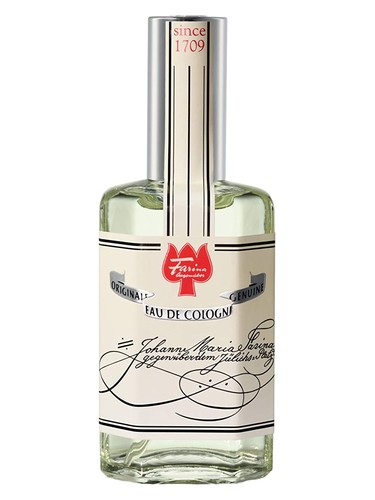
The pros are compelling for a specific audience: its historic significance and cultural gravitas cannot be overstated—this is the original, the blueprint from which an entire category emerged. Collectors and history buffs appreciate its authentic connection to the Kölnisch Wasser tradition. The elegant vintage bottle design adds aesthetic value, and the price point remains refreshingly accessible compared to inflated modern designer releases.
The cons are practical rather than qualitative. The community notes limited in-depth discussion, suggesting it''s respected more than actively debated. Availability challenges outside Germany make it a hunt rather than a simple purchase. The small bottle sizes, while charming, may frustrate those building larger collections.
The consensus positions 1709 as ideal for fragrance collectors seeking historical pieces, casual daily wear enthusiasts who value simplicity, and travelers interested in regional cologne exploration. It''s a souvenir that actually deserves its place in your collection.
How It Compares
The similar fragrances list reads like a who''s who of clean, citrus-forward classics. 4711 Original Eau de Cologne is perhaps the closest cousin—another German cologne house with centuries of history. CK One represents the 1990s minimalist interpretation of this tradition. Acqua di Parma Colonia took the blueprint upmarket, adding Italian luxury to German simplicity. Hermès'' Un Jardin Sur Le Nil explores green freshness through a more contemporary, fig-forward lens. Habit Rouge''s inclusion is slightly more surprising, suggesting shared aromatic qualities despite that fragrance''s richer base.
Within this company, Farina''s 1709 holds its ground as the most historically authentic, the least modernized. Where others have adapted the cologne structure for contemporary tastes, this remains admirably stubborn in its original vision.
The Bottom Line
A 4.25-star rating from nearly 400 voters suggests broad approval without universal worship—and that feels exactly right. Farina''s 1709 Original Eau de Cologne isn''t trying to be your signature scent or your most complimented fragrance. It''s offering something increasingly rare: genuine historical continuity in a bottle.
The value proposition is straightforward. You''re getting an affordable piece of fragrance history that actually smells good, not just interesting. The cologne performs well for its concentration, though longevity will never match modern eau de parfums. If you''re chasing projection and persistence, look elsewhere. If you want a beautifully crafted citrus refresher with three centuries of pedigree, this delivers.
Who should try it? Anyone interested in fragrance history owes themselves at least one encounter. Fans of minimalist, citrus-forward compositions will find much to love. Those planning trips to Germany should consider it an essential souvenir. And if you''re exhausted by the heavy, sweet, synthetic bombardment of contemporary releases, Farina''s 1709 offers a palate cleanser that doubles as a reminder of what cologne can be when it''s not trying to be anything other than itself.
AI-generated editorial review