First Impressions
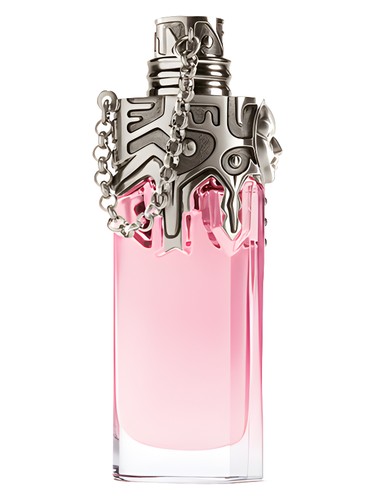
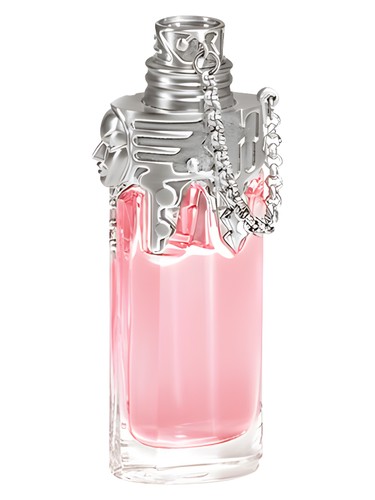
The first spray of The Taste of Fragrance Womanity is nothing short of startling. Mugler has never been a house to play it safe, and this 2011 release announces itself with an opening that makes you pause, recalibrate, and wonder what exactly just landed on your skin. There's an immediate saline quality—briny, almost edible—that mingles with an unexpected sweetness. The chutney accord referenced in the top notes isn't metaphorical; there's genuinely something condiment-like happening here, a preserved fruitiness that hovers between savory and sweet. Bright citruses cut through with green, herbaceous notes that feel like walking through a coastal garden where salt air has settled on the leaves overnight.
This is not a fragrance that eases you in gently. It demands attention, raises eyebrows, and forces a reaction. Within moments, you understand why Mugler chose such an unusual name—this is indeed about taste as much as smell, an olfactory experience that activates flavor memories as much as scent associations.
The Scent Profile
The evolution of Womanity's Taste of Fragrance follows an unconventional trajectory that mirrors its opening audacity. Those initial notes of chutney and citrus—sweet, tangy, vaguely pickled—give way relatively quickly to the fragrance's true heart: black fig and sea water, supported by the most unusual note in commercial perfumery: caviar.
The fig dominates the middle phase, but this isn't the creamy, latex-like fig of many Mediterranean-inspired scents. Instead, it's fig preserved in brine, sweetened and salted simultaneously. The sea water accord brings that distinctive marine quality that registers at 94% in the main accords—second only to the warm spice that defines the fragrance at 100%. This marine element isn't fresh and ozonic like typical aquatics; it's denser, more literal, as though Mugler's perfumers actually tried to capture the mineral complexity of ocean water rather than just its breezy impression.
The caviar note remains enigmatic throughout, more of a saline texture than a distinct smell, adding to the overall briny-sweet character that makes this fragrance so divisive and memorable.
As the fragrance settles into its base, the sweetness intensifies. Opoponax brings a warm, resinous honey-like quality, while immortelle adds its characteristic maple syrup sweetness with subtle curry undertones. Virginia cedar and vetiver provide the woody foundation that accounts for the 71% woody accord, grounding all that aquatic strangeness with something more familiar and earthy. The result is a skin scent that feels simultaneously warm and cool, sweet and salty, familiar and utterly alien.
Character & Occasion
The community data reveals that this is predominantly a warm-weather fragrance, with summer leading at 82% suitability, followed closely by fall at 71%. This makes intuitive sense—that marine quality feels most at home in heat, when salt air and skin-warmed sweetness create an evocative combination. Spring comes in at 67%, while winter trails at 54%, suggesting this isn't the cozy comfort scent for cold weather that other Mugler fragrances can be.
The day/night breakdown is revealing: this scores 100% for daytime wear but drops to 66% for evening. The marine-fruity character reads as casual and approachable despite its strangeness, better suited to sun-drenched afternoons than candlelit dinners. This is a fragrance for wandering farmer's markets, beachside lunches, or creative workspaces where unconventional choices are celebrated rather than questioned.
Who is this for? The woman who finds typical fruity florals boring, who wants her sweetness with an edge, who doesn't mind turning heads for unusual rather than conventionally beautiful reasons. With 571 community votes landing at a solid 4.01 out of 5, this clearly has its devoted following—people who understand and appreciate what Mugler was attempting.
Community Verdict
That 4.01 rating from 571 voters tells an interesting story. It's not the near-universal acclaim of some mainstream favorites, nor is it the poor showing of a fragrance that missed its mark entirely. Instead, it suggests a scent that resonates strongly with those who "get it" while potentially leaving others confused. This is exactly the kind of rating you'd expect for an adventurous, artistic fragrance that prioritizes creativity over mass appeal.
The voters who love this fragrance seem to truly love it, appreciating the risk-taking and the unusual combination of notes. It's a fragrance worth exploring precisely because it doesn't play by conventional rules.
How It Compares
Within the Mugler universe, this sits alongside Womanity Eau pour Elles and the original Womanity, sharing that house's commitment to bold, unconventional femininity. The comparison to Tom Ford's Black Orchid is intriguing—both fragrances embrace darkness and complexity in women's perfumery, though they achieve it through entirely different means.
The Kenzo Jungle L'Elephant reference points to another fragrance unafraid of spice and strangeness, while the Angel Eau de Toilette connection reminds us of Mugler's ongoing love affair with gourmand notes taken to unexpected places. What sets The Taste of Fragrance apart is that marine element—the willingness to make a sweet fragrance simultaneously salty and aquatic.
The Bottom Line
The Taste of Fragrance Womanity isn't for everyone, and Mugler wouldn't want it to be. This is a fragrance that earns its 4.01 rating through conviction rather than consensus, appealing to those who want their perfume to provoke thought as well as pleasure. The combination of fig, marine notes, and that mysterious caviar accord creates something genuinely original in a market often crowded with safe bets and familiar formulas.
Should you try it? Absolutely—if you're tired of predictable sweetness, if you've ever wondered what the ocean might smell like preserved in honey, if you appreciate perfumery as art rather than just accessory. Sample it in warm weather, give it time to develop, and prepare for something completely different. Just don't expect it to smell like anything else in your collection.
AI-generated editorial review